


- Product name
- Matador
- Type
- Retractable / telescopic
- Material
- Steel
- Crash rating
- IWA 14
- Aboveground height (mm)
- 1140
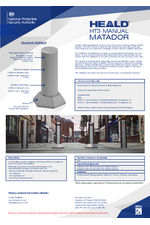
Heald Matador is a patent-protected sliding bollard system designed for high-security perimeter protection, crash-tested to PAS 68 and IWA standards. Made for sites with limited excavation depth, it uses a shallow-mounted design and sliding motion for visible operation and pedestrian safety. Electromechanical and manual drive options support energy efficiency and easy installation in challenging locations.
Sliding bollard system for high-security vehicle mitigation and perimeter control
Crash-tested to PAS 68 and IWA standards with zero vehicle penetration
Shallow-mounted design suits sites with congested underground services
Sliding motion keeps bollards visible, reducing accidental damage risk
Flat, anti-slip surface minimises trip hazards in pedestrian areas
Electromechanical drive uses up to 80% less energy than hydraulic systems
Customisable finish and installation depth for architectural integration
Applications
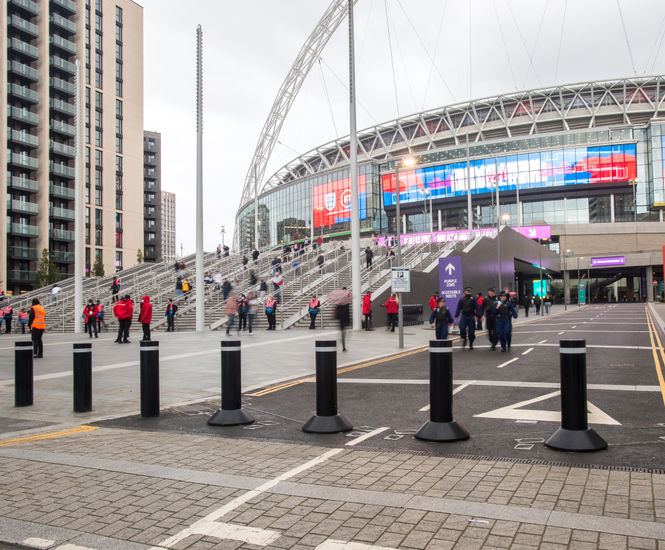
Urban streetscapes and public realm projects
Critical infrastructure and utility protection
Event venues and temporary security installations
Pedestrianised zones and city centres
Government and commercial building perimeters
Transport hubs and airports
Dimensions
Shallow foundation depth from 150mm
Performance
Crash-tested to PAS 68 and IWA standards
Zero vehicle penetration in crash tests
Continued operation after impact with no repairs required
Materials
Made from steel
Colours
Anti-slip top plate available in a wide range of RAL colours
Finish
Hardwearing anti-slip coating
Options and variations
Electromechanical or manual operation
Three installation depths: surface-mounted, recessed, or recessed with architectural paving system
Customisable to suit site requirements
Installation
Surface-mounted for temporary or permanent use, can be bolted to existing slabs
Recessed and architectural paving system options for seamless integration
Sustainability
Electromechanical drive uses up to 80% less energy than hydraulic systems
No hydraulic oil required, reducing risk of environmental contamination