

- Product name
- Hot-Applied High Friction Surfacing
- Applications
- Bus lanes
- Car parks
- Cycle routes
- Footpaths
- Level crossings
- Motorways
- Pedestrian crossings
- Road junctions
- Roads
- Transport terminals
- Hot applied / cold applied
- Hot applied
- Method of application
- Hand applied
- Accreditation
- BBA HAPAS Type 1
- Substrate
- Asphalt
- Concrete
- Metals
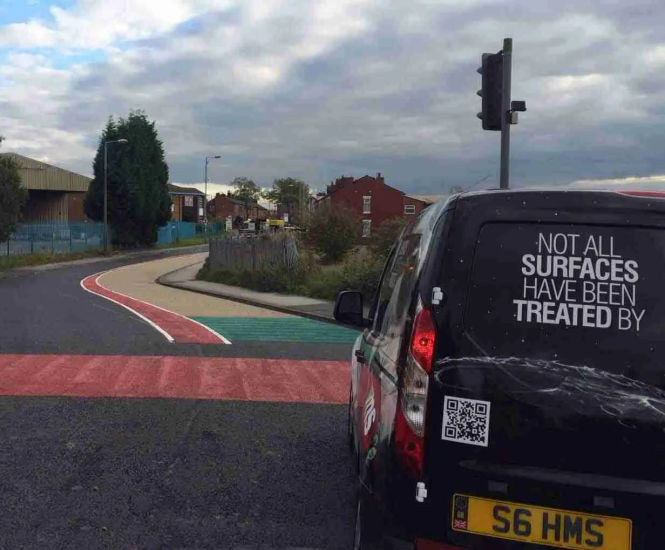
- Colours
- Colours of your choice
- Skid resistance value
- 70+
- Cure time
- 15 - 20 minutes
A BBA HAPAS-approved installer, HMS has more than 30 years' experience laying hot-applied high friction surfacing to roads, footpaths, and pedestrian crossings for local authorities and other main contractors.
Applications
Junctions
Roundabouts
Pedestrian crossings
Motorway slip roads
Sharp bends
Cycle or bus lanes
Hot-Applied High Friction Surfacing
BBA HAPAS-approved hot-applied high friction surfacing works by combining thermoplastic resin-based material with calcined bauxite aggregate that is then heated to a safe working temperature and applied to road surfaces.
The aggregate improves tyre grip by creating numerous high contact pressure points to improve braking distances and reduce the chances of vehicles skidding on uneven surfaces, sharp bends or tight corners, paticularly in wet conditions.
Key Features and Benefits
Can be laid in temperatures from 0 - 35°C
Cures in 15 - 20 minutes
Improved road and public safety
Reduced braking distances if vehicles need to stop suddenly
Lowered risk of skidding if brakes are applied sharply
Highlighting potential road hazardous areas
Flexible surfacing solution that can be laid to metal, concrete and tarmac
Winter-grade materials are available on request
Wide choice of colours for hazard identification