

- Form
- Seeds
- Suitability
- Reclamation projects
- Colours
- Purple
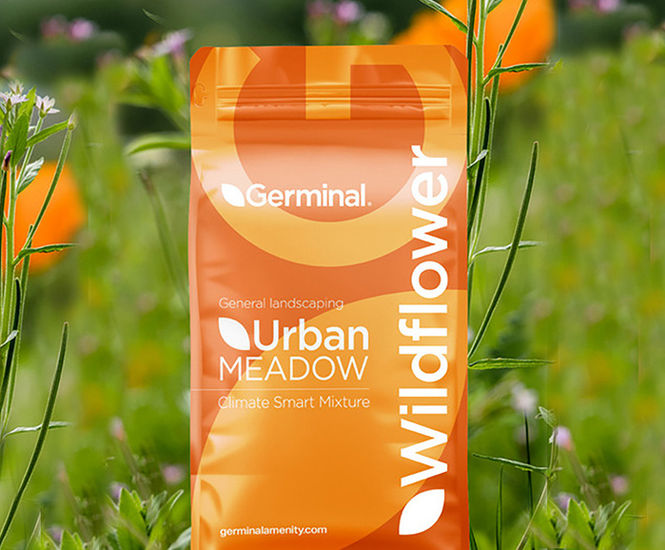
WF3 includes perennials suited to various soil types and urban or suburban settings. Once established, it provides a vibrant floral display year after year, with a wide range of wildflowers and ornamentals that support bees and pollinators. Without grass, establishment may be slower, so a clean seedbed free of weeds is crucial to prevent competition. The mix features UK native wildflowers and selected non-natives like Musk Mallow, Foxglove, Ragged Robin, Lady's Bedstraw, and Birdsfoot Trefoil.
Mixture
8.0% |
Salad Burnet |
(Sanguisorba minor) |
1.0% |
Lady's Bedstraw |
(Galium verum) |
10.0% |
Oxeye Daisy |
(Leucanthemum Vulgare) |
3.0% |
Musk Mallow |
(Malva moschata) |
5.0% |
Rudbeckia |
(Rudbeckia Hirta) |
7.0% |
Ribwort Plantain |
(Plantago lanceolata) |
0.1% |
Ragged Robin |
(Lychnis flos cuculi) |
10.0% |
Sainfoin |
(Onobrychis vicifolia) |
2.8% |
Hyssop |
(Hyssopus officinalis) |
5.0% |
Yarrow |
(Achillea millefolium) |
7.0% |
Flax |
(Linum usitatissimum) |
10.0% |
Oxeye Sunflower |
(Heliopsis helianthoides) |
10.0% |
Purple Coneflower |
(Echinacea) |
2.0% |
Dotted Gayfeather |
(Liatris punctata) |
5.0% |
Leo (Birdsfoot Trefoil) |
(Lotus corniculatus) |
0.5% |
Cut Leaved Cranesbill |
(Geranium dissectum) |
0.5% |
Doves Foot Cranesbill |
(Geranium molle) |
2.5% |
Foxglove |
(Digitalis purpurea) |
5.0% |
Smooth Blue Aster |
(Symphotrichum laeve) |
1.0% |
Evening Primrose |
(Oenothera biennis) |
0.1% |
Narrow-Leaved Everlasting Pea |
(Lathyrus Sylvestris) |
2.0% |
Common Knapweed |
(Centaurea nigra) |
2.0% |
Cow Parsley |
(Anthriscus sylvestris) |
0.5% |
Meadow Sweet |
(Filipendula ulmaria) |
Usage guide
Sowing Rate |
1-5 g/m2 |
||||
|---|---|---|---|---|---|
Sowing Time |
March - October |
||||
Sowing Depth |
10 mm |
||||
Sowing Instructions |
Create a fine friable seedbed down to 150 mm in depth. Carry out two equal sowings at right angles to each other and diagonally to main axis. Broadcast manually or use seed drill, rake level and roll. Ensure good seed to soil contact. |
||||
Maintenance |
|
||||