

- Form
- Seeds
- Suitability
- Chalky soils
- Colours
- White
- Yellow
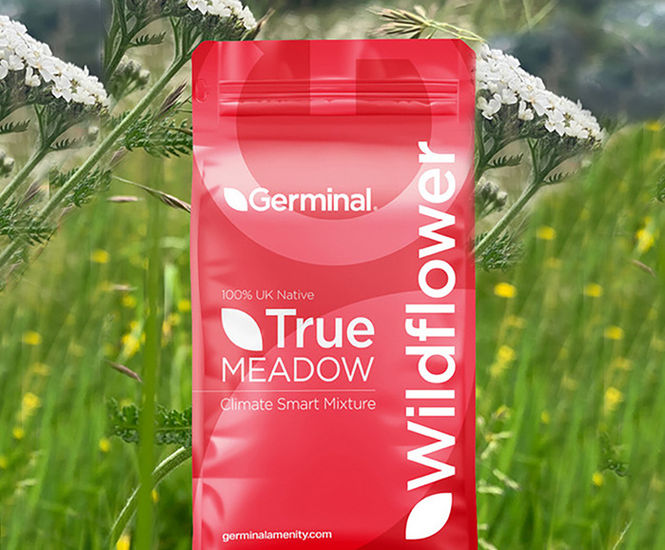
A mix of wildflowers and grasses suited for calcareous soils, designed to create habitats in challenging sites. It can be grazed by sheep long-term, though cutting may be needed in the first few seasons to develop sward depth and prevent poaching. It provides excellent habitat for invertebrates, birds, and mammals. When cutting in late summer, leave one-third uncut for overwintering invertebrates, rotating the area each year.
Applications
Free-draining soils
Limestone areas
Earthwork areas
Road verges
To encourage insects and birds
Mixture
1.0% |
Yarrow |
(Achillea millefolium) |
0.5% |
Kidney Vetch |
(Anthyllis vulneraria) |
0.5% |
Hoary Plantain |
(Plantago media) |
1.4% |
Lady's Bedstraw |
(Galium verum) |
1.0% |
Birdsfoot Trefoil |
(Lotus corniculatus) |
0.5% |
Yellow Rattle |
(Rhinanthus minor) |
3.1% |
Sainfoin |
(Onobrychis vicifolia) |
3.5% |
Ribwort Plantain |
(Plantago lanceolata) |
1.1% |
Salad Burnet |
(Sanguisorba minor) |
2.0% |
Oxeye Daisy |
(Leucanthemum vulgare) |
1.0% |
Red Clover |
(Trifolium pratense) |
1.0% |
Wild Carrot |
(Daucus carota) |
0.1% |
Betony |
(Stachys betonica) |
3.1% |
Flax |
(Linum usitatissimum) |
0.2% |
Goats Beard |
(Trapapogon pratensis) |
30.0% |
Sheeps Fescue |
(Festuca ovina) |
20.0% |
Slender Creeping Red Fescue |
(Festuca rubra litoralis) |
8.0% |
Crested Dogstail |
(Cynosurus cristatus) |
10.0% |
Tall Fescue |
(Festuca arundinacea) |
2.5% |
Creeping Bent |
(Agrostis stolonifera) |
1.0% |
Browntop Bent |
(Agrostis Capillaris) |
2.0% |
Tall Oat-grass |
(Arrhenatherum elatius) |
2.0% |
Golden Oat Grass |
(Trisetum flavescens) |
1.0% |
Tufted Hair Grass |
(Deschampsia caespitosa) |
0.5% |
Crested Hair Grass |
(Koeleria macrantha |
1.0% |
Quaking Grass |
(Briza media) |
2.0% |
Timothy (Small eared) |
(Phleum bertolonii) |
Usage guide
Sowing Rate |
5 g/m2 |
||||||
|---|---|---|---|---|---|---|---|
Sowing Time |
March - October |
||||||
Sowing Depth |
10 mm |
||||||
Sowing Instructions |
Create a fine friable seedbed down to 150 mm in depth. Carry out two equal sowings at right angles to each other and diagonally to main axis. Broadcast manually or use seed drill, rake level and roll. Ensure good seed to soil contact. |
||||||
Maintenance |
|
||||||