


- Type
- Bypass separators
- Class
- Class I (oil concentration < 5mg/l)
- Flow rate
- 3.5 to 18 litres/sec
- Drainage area (m2)
- 2000 to 10,000m2
- Storage capacity - oil (litres)
- 52.5 to 270 litres
- Dimensions
- 1240 to 1540mm dia.
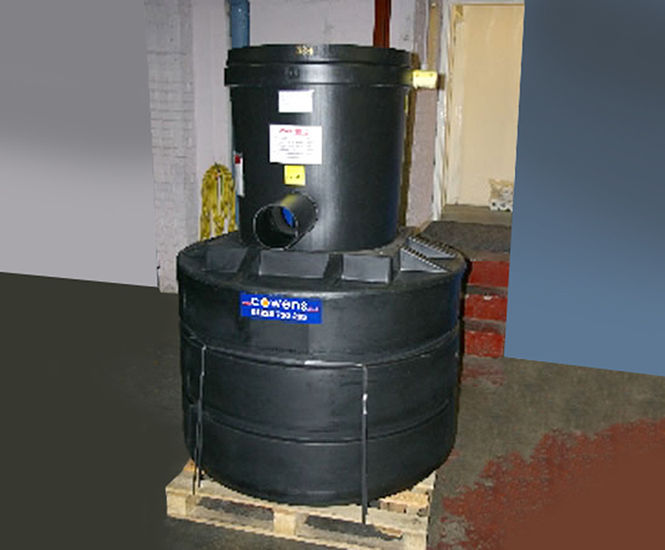
Cowens Class 1 By-pass range provides a high level of hydrocarbon removal at normal flow rates while higher flow rates by-pass the main chamber thus preventing contamination of increased flow.
Their unique vertical design dramatically reduces the tank foot print and therefore the civils excavation costs.
This separator is generally recommended for use in low risk areas such as car parks, where there frequent oil contamination of surface water.
As part of the Environment Agencies Pollution Prevention Guidelines PPG3 and current British and European Standards BS EN 858, bypass oil and silt separators have become a necessity on most car parking and light road schemes, and are equally important as up-stream defences for storm water storage systems.
Bypass separators are designed to treat over 99% of all rainfall events in the U.K. and Europe. All separators must be tested and approved to the European Standard and feature on the Environment Agencies separator provider report. They must prove under test that they separate and retain any hydrocarbon in rainwater flows up to 6.5mm per hour. Rainfall above this is extremely rare even in recent flood conditions in the UK.
The given application for by-pass separators in PPG3 is for use in areas where there is low risk of oil (hydrocarbons) polluting an area - including car parks, small road schemes and lightly contaminated hardstanding areas.
Benefits
- Europe's smallest approved separator
- huge savings on installation
- lightweight
- robust and Durable on site
- impact Resistant
- extremely low maintenance
- cost engineering allows competitive pricing
- the existing Bypass separator designs in the industry were very antiquated, many having been around for over 30 years.