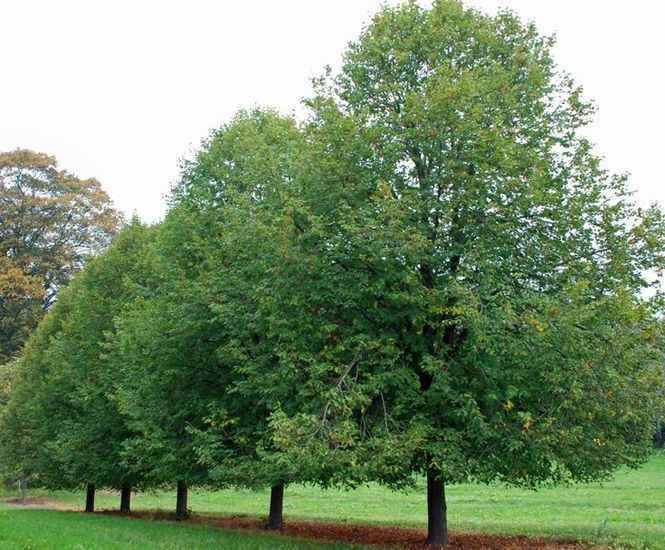
t. platyphyllos; t. platyphyllos 'Aurea'; t. platyphyllos 'Laciniata'; t. platyphyllos 'Örebro'; t. platyphyllos 'Prince's Street'; t. platyphyllos 'Rubra'. Habit Large tree with impressive, very low crown, 30-40 m tall, 15-25 m wide; initially conical or wide-ovoid, later round; main branches upright, twigs arching-upright to horizontal, loosely
Large tree with impressive, very low crown, 30-40 m tall, 15-25 m wide; initially conical or wide-ovoid, later round; main branches upright, twigs arching-upright to horizontal, loosely overhanging at the bottom; fast-growing in the first 10-20 years, 40-60 cm a year, then increasingly slow, 15-25 cm a year.
Origin
Central Europe
Flower
Yellow, umbel-like inflorescences 3 to 5, sweet scent; June/July, bee and insects friendly, flowers appears at the age 15 to 20 years.
Fruit
Ovoid nuts, grey to green, felty-like hair.
Leaves
Early shoots (before T. cordata); cordate, large, pale dark green, in October strong yellow.
Roots
Cordate to deep, sensitive to paving, covering and soil compaction.
Demands
Sun to semi-shade; likes warmth, sensitive to late frost, but frost hardy; sensitive to heat/drought, otherwise leaves falling early; good in cool or Tilia mild areas with high humidity and moist soil; very demanding, tolerant of wind.
Soil
Nutritious, deep soil, best loamy, slightly acidic to alkaline, likes chalk; sensitive to salt.
Note
Takes well to cutting and regenerate well; best for tall tree hedges; cut in July to August; an ideal park tree for avenues, arcades and boxe forms.