

Main features
Height |
25 to 30 m |
Width |
20 m |
Flower colour |
Yellow |
Flowering Time |
June. July |
Light/shadow demands |
Sun |
pH-Value |
slightly alkaline, neutral, alkaline, slightly acidic |
Soil |
Loamy |
Characteristics
Habit |
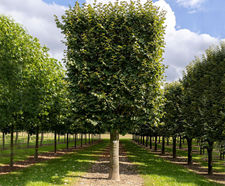
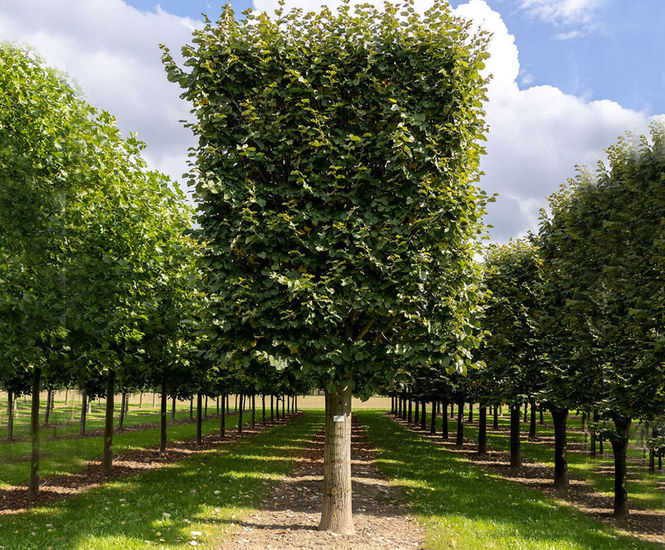
An impressive, large tree, 25-30 m tall, to 20 m wide; from the start broadly conical or ovoid, soon round crown; main branches stiffly upright, twigs diagonally rising to horizontal, hardly or not overhanging; 40-50 cm a year, fast-growing |
Crown |
Rund, broad ovoid, broad conical, upright rund, broad ovoid, broad conical, upright |
Blossom |
White-yellow cymes, (end of) July; very fragrant; the last flowers of the useful limes |
Leaves |
Broadly cordate, asymmetrical; shoots whitish grey, then dull green on top, white tomentose underneath; staying green a long time, pale yellow from November |
Fruits |
Inconspicuous |
Roots |
Deep with strong lateral roots, sensitive to soil compaction |
Demands |
Sun; tolerates heat, likes warmth, frost hardy, occasional early frost damage; good for urban areas |
Soil |
Moderately dry to fresh areas, slightly acidic to very alkaline; nutritious, loamy soil |
Note |
Contrary to some rumours, insects are not poisoned by the honey of T. tomentosa. A study by Prof. Dr. Surholt showed that a decrease in nectar-providing plants leads to a lack of food for bees. The late-flowering T. tomentosa is an important source of food for insects, but too many insects compete for the same source when only one is available far and wide. Hence, numerous bumble-bees and some bees die of starvation under this lime |
Hardiness Zone |
Zone 4 Also see chapter on topiary plants |
Bee pasture / nectar |
Yes |
Synonyms |
T. argentea |