

- Services
- Wildflower seeding
- Client
- EcoGreenRoofs
- Consultant
- Architect: Glenn Howells
Context
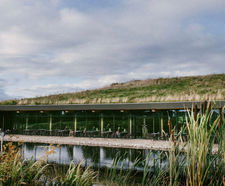
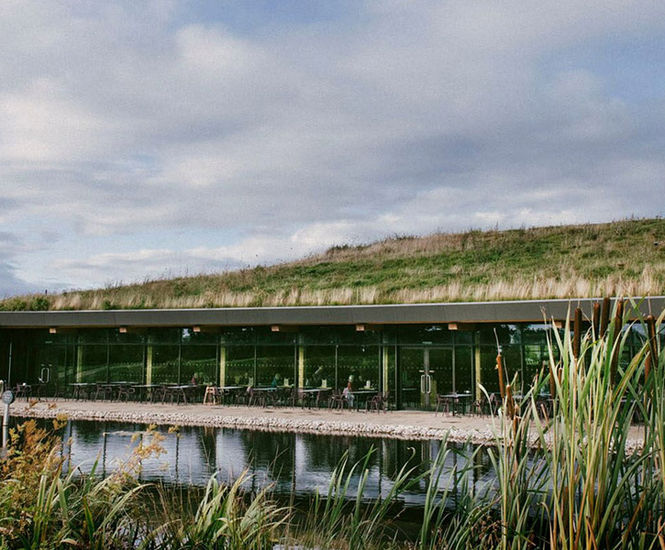
Wildflower hydroseeding completed by RMB on a state-of-the-art green roof project covering 4,000m2 at Gloucester Gateway has helped to disguise the new service station as part of the landscape.
Background
The new motorway services on the M5 Southbound wasn't to be constructed in a typical design. A leap forward in service station engineering and design, the clients aimed to do something different from the average motorway services, no franchises, no big brands, but instead a “sense of where you are – a sense of place”.
Challenges
Due to the weight-loading capacity of the green roof, which only allowed for a thin substrate layer, hydroseeding using a 100% wood fibre hydro-mulch at a higher application rate of 3,500kg per ha provided an ideal growing environment for germination and development of the new vegetation.
Due to the lack of topsoil and the free-draining properties of the substrate, drought-like conditions were a concern and a drip-feed irritation system was installed to counter the risk. Using very little water, the area retains sufficient moisture to support the wild flora whilst also conserving precious water.
Other challenges included restricted access to the roofs and working from height, both overcome by using staff experienced in this type of work environment and also wearing the specialist safety equipment needed.
Solution
The 4,000m2 state-of-the-art green roof project was designed to disguise the new service station as a part of the landscape. Being a greenfield site, flanked by the Cotswolds on one side and Robinswood Hill on the other, great care was required to minimise the environmental impact and blend the building into the surrounding countryside. A bespoke perennial wildflower seed mix was therefore used that not only would match the native species but not grow excessively, keeping maintenance of the roof to a minimum.
Outcome
After the hydroseeding of the main visitors centre and fuel station, both areas have established excellently, containing nectar-rich species of wildflowers such as Self Heal, Yellow Rattle, Birdsfoot Trefoil and Meadow Sweet that support pollinating insects such as bees and also preserve the heritage of UK-native wild flora habitats.