



- Product name
- Atria+
- Finish
- Textured
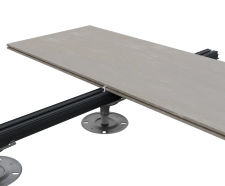
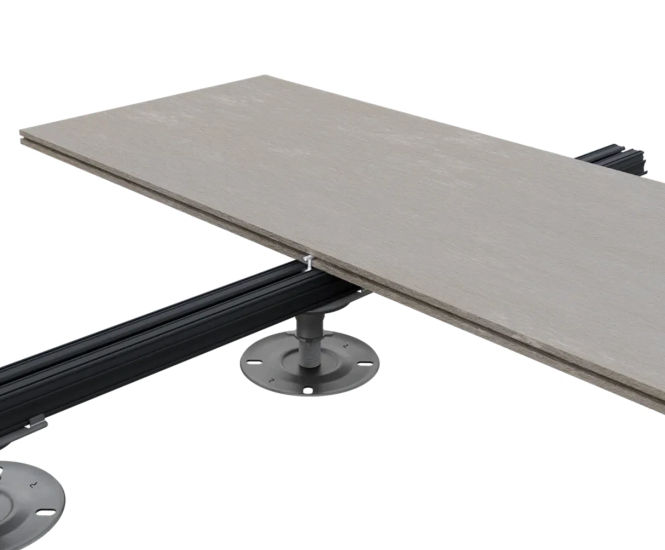
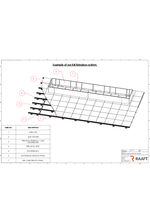
Atria+ anti wind-uplift porcelain tiles have an unobtrusive groove cut into the sides that allows them to be clipped down using stainless steel anti-uplift clips. Atria+ used with Raaft aluminium joists will resist uplift in extreme windspeeds.
Raaft's Atria® porcelain tiles are produced in highly-authentic wood, stone, concrete and terrazzo effect finishes in a range of sizes that can be used to create uniform or random patterns.
Porcelain is a highly-durable, anti-slip surface that is resistant to scratching, staining and frost damage. As a Class A1 fire-rated product it also meets the UK’s Building (Amendment) Regulations 2018.
About wind uplift
What is wind uplift?
When air currents pass over a flat surface they create pockets of low air pressure and because the air pressure underneath the surface is higher, the surface is pushed upwards towards the lower pressure area. This is the principle behind aircraft wings.
How does it affect terraces?
On a roof deck, where the deck surface is loose-laid into a supporting frame, wind uplift can result in the surface lifting from the frame and becoming unstable or damaged. In more extreme conditions, the surface components can cause damage to surrounding structures and even injury to people.
What factors affect wind uplift pressure?
Building height, location and shape
Surrounding buildings and terrain
Parapet height and permeability
Wind direction and speed
What Standards need to be met?
Products that claim to be resistant to wind uplift must meet BS EN 1991-1-4: 2005 + + A1:2010 Eurocode 1 regulations, so Raaft put its tiles and clips to the test.
Atria+ porcelain tiles testing
Atria+ porcelain tiles were tested using adhesives and the clip-down method.
Fixing porcelain tiles to joists using adhesives
Atria+ porcelain tiles were tested using a Formoa 017FE hybrid polymer adhesive to hold them down to the aluminium joists that run beneath.
Being a fast-setting adhesive, Raaft was able to run the tests soon after they were adhered to the joists. They achieved excellent wind-uplift resistance.
The disadvantages of using an adhesive to hold the tiles down is that it makes replacing or removing tiles difficult.
Fixing porcelain tiles to joists using Atria+ stainless steel clips
Tests were conducted by independent testers BRE Group.
Two clips per tile were used to fix 600 x 600mm, 20mm-thick Atria+ porcelain tiles to the Raaft® aluminium joists. Tests were also carried out on the pedestal joist connectors.
An uplift pressure of 4536N/m2 was applied and, as the products were tested to destruction, no partial safety factors were used.
Test results
BS EN 14437:2004 - assessment of the wind uplift of roofing tiles
Stainless steel clips: 738.1N
Formoa 017FE Hybrid Polymer Adhesive: 2943N
Other Raaft wind uplift-resistant systems
The clip-and-groove wind uplift resistance system is also featured on Raaft® Terrafina composite wood-polymer decking, which is a durable, attractive, Class B fire-rated alternative to traditional timber decking.