

- Form
- Seeds
- Suitability
- Clay soils
- Colours
- Purple
- Red
- White
- Yellow
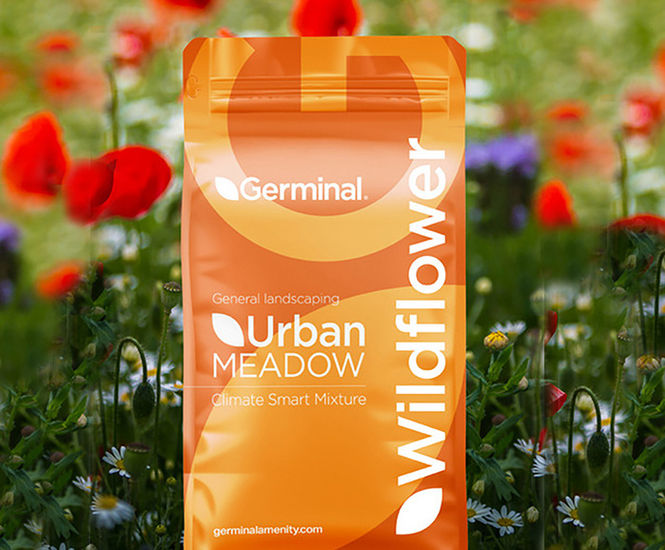
This mixture, designed for pollinators, includes ornamental, annual, and perennial species to provide pollen-rich flowers for bees, butterflies, and other insects from spring to early autumn. On heavy clay soils, protect emerging plants from slugs. It works well near habitat mixtures like WFG2 Flowering Meadow. The mix includes native and non-native annuals like Corn Poppy, Evening Primrose and Phacelia.
Mixture
5.0% |
Purple coneflower |
(Echinacea) |
|
5.0% |
Rudbeckia |
(Rudbeckia Hirta) |
|
4.0% |
Lance-leaved Coreopsis |
(Coreopsis lanceolata) |
|
2.0% |
Cosmos "Sensation Mix" |
(Cosmos "sensation mix") |
|
3.0% |
Hyssop |
(Hyssopus officinalis) |
|
2.0% |
Smooth Blue Aster |
(Symphyotrichum laeve) |
|
2.0% |
Foxglove |
(Digitalis purpurea) |
|
0.5% |
Dotted Gayfeather |
(Liatris punctata) |
|
10.0% |
Oxeye Daisy |
(Leucanthemum vulgare) |
|
10.0% |
Corn Poppy |
(Papaver rhoeas) |
|
7.0% |
Common Vetch |
(Vicia sativa) |
|
5.0% |
Yarrow |
(Achillea millefolium) |
|
5.0% |
White Clover |
(Trifolium repens) |
|
9.5% |
Birdsfoot Trefoil |
(Lotus corniculatus) |
|
7.0% |
Calendula Art Shades |
(Calendula art shades) |
|
5.0% |
Nigella Oxford Blue |
(Nigella oxford blue) |
|
11.0% |
Corncockle |
(Agrostemma githago) |
|
2.0% |
Evening Primrose |
(Oenothera biennis) |
|
2.0% |
Oxeye Sunflower |
(Heliopsis helianthoides) |
|
2.0% |
Red Clover |
(Trifolium pratense) |
|
1.0% |
Phacelia |
(Phacelia tanacetifolia) |
Usage guide
Sowing Rate |
1-5 g/m2 |
||||
|---|---|---|---|---|---|
Sowing Time |
March - October |
||||
Sowing Depth |
10 mm |
||||
Sowing Instructions |
Create a fine friable seedbed down to 150 mm in depth. Carry out two equal sowings at right angles to each other and diagonally to main axis. Broadcast manually or use seed drill, rake level and roll. Ensure good seed to soil contact. |
||||
Maintenance |
|
||||