
- Sector
- Commercial
- Project type
- New build
- Services provided
- Site survey
- Planning advice
- Design
- Product / system manufacture
- Product / system supply
- Installation
- Year completed
- 2025
- Project location
- London
- Products used
- SDS Aqua-Swirl® AS-2 Pollutant Separation System
- SDS Aqua-Filter™ AF-X.1 Media-based Filtration System
Overview
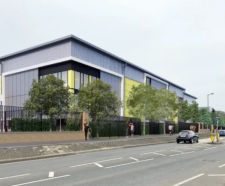
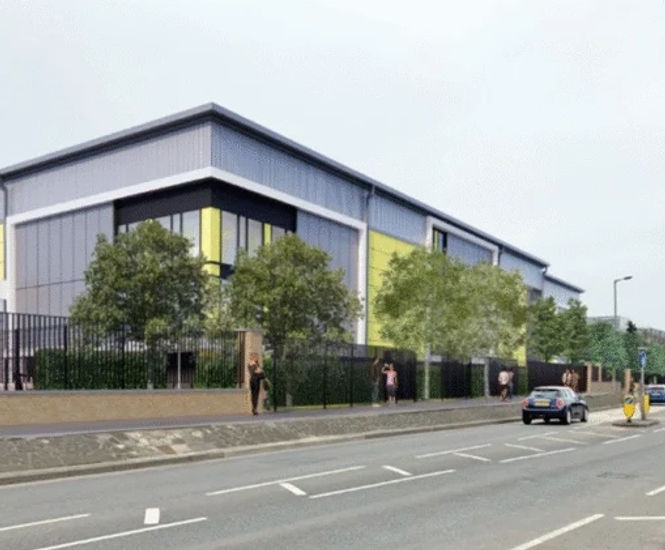
The Thames Riverside development is a £26 million business park on the south bank of the River Thames in Staines, on a 5.65-acre site along the Causeway. The mixed-use scheme combines a 64,000 sq ft "Big Yellow" self-storage facility, a six-unit, 6,000 sq ft Innovation Centre, and nine industrial units totalling 100,000 sq ft, set within an area that mixes large commercial buildings, office units, DIY stores and dense residential neighbourhoods. SDS was brought in to design surface water treatment for the site, working alongside principal contractor MCS Build and Thamesbridge Construction.
The Challenge
The site sits above principal aquifers within a groundwater Source Protection Zone (SPZ), and previously hosted a gas works decommissioned in 1986. A gas holder used for natural gas storage remained on site until it was demolished in 2014, alongside the removal of overspill car parking that had served the Centrica (formerly British Gas) headquarters opposite. Earlier demolition works uncovered residual hydrocarbon contamination in the shallow soils. A quantitative risk assessment found elevated leachate hydrocarbon concentrations but concluded the material did not pose a significant risk to groundwater and could safely remain in situ and undisturbed, provided surface water was managed carefully.
This left SDS with a clear brief: prevent stormwater runoff from mobilising surface and underground contaminants and carrying them into local waterbodies, while ensuring the new drainage scheme met a demanding set of regulatory requirements. Following 2016 remedial works, a Land Quality Statement and Vapour Detailed Quantitative Risk Assessment prepared by Campbell Reith in December 2021 had identified a need for soil remediation in one specific area, and the scheme also had to address the site's location in Flood Zone 2, its position within the groundwater SPZ, and compliance with Hazardous Substance Regulations.
The Solution
SDS designed a SuDS strategy combining its Aqua-Swirl® and Aqua-Filter™ treatment systems with underground attenuation tanks and flow control, supported by a planned maintenance schedule. The new drainage system was sized to accommodate a 1-in-100-year storm event plus a 40% allowance for climate change, and was designed to accept siphonic drainage from the main building's roof.
This replaced the site's previous drainage arrangement, a gravity-fed, gravel-filled interception trench running across the top of the parking area. The works also required the removal of an existing concrete interceptor drainage box and the safe disposal of the fluids it contained, with its outfall pipe reconnected into the new surface drainage system and any redundant pipework removed.
To gain approval from the Local Drainage Authority, the design satisfied the SuDS hierarchy and complied with the National Non-Statutory Technical Standards for SuDS, the NPPF, and the Ministerial Statement on SuDS, as well as the latest versions of Sewers for Adoption and BS EN 752 (Drains and Sewer Systems Outside Buildings).
Results
The treatment systems now ensure that surface water leaving the site poses no risk of pollution to groundwater or the River Thames, despite the legacy contamination retained beneath it. Soft landscaping across the site retains and enhances the green buffer along the riverbank, reinforcing its naturalistic edge, while new buildings and landscaping facing the Causeway have improved the character of one of the busiest routes in and out of Staines town centre.
Testimonial
“Big Yellow at Staines is the newest of over one hundred sites located in key conurbations around the UK. In keeping with the company’s positive approach to sustainability the impact of the Staines site on the local environment and in particular any natural waterbodies was a fundamental consideration in the specification of a suitable stormwater treatment solution. The system we provided has enabled them to treat specific ground-based contaminants ensuring there is no risk of pollution.”
Ben White, Specification Manger, SDS