

- Sector
- Housing, private
- Project type
- Refurbishment
- Services provided
- Product / system manufacture
- Product / system supply
- Installation
- Year completed
- 2026
- Project location
- London
- Client
- Lant House
- Products used
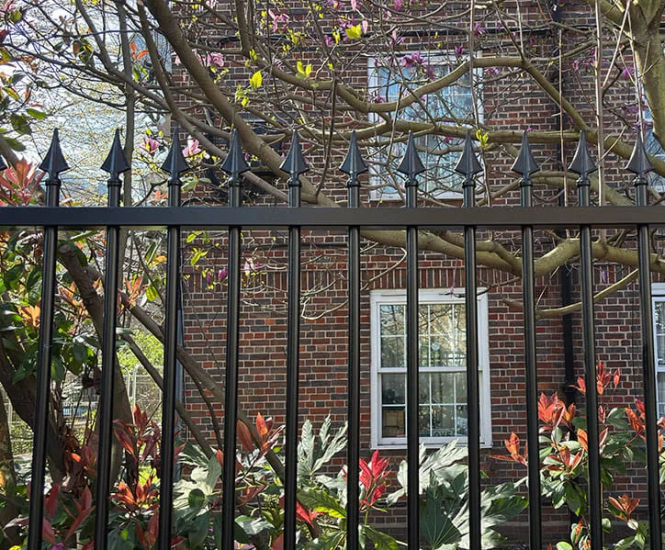
- Barbican Imperial vertical bar railings with L finials
Lant House Garden is a communal green space serving residents of a block of flats in London. The garden features established trees, generous planting beds, and a layout intended to provide a practical outdoor amenity. Despite these qualities, the space had been neglected for a number of years and was largely avoided by the people it was meant to serve.
The problem
The primary driver of the garden's decline was persistent anti-social behaviour. The site had no secure boundary, allowing unauthorised access from outside the community. This resulted in regular dog fouling, trespassing, and misuse of the space. Ground-floor residents reported being unable to open their windows due to security concerns, and some instances of theft through open windows were recorded.
Resident footfall in the garden dropped significantly, even in warmer months. The space did not feel safe or private, and without a solution to the boundary issue, there was little prospect of that changing.
Organising the community response
Jo Hardwick, a flat owner at Lant House, became a focal point for residents seeking to address the problem. Over time she became chair of the Lant and Bittern Streets Tenants and Residents Association and took on the task of coordinating a funding application on behalf of the community.
The block had no dedicated budget for major improvements, so external funding was required. Hardwick approached local Liberal Democrat Councillors, and secured a grant from the Community Infrastructure Levy, a fund drawn from developer contributions and allocated to community benefit projects.
Product Selection
The association obtained multiple quotes before selecting Jacksons Fencing to supply and install the boundary solution. Hardwick's father, a former blacksmith, had recommended Jacksons specifically based on their reputation for quality and longevity.
The product chosen was the Barbican Imperial vertical bar railing with finials. Key factors in the decision included the structural strength of the railing, its decorative finish, and the open design which maintains visibility and allows light into the garden. Matching lockable access gates were installed at both entry points, with access restricted to residents.
The railings were supplied with a hot-dip galvanised and polyester powder-coated finish, backed by a 25-year Service Life Guarantee.
Results
Following installation, residents reported an immediate improvement in how the space felt. Ground-floor residents were able to open their windows again. Use of the garden for relaxation and socialising increased, with people of different ages beginning to return to the space.
The transformation attracted external interest. The garden was entered through the Bankside Open Spaces Trust into the London in Bloom competition in the 'It's Your Neighbourhood' category. Community groups and charities with an interest in urban green spaces also took notice.
The project is situated within the Liberty of the Mint conservation area. The railings were noted for integrating well with the existing architecture and streetscape.
Looking Ahead
With a secure perimeter now in place, the residents' association regards the fencing project as a foundation for further improvements to the garden. The chair has stated that the goal is to develop the space into one that reflects the broader character of the community and can be used by residents across generations.