

- Sector
- Education
- Project type
- Refurbishment
- Services provided
- Planning advice
- Design
- Product / system manufacture
- Product / system supply
- Installation
- Project location
- South East England
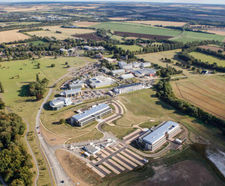
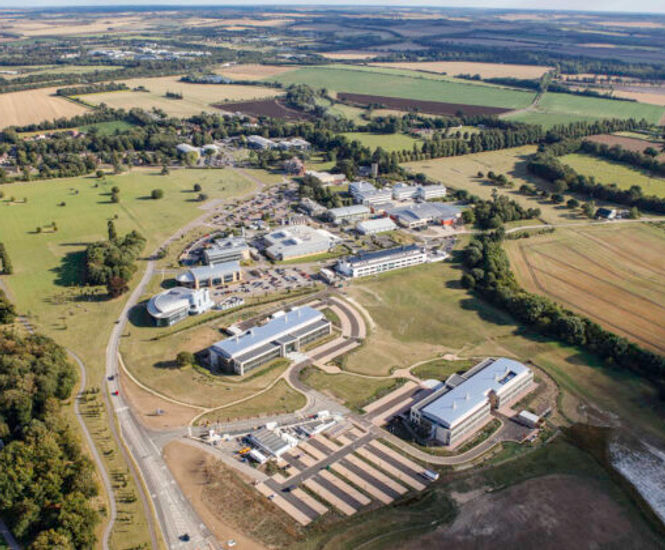
Babraham Research Campus, located within Green Belt land to the south-east of Cambridge, is one of the United Kingdom's foremost locations for bioscience. The Campus forms part of the wider Cambridgeshire Life Sciences Cluster and sits within the Oxford-Cambridge-London 'Golden Triangle' of research, development and innovation.
Established in 1998, the Campus provides companies with laboratory and office accommodation alongside access to world-class scientific facilities. It is home to more than 60 companies, employing 1,500 staff and supporting 300 academic researchers.
The latest phase of development - extending to approximately two-and-a-half hectares - is designed to strengthen the UK's and the Oxford-Cambridge Arc's position in the global life sciences sector. Beyond its economic significance, the development also delivers a range of environmental, social and health benefits, including:
A Biodiversity Net Gain of over 20%
A target BREEAM 'Excellent' rating
A projected reduction in carbon dioxide emissions of up to 40% - exceeding the minimum 10% planning requirement
The Challenge
SDS Infrastructure was appointed to deliver a comprehensive, integrated water management solution capable of addressing two challenges: the potential for flooding across the development site and the risk of seasonal water shortages.
The site's soil was found to have a very low infiltration capacity, rendering conventional soakaway drainage unsuitable. At the same time, the development needed to comply with strict planning policies which require drainage schemes to follow the hierarchy of drainage options set out in the National Planning Policy Framework's Planning Practice Guidance (NPPF PPG).
The solution was required to protect critical campus infrastructure from extreme rainfall events, including hard and soft landscaping, pedestrian walkways and cycleways, while also ensuring the development did not adversely affect the availability of water for protected and priority species in the surrounding environment.
The Approach
Following consultation with Anglian Water, the Environment Agency, the Lead Local Flood Authority and the Council's Sustainable Drainage Engineer, SDS Infrastructure designed and implemented a multi-component drainage strategy tailored to the site's specific constraints.
Surface Water Management
Permeable pavement was specified for all hardstanding areas to allow surface water to permeate through the pavement structure. Roof rainwater collection was integrated with an existing surface water connection to manage run-off from buildings. Flow restriction to greenfield runoff rates was achieved through attenuation, with an extension of an existing cellular storage tank providing capacity to accommodate a 1-in-100-year storm return period, including a 40% allowance for climate change.
Rainwater Harvesting
During the design phase, SDS identified limitations in the original tank specification - which had been designed primarily for surface water attenuation with an additional sump for rainwater harvesting. Rather than proceeding with a solution that fell short of the site's potential, SDS presented the client with a range of alternative design options that maximised water reuse whilst fully preserving the attenuation performance required by the drainage hierarchy.
The revised approach enabled the Campus to maintain an uninterrupted supply of harvested rainwater for toilet flushing and for grounds irrigation and maintenance - a particular benefit during prolonged dry periods when rainfall is absent.
SDS Products Deployed
Product |
Description |
SDS GEOlight® Tank |
Geocellular crate-based surface water storage, attenuation and infiltration system |
SDS Weholite Flow Control |
HDPE pipe- and panel-based surface and waste-water flow control chamber |
SDS Weholite Manhole |
HDPE pipe- and panel-based manhole chamber and access shaft |
SDS Weholite Pumping Station |
HDPE pipe- and panel-based surface water and wastewater pumping system |
SDS Aqua-Swirl® |
HDPE surface water pollutant separation system |
SDS Intellistorm® Rainwater Management |
Smart rainwater recycling and attenuation system |
SDS SYMBiotIC™ |
Remote device monitoring and control |
Results & Outcomes
The integrated water management system delivered by SDS Infrastructure has provided Babraham Research Campus with a resilient, sustainable and environmentally responsible drainage solution. Key outcomes include:
Uninterrupted surface water drainage protecting all campus infrastructure and public realm from extreme rainfall events
A continuous supply of harvested rainwater for toilet flushing and grounds irrigation, reducing potable water demand and supporting campus sustainability targets
Full compliance with South Cambridgeshire Local Plan policies CC/7 and CC/9, and adherence to the NPPF PPG drainage hierarchy
A demonstrated Biodiversity Net Gain of 32% - more than three times the mandatory requirement.
No significant adverse impact on European protected species (bats, great crested newts and otters) or priority species such as water voles
A development on track to achieve BREEAM 'Excellent' certification with up to a 40% reduction in carbon dioxide emissions
By proactively identifying shortcomings in the original design brief and offering value-engineered alternatives, SDS Infrastructure delivered a solution that exceeded both the client's expectations and the regulatory requirements - providing Babraham Research Campus with a water management system fit for a globally significant science and innovation hub.