What makes a public space work well? We usually think about how it serves people. Yet the spaces that thrive serve an expanded biodiverse community, including bees in our gardens, the birds nesting in our trees, and the countless species sharing our cities. Street furniture is evolving to reflect this dual responsibility.
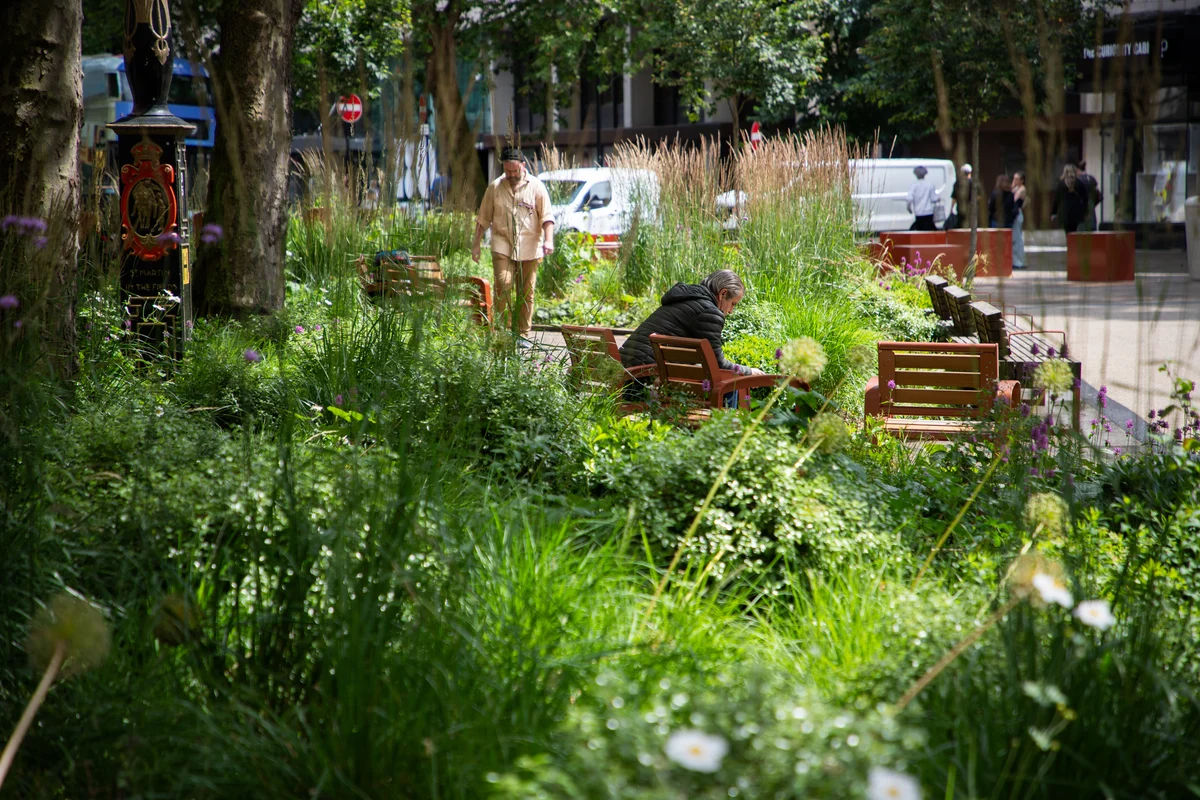
How the right street furniture choices can support local wildlife
What was once simply functional or decorative now represents an opportunity to create habitat, provide food sources, and support wildlife corridors from within our urban landscape.
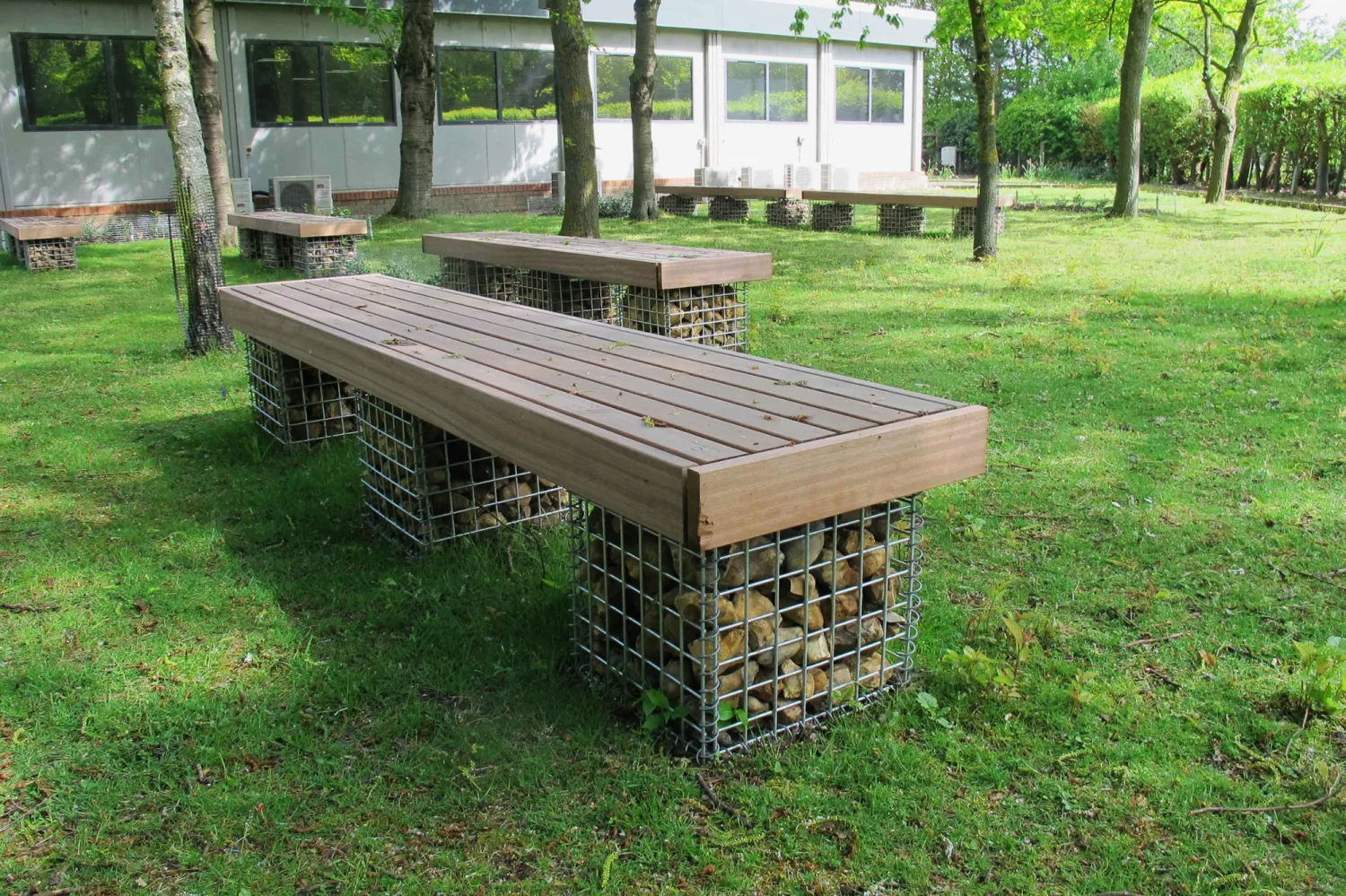
Elements benches with gabion supports at Stanway Quarry
A welcome home for the smallest neighbours
Furniture that supports biodiversity offers a practical nature-based solution for landscape architects and planners. But what does this look like in practice? One compelling example is the Elements bench with gabion basket supports at Stanway Quarry in Colchester. The eleven distinct 2.45m long benches are arranged linearly between the trees. Anchored by gabion baskets filled with the quarry’s own aggregate, stability is assured without invasive concrete foundations. Situated within a woodland copse and intermingled with new hedge planting, this biodiversity-friendly arrangement deftly contrasts the soft verticality of the trees with the hard, stacked horizontality of the site-sourced stone.
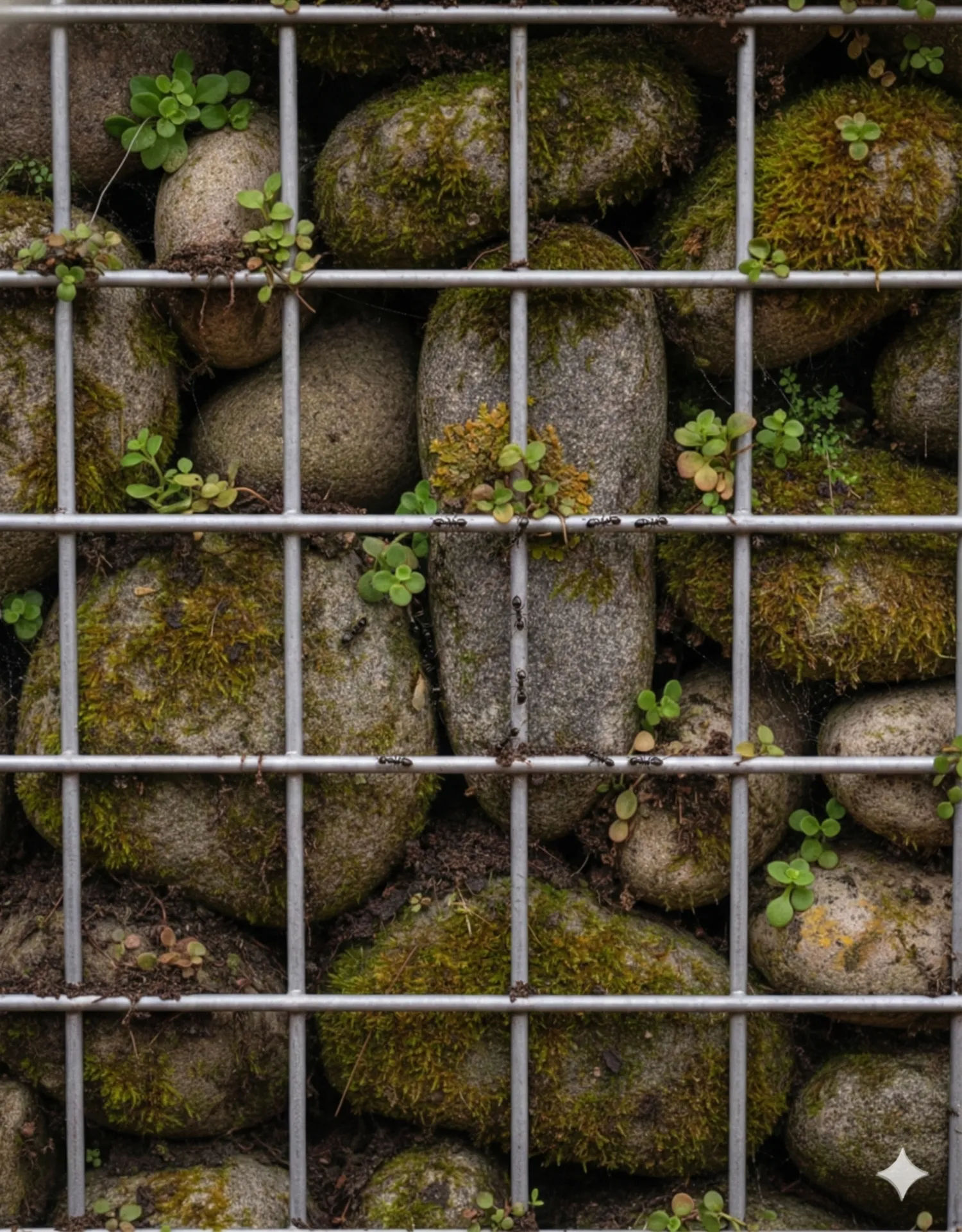
Biodiversity gabion baskets
Within the gabion mesh, microhabitats arise, their crevices offering the cool, dark refuge that native insects rely upon. Ageing enhances these structures, bringing moss to shaded surfaces and webs to protected corners, and gradually a community gathers itself for the job of life. This approach to multi-purpose outdoor furniture also contributes to Biodiversity Net Gain, the requirement now embedded in UK planning policy.
Meeting BNG targets doesn’t require grand gestures—it’s often about the small interventions.
Wall-tops and ledges, for example, serve as waypoints for urban birds: resting spots during migration, vantage points for territorial song, and platforms for seed dispersal. For developers facing the new mandatory 10% BNG target, these furniture integrations satisfy planning conditions without sacrificing usable square footage.
As these principles become standard practice, opportunities exist for further adaptations: integrated swift boxes within vertical surfaces for nesting, or textured surfaces that encourage lichen growth while giving climbing insects the traction they require. Furniture can easily enhance what it already does for people, adding layers of ecological value that grow over time as communities establish and mature. While ground-level interventions like Stanway Quarry demonstrate these principles, biodiversity design works at any elevation.
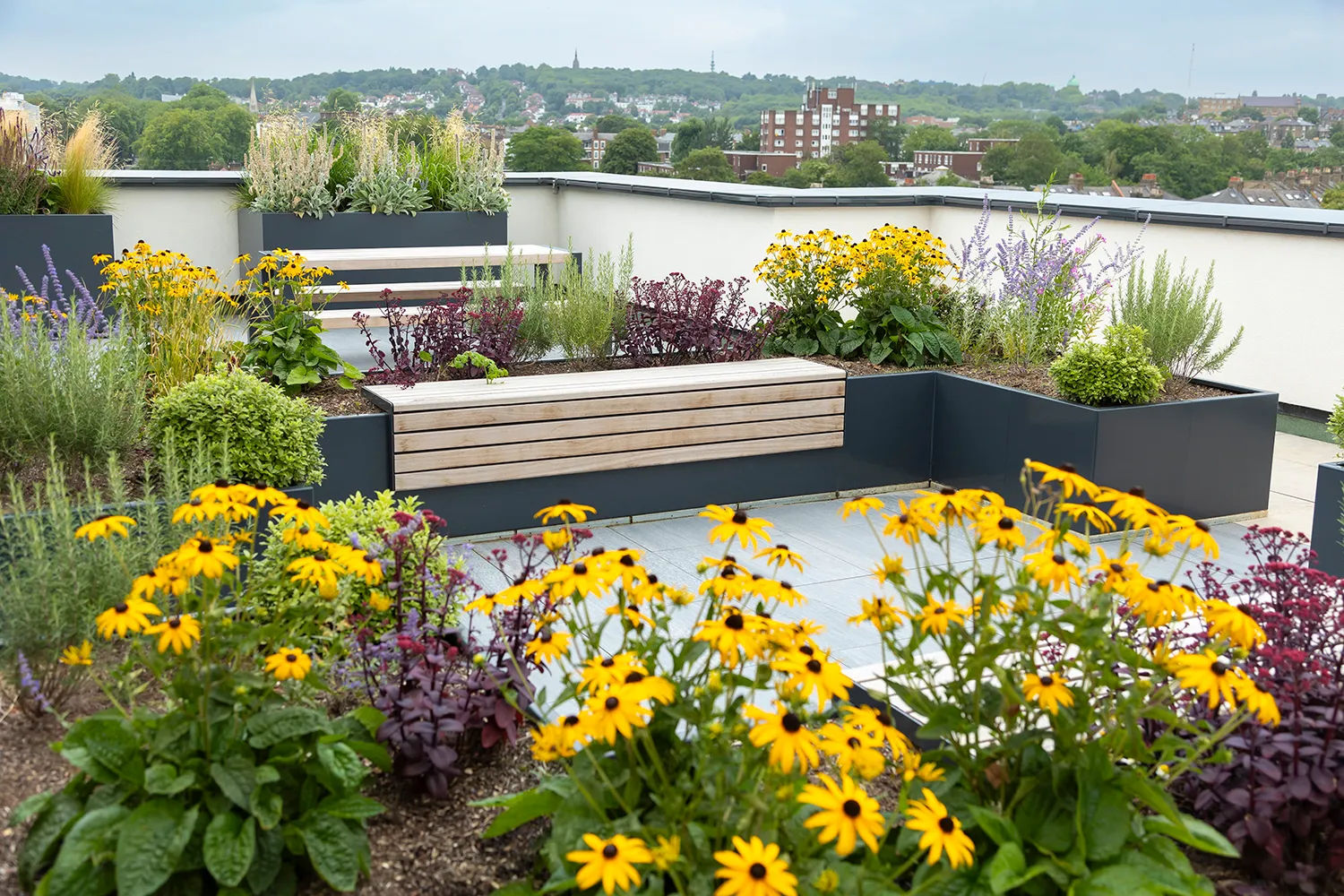
Furnitubes helped create a private rooftop terrace biophilic sanctuary at Highgate Road
The gift of a buzz, seven storeys high
The convenience of Furnitubes’ modularity in Highgate Road, Kentish Town, helped create a private rooftop terrace biophilic sanctuary, buzzing with bees and offering 47 residents a literal and figurative elevation above the city. By deploying a precision grid of AKRI Snap integrated seating planters, Thetford picnic tables, and Hollo benches, a community space over 80 feet above the busy A400 connecting Kentish Town to Highgate and Camden sprang into life. The design also creates a crisp architectural mirror of the building itself—achieving a bespoke aesthetic through cost-effective standardisation.
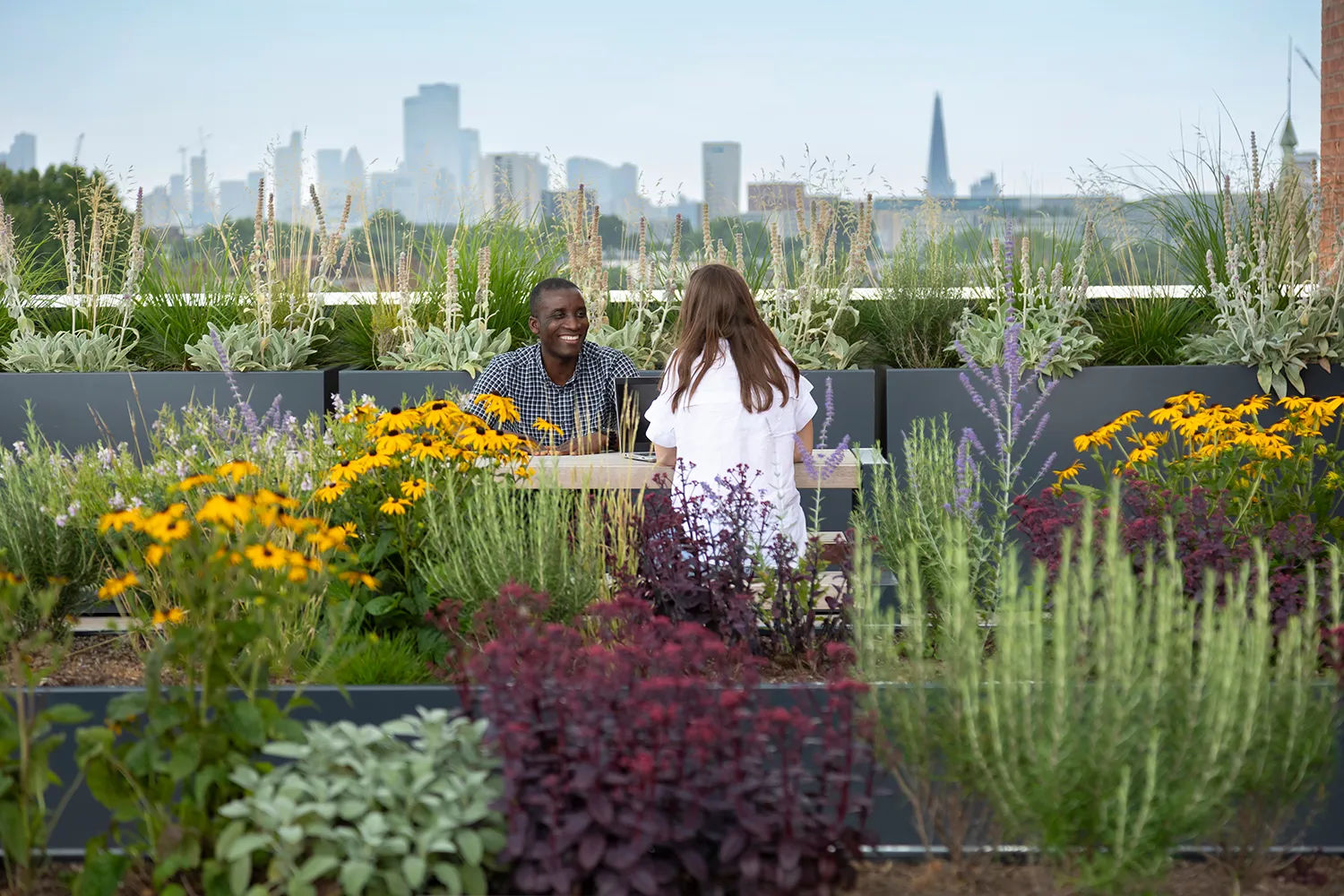
Residents find themselves immersed, with one describing the sensation as a “gift”
Timber benches are seamlessly inset into the steel walls, placing residents deep within the “horticultural envelope” rather than sitting beside it. All this floats on a non-penetrative substructure that safeguards the roof membrane. The success of this approach proves that high-level urban greening can address the weight loading engineering challenge on roof liners by being lightweight, yet still achieve resilience and uncompromising beauty.
Residents find themselves immersed, with one describing the sensation as a “gift”. The ferned planters already host thriving bee populations, creating that rare urban experience where city living and biodiversity harmonise naturally through biophilic design. The success of the Highgate Road rooftop community realm validates findings from the Royal Horticultural Society, showing that even small urban plantings can promote biodiversity when they feature native plants with staggered blooming periods. This ecological philosophy extends beyond the planting, shaping how the furniture itself integrates with the environment.
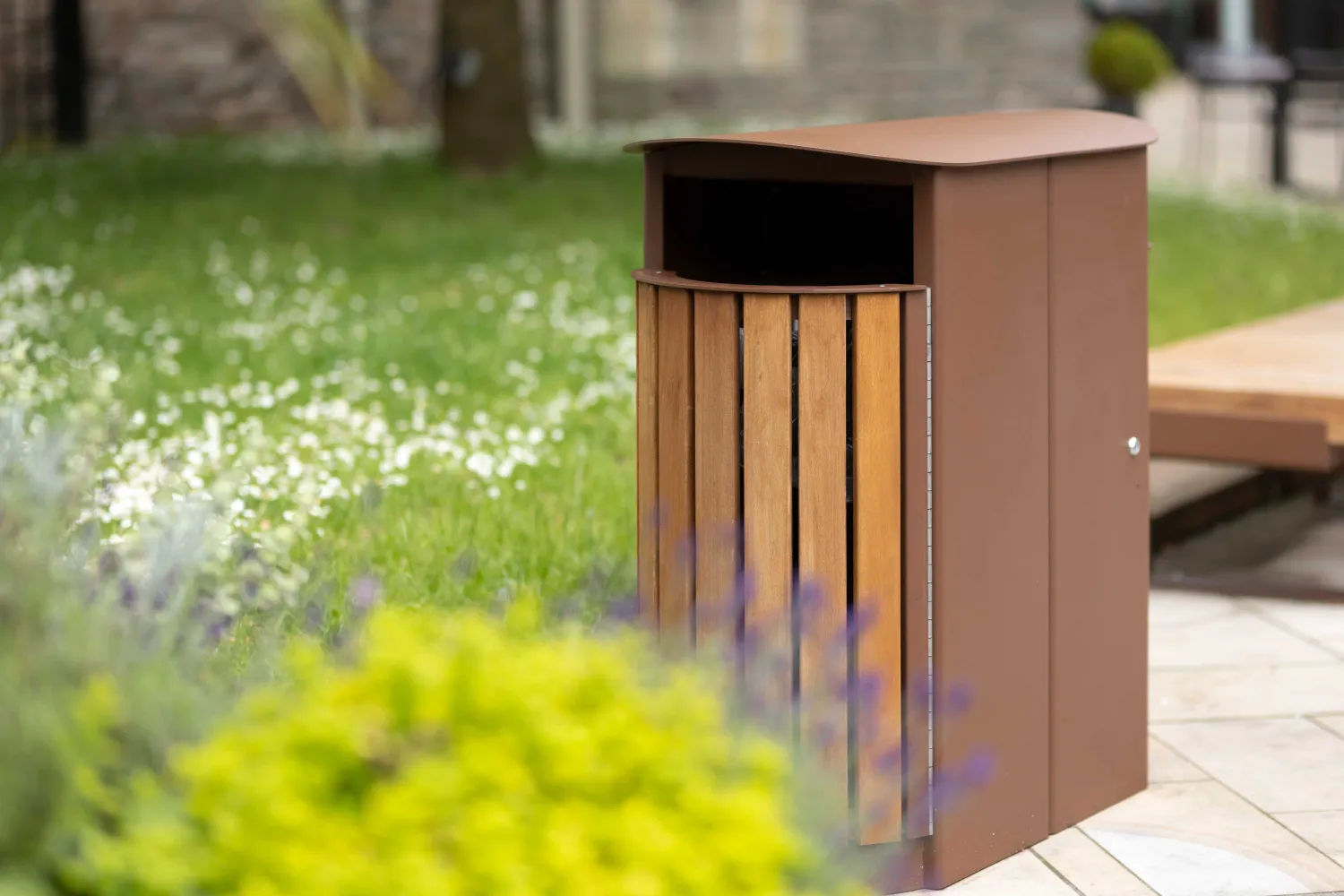
The technically artful camouflage is in harmony with the RailRoad range of seating and planters at the Quakers Friars site in Bristol
Fluent in the landscape’s language
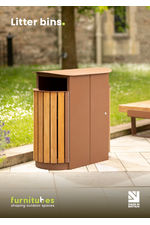
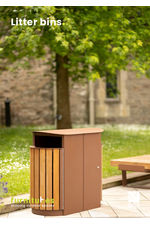
The Arca bins at Quaker Friars in Bristol understand their place within the natural world. This is achieved through material choices and forms that sit comfortably in a tree protection zone with brick walls framing a vibrant square of restaurants and boutiques. The Arca bins comprise modular Class 1 Iroko hardwood staves cladding a hot-dip galvanised, copper-brown powder-coated recycled steel chassis housing a Zintec zinc-coated steel liner. This technically artful camouflage is in harmony with the RailRoad range of seating and planters at the site.
Forms traversing the square create continuous ribbons of seating that invite conversation, contemplation, and community. Benches merge with blooming borders of foliage, form, and texture, acting as havens for biodiversity and invertebrate life, allowing nature to thrive whilst each element flows into the next.
In settings like this, realm furniture becomes part of the landscape’s vocabulary, meeting human needs whilst honouring the environmental conversations already taking place. This philosophy extends all the way to the materials themselves, where the next frontier is repurposing discarded materials into a self-sustaining ecosystem.