Walk through any well-designed public space and you might notice something curious... the bins seem to know exactly where you'll need them.
That's no accident.
Public litter bins occupy a peculiar position in an urban landscape. Present them thoughtfully and communities thrive; neglect their placement, and even the most beautiful spaces begin to fray at the edges.
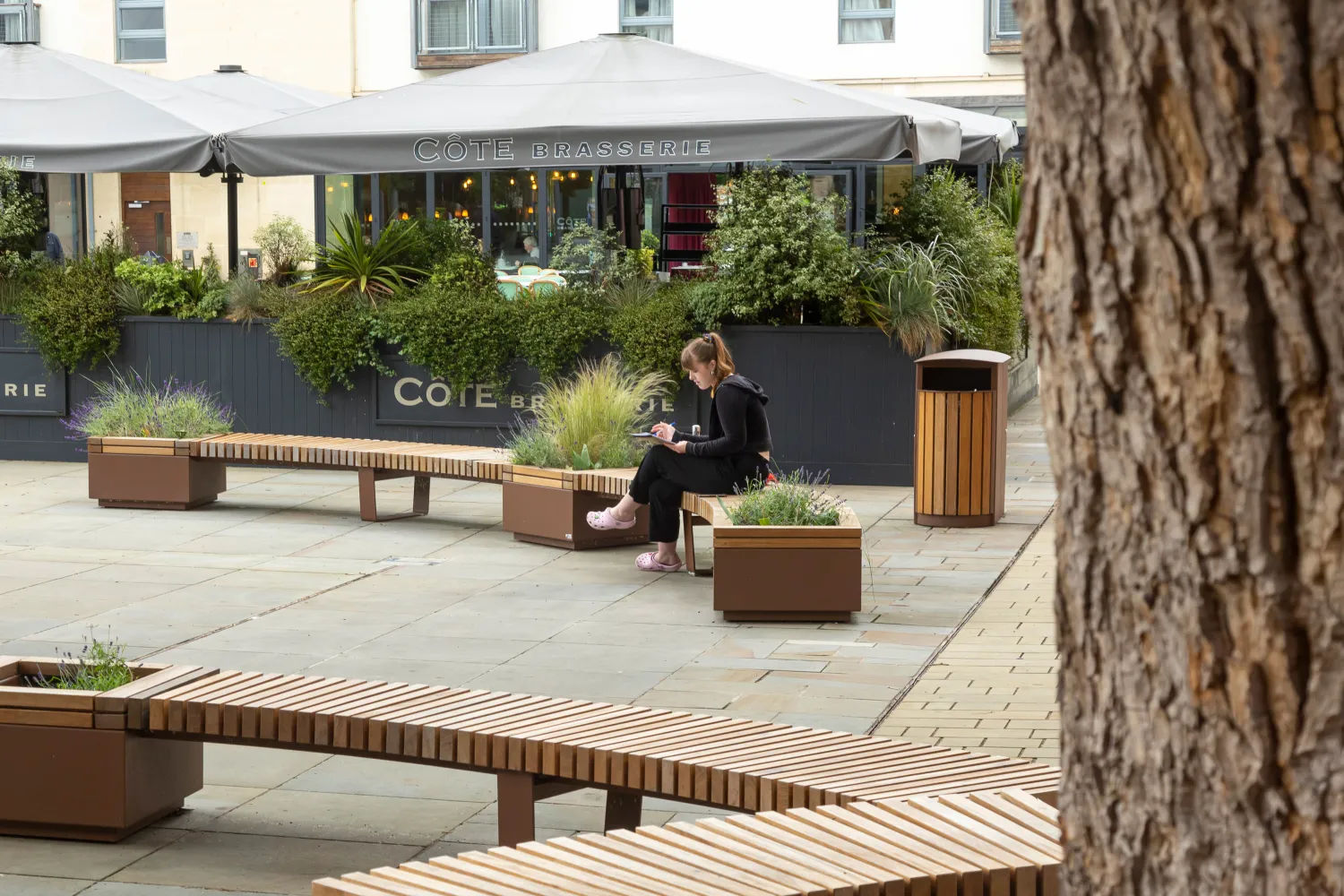
The best outdoor litter bins are useful and unobtrusive.
Grateful, not wasteful
The best outdoor litter bins are useful and unobtrusive. They appear precisely where people pause: at the junction where two paths meet, near the bench that catches afternoon sun, beside the playground gate where ice lolly wrappers accumulate on warm days.
This placement stems from understanding human behaviour in outdoor spaces. We move in patterns and we congregate in predictable spots. Strategic bin positioning anticipates these rhythms, making the right choice feel effortless.
For councils and estate managers, this translates into tangible benefits: cleaner spaces, reduced maintenance costs, and communities that take pride in their surroundings. When waste management feels intuitive, people engage with it naturally.
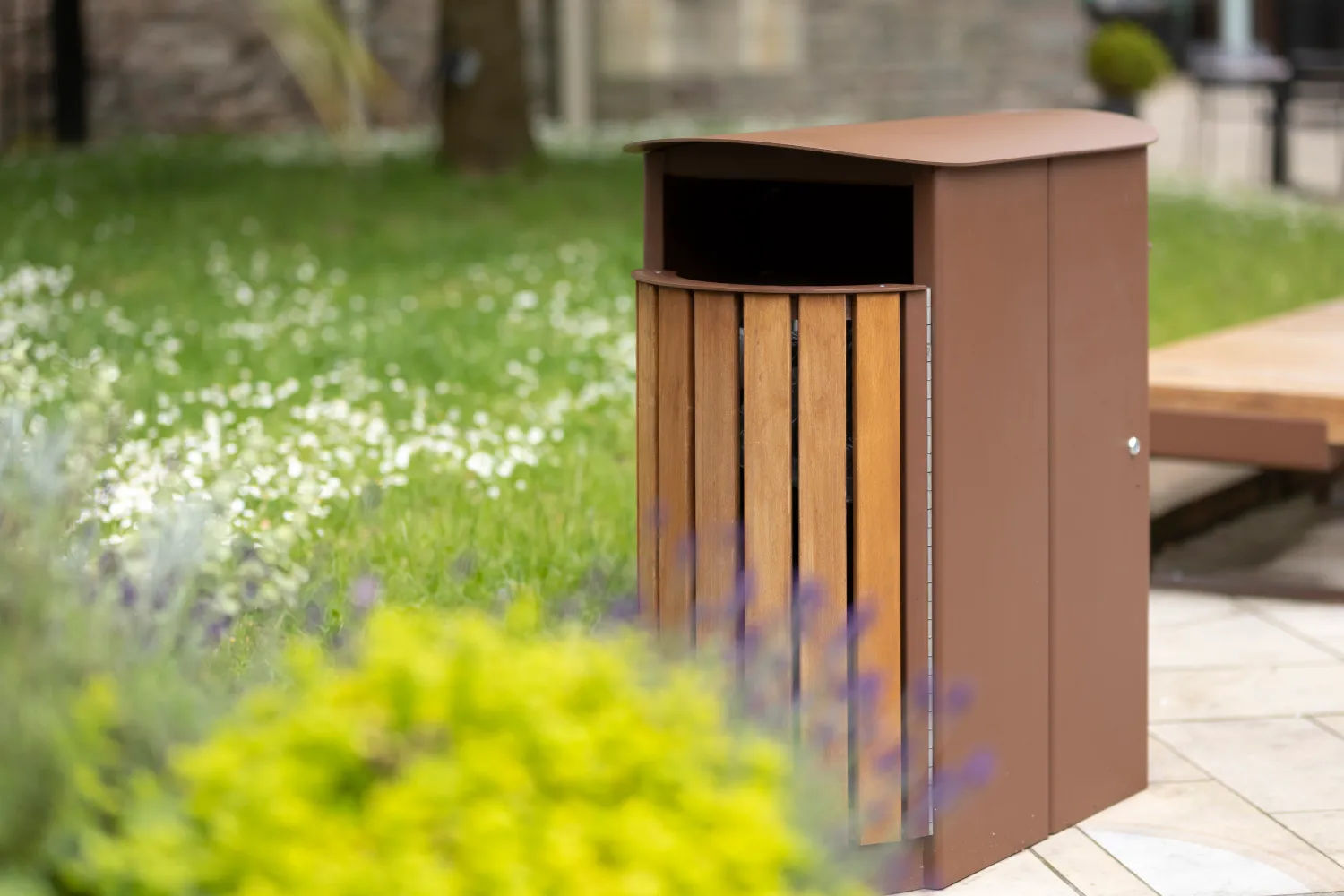
Street bins communicate through their presence.
The design dialogue
A well-designed litter bin signals that someone cares about this space, that it’s worth maintaining, that the community matters.
Materials speak volumes too, and the finish tells its own story. Powder-coated steel weathers British seasons with grace. Furnitubes developed powder coating protocols that create both beautiful surfaces and protective barriers capable of withstanding decades of British weather. The Triple Process approach (independently tested to 1,000 hours in German laboratories) ensures uniform coverage that resists UV rays, scratches, and fading. This durability means fewer replacements, reduced waste, and bins that maintain their dignity throughout their service life.
Dimensions matter as well. Commercial litter bins need sufficient capacity to serve their location without overwhelming the sightlines. A bin positioned near a café requires a different capacity than one serving a quiet residential street. Getting this balance right means fewer overflowing receptacles and more dignified public spaces.
Sustainable foundations
Modern waste management extends beyond collection. Effective public waste solutions consider the full lifecycle: manufacturing impact, longevity in service, maintenance requirements, and eventual recyclability.
Durable construction reduces replacement frequency. Simple, accessible designs facilitate maintenance. Modular components allow repairs without complete replacement. These considerations compound over decades, representing genuine stewardship of resources and budgets alike.
Furnitubes approaches this challenge through long-term thinking. Their outdoor litter bins combine robust materials with considered aesthetics, built to serve communities for generations.
Configuring for context
A riverside path presents different requirements than a town centre, just like a housing estate’s needs diverge from a business district’s patterns.
The new Zenith bin configurator acknowledges this diversity. Estate managers and councils can specify litter bins that respond to their unique context; adjusting capacity, finish, and features to suit local needs. This flexibility ensures that waste solutions enhance their environment.
Choose aperture styles that discourage misuse. Select finishes that complement existing street furniture. Determine capacity based on collection frequency and footfall. These calibrations transform generic bins into purposeful elements of the public realm.
Placement principles
Successful bin positioning follows observable patterns:
Visibility matters. People use bins they can see. Position them where they’re visually accessible without dominating sightlines.
Anticipate transitions. Place bins where people naturally move between activities: exiting parks, leaving cafés, finishing their commute.
Consider maintenance access. Collection crews need clear approaches. Bins tucked into awkward corners create operational headaches.
Cluster thoughtfully. In high-traffic areas, grouped bins for different waste streams work better than scattered singles.
Monitor and adapt. Even expert placement benefits from observation. Usage patterns reveal opportunities for refinement.
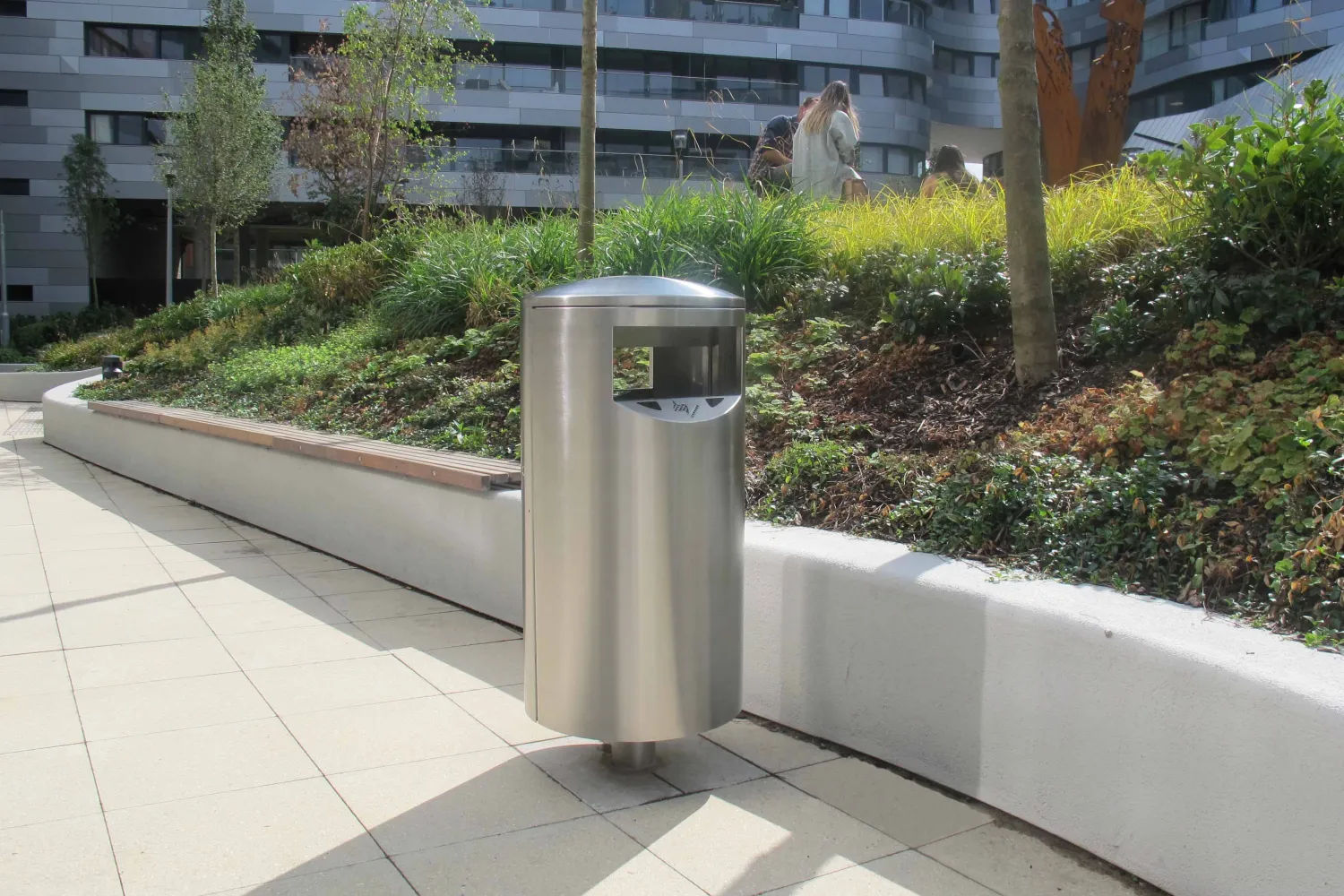
Clean public spaces invite community engagement.
The ripple effect
Clean public spaces invite community engagement. When outdoor waste management works seamlessly, people linger longer, children play more freely, and neighbours greet each other with greater ease.
This cascade of benefits flows from infrastructure that respects human behaviour. Public litter bins become invisible enablers, noticed in their absence, but influential in their presence.
For those charged with maintaining our shared spaces, this represents both responsibility and opportunity. Choose street bins that honour the communities they serve. Position them with care. Maintain them with diligence.
The results speak through cleaner streets, prouder residents, and spaces that welcome everyone.
Practical specifications
Modern commercial litter bins balance multiple demands. They must withstand weather, resist vandalism, facilitate maintenance, and contribute aesthetically to their setting.
Powder-coated steel offers excellent durability with minimal upkeep. Galvanised internal buckets simplify waste removal. Ground-fixing options range from surface-mounted to root-fixed, depending on substrate and security requirements.
Capacity typically ranges from 40 to 120 litres for standard applications, with larger volumes available for high-footfall locations. Aperture designs influence what goes in. Circular openings discourage bulky waste, hooded designs shed rain, and side slots suit cigarette disposal.
Looking ahead
Urban waste solutions continue evolving. Compacting mechanisms reduce collection frequency. Smart sensors alert teams when emptying is needed. Recycled materials form increasingly sophisticated products.
Yet the fundamentals remain constant. People need convenient waste disposal in shared spaces. Thoughtful placement encourages responsible use. Durable design respects both budgets and the environment.
The humble litter bin deserves recognition for the considerable work it performs. When specified wisely and positioned thoughtfully, these essential elements of street furniture help transform outdoor urban spaces into realms of wellbeing.
That’s rather good value for a bin.
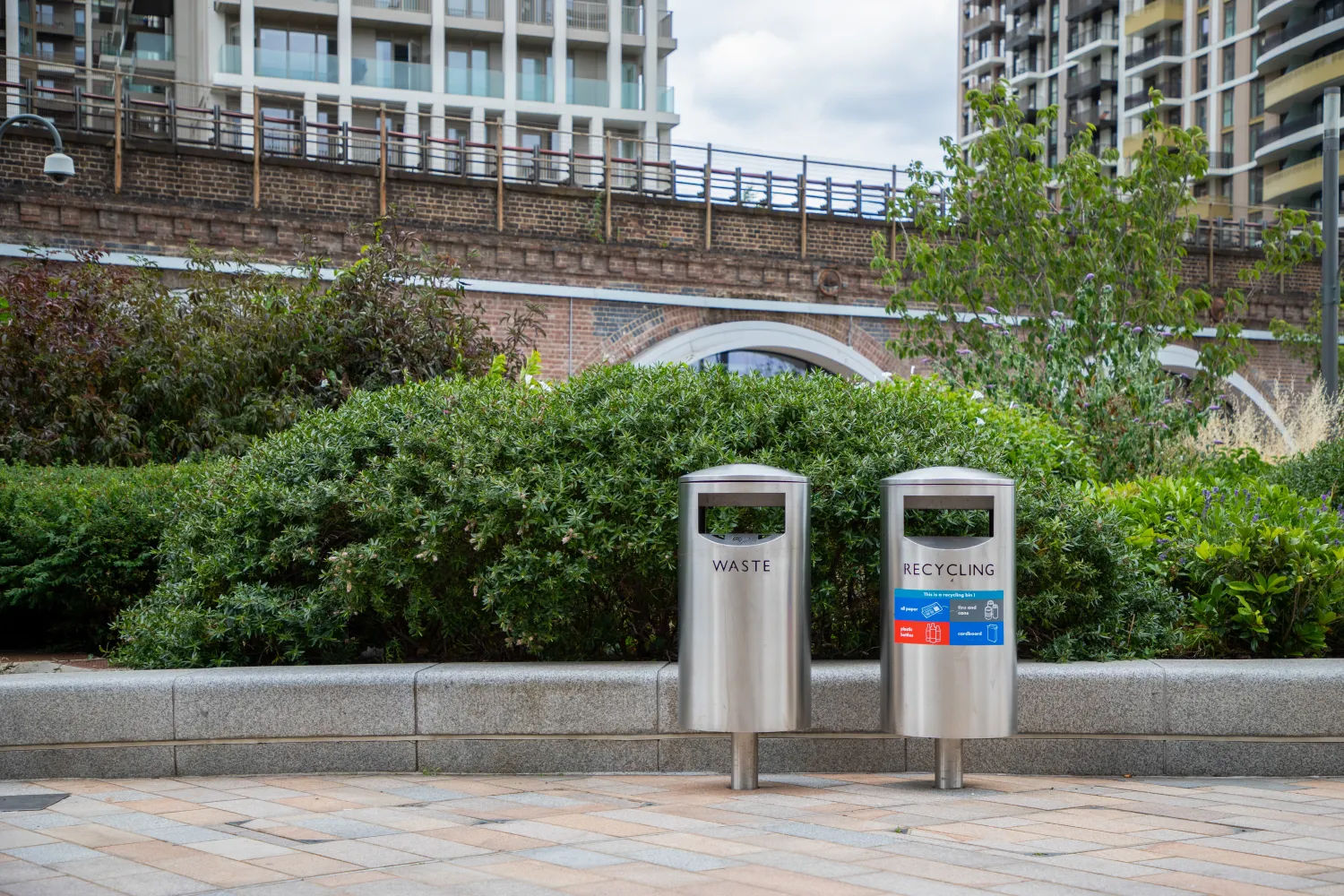
The humble litter bin deserves recognition for the considerable work it performs.