A well-designed public space invites us to linger, to connect, and sometimes – quite wonderfully – to do absolutely nothing at all. The principles that guide thoughtful public space design shape the fabric of our shared urban experience. Indeed, landmark research by urbanists such as Jan Gehl in Cities for People demonstrates that thoughtfully designed public spaces fundamentally enhance both individual wellbeing and social cohesion.
In conversations with our designers Lauren Walls, Design Engineer, and Theo Seah, Product Designer, we’ve distilled insights that might help illuminate what makes certain spaces sing with life while others remain curiously empty, regardless of foot traffic or location. These observations aren’t particularly revolutionary claims. They’re gentle reminders of what we intuitively know about the spaces where we feel most at ease.
The comfort angle
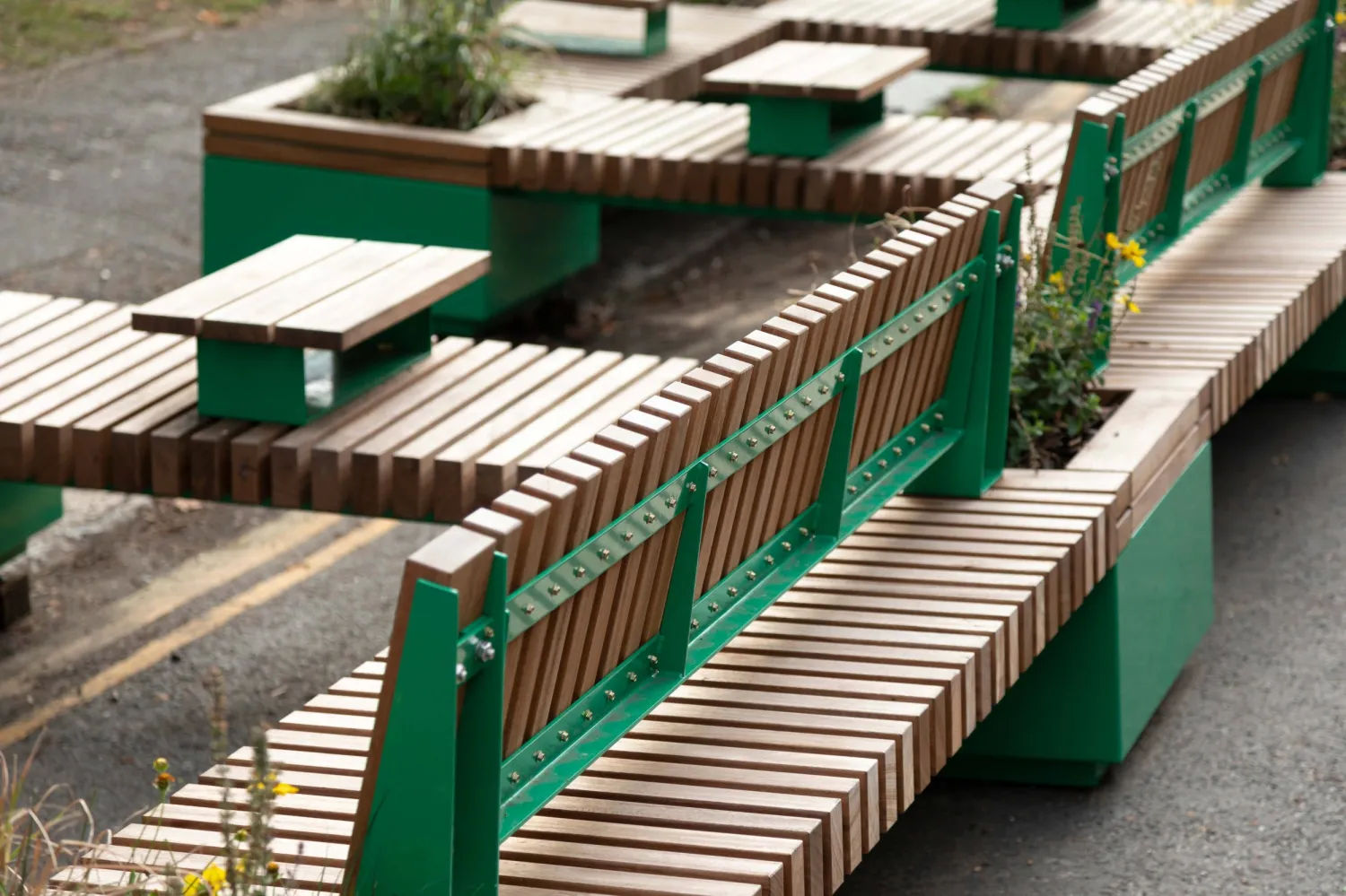
The angle of a backrest speaks volumes. As Theo notes, “The seating angle between the backrest and seat is typically somewhere between 98° – 110°, influencing people’s posture from fully reclined to perching.”
This seemingly minor detail profoundly affects how relaxed we feel, which in turn shapes the emotional atmosphere of the entire space. Research by Villanueva et al. (2013) in Industrial Health confirms that seating angles directly affect not only physical comfort but also psychological wellbeing and willingness to remain in a space.
When we observe public spaces without seating, the human desire for rest becomes immediately apparent. People perch on walls, lean against railings, or sit on steps – their bodies telling us what the space lacks. These improvised moments of rest are valuable clues for designers attuned to human behaviour.
William H. Whyte’s pioneering work The Social Life of Small Urban Spaces documented this phenomenon decades ago, showing how people will create informal seating in almost any environment – a pattern of behaviour that remains remarkably consistent across cultures and contexts.
Designing for all, without exception
Universal design extends far beyond mere compliance with accessibility standards. It’s about creating spaces that welcome everyone with quiet dignity. Research by Burton and Mitchell in Inclusive Urban Design: Streets for Life demonstrates that truly inclusive spaces enhance quality of life for everyone, not just those with specific access needs.
“I have had my eyes opened to the lack of inclusivity for wheelchair users and how important it is to allow for them in designs,” reflects Lauren.
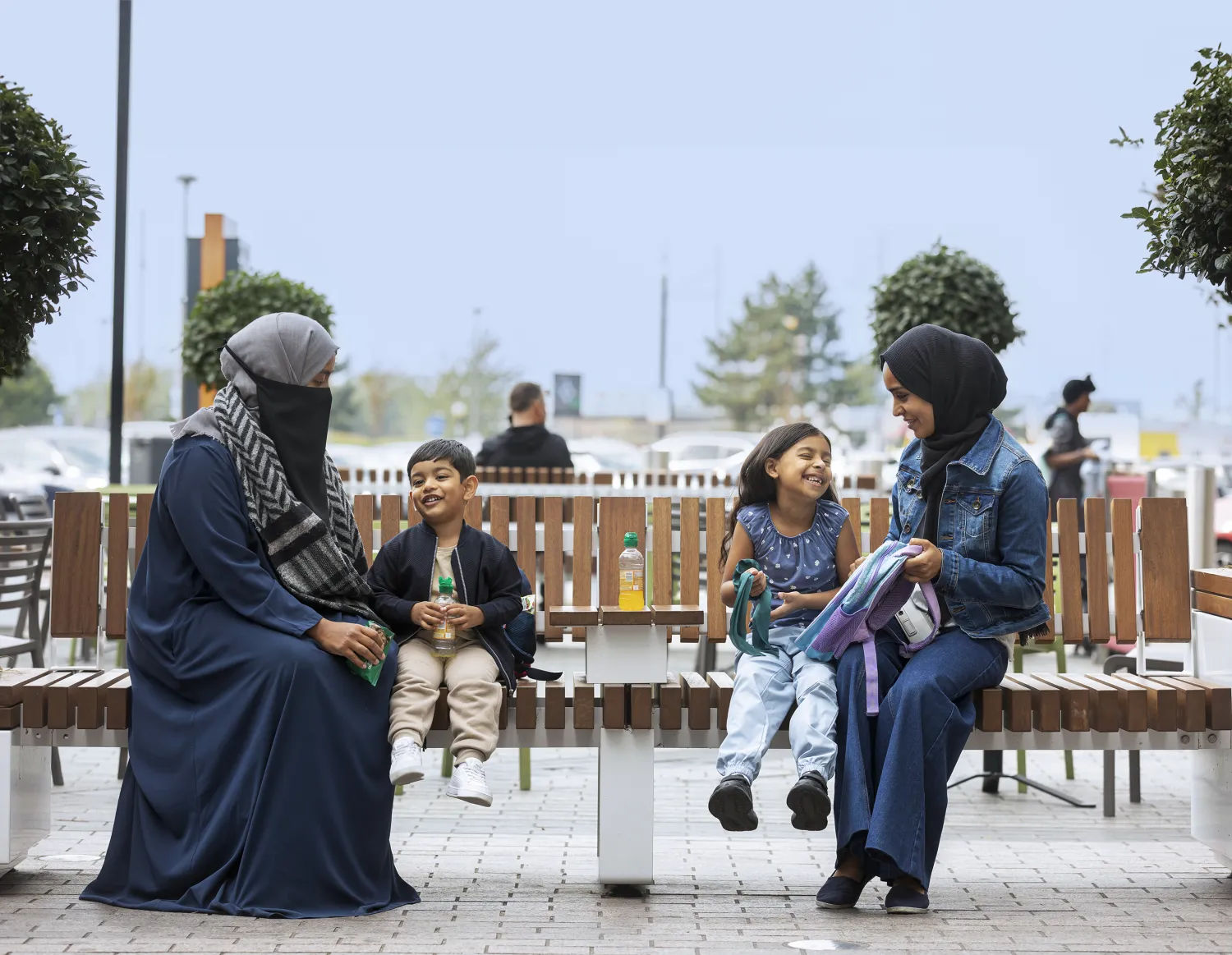
Simple considerations – like ensuring picnic tables accommodate wheelchair users at the ends – transform a potentially isolating experience into one of belonging.
Beyond physical accessibility, subtle design elements create truly welcoming environments. Multi-use seating with varying heights accommodates different bodies and different needs – from children to those with limited mobility. A place to perch makes a space more inclusive for someone who simply needs a moment’s rest.
Furnitubes CEO Catherine Barratt feels strongly about our role. She stated that,
“Great public spaces don’t just happen – they’re the result of thoughtful, human-centred design. Nothing makes me happier than an outdoor space that is serving a diverse group of people and needs without compromise. Everyone deserves access to places that are welcoming, inclusive, and built to last. When we prioritise comfort, context, and connection, we’re shaping the social fabric of our cities.”
Context shapes purpose
A transport hub and a contemplative garden demand entirely different approaches, though both serve essential human needs. In bustling transit areas, quantity and efficient use of space often take precedence, while in parks and gardens, the quality of experience becomes paramount.
“It is important to consider the duration of time likely to be spent on the seating,” Lauren explains.
“In a transport hub, people will be more likely to be passing through, so long-term comfort is less important than something like quantity of seating. In a public garden, people are much more likely to spend a long time there.”
When designing for different contexts, a thoughtful approach considers specific use cases – observing what people need in each unique environment rather than applying universal solutions without nuance. Carmona et al. (2010) in their comprehensive work Public Places Urban Spaces: The Dimensions of Urban Design emphasise that successful public space design must respond to the specific context, activities, and cultural dimensions of a place to truly resonate with users.
The social dimension of space
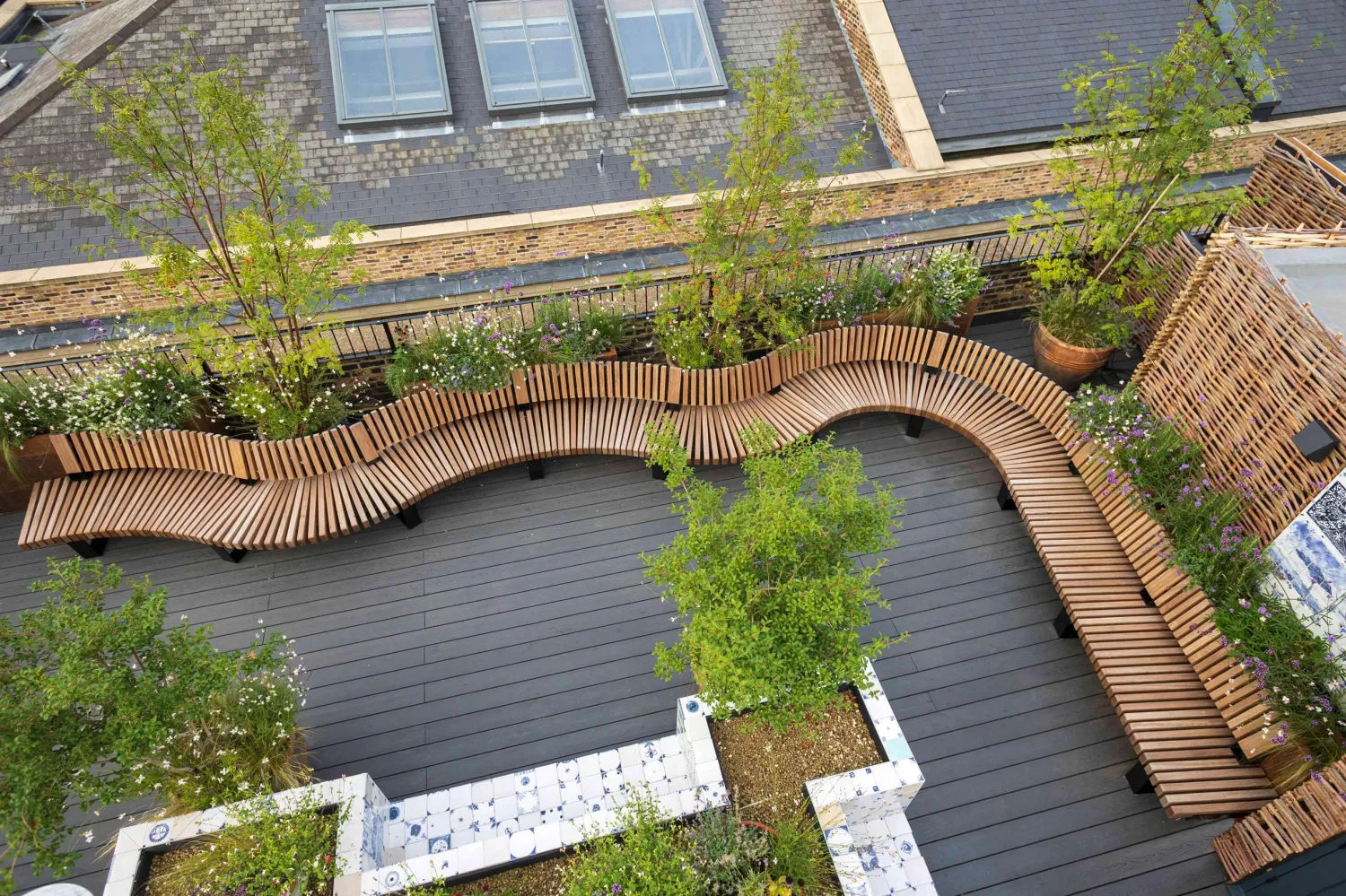
The arrangement of furniture profoundly influences how people interact. Circular configurations, for instance, create natural gathering points that serve both those seeking solitude and those desiring connection. Recent research by Ahmadi and Toghyani (2021) in Urban Design International confirms that the spatial arrangement of urban furniture significantly impacts both the frequency and quality of social interactions, with circular and semi-circular arrangements particularly effective at fostering spontaneous engagement.
Armrests, often viewed primarily as dividers, sometimes surprise us by becoming shared surfaces for impromptu picnics.
“For designers, armrests are commonly thought of as a tool for division across seating arrangements,” shares Theo, “and while this is often true, I recently encountered individuals sat on either side of a Railroad tablet armrest using it as a shared lunch platform.”
This adaptability – the way people creatively use spaces beyond their intended purpose – offers valuable lessons in flexibility. A 2022 study by Vezzani and Howell in the Journal of Urban Design highlights how multifunctional urban furniture elements can simultaneously address sustainability goals while accommodating diverse and sometimes unexpected user behaviours.
Lauren shares a fascinating observation:
“People like to be around others, in green spaces or just somewhere where they can watch the world go by. Often it is an escape from being at home or at work and a moment to take in your surroundings.”
This simple insight reminds us that public spaces serve as breathing room in our increasingly privatised world – places where we can simply exist without purpose or purchase. Jan Gehl’s observational research, captured in How to Study Public Life, demonstrates that these “optional activities” – like sitting quietly, people-watching, or simply enjoying being outdoors – are crucial indicators of high-quality public space.
Materials that stand the test of time
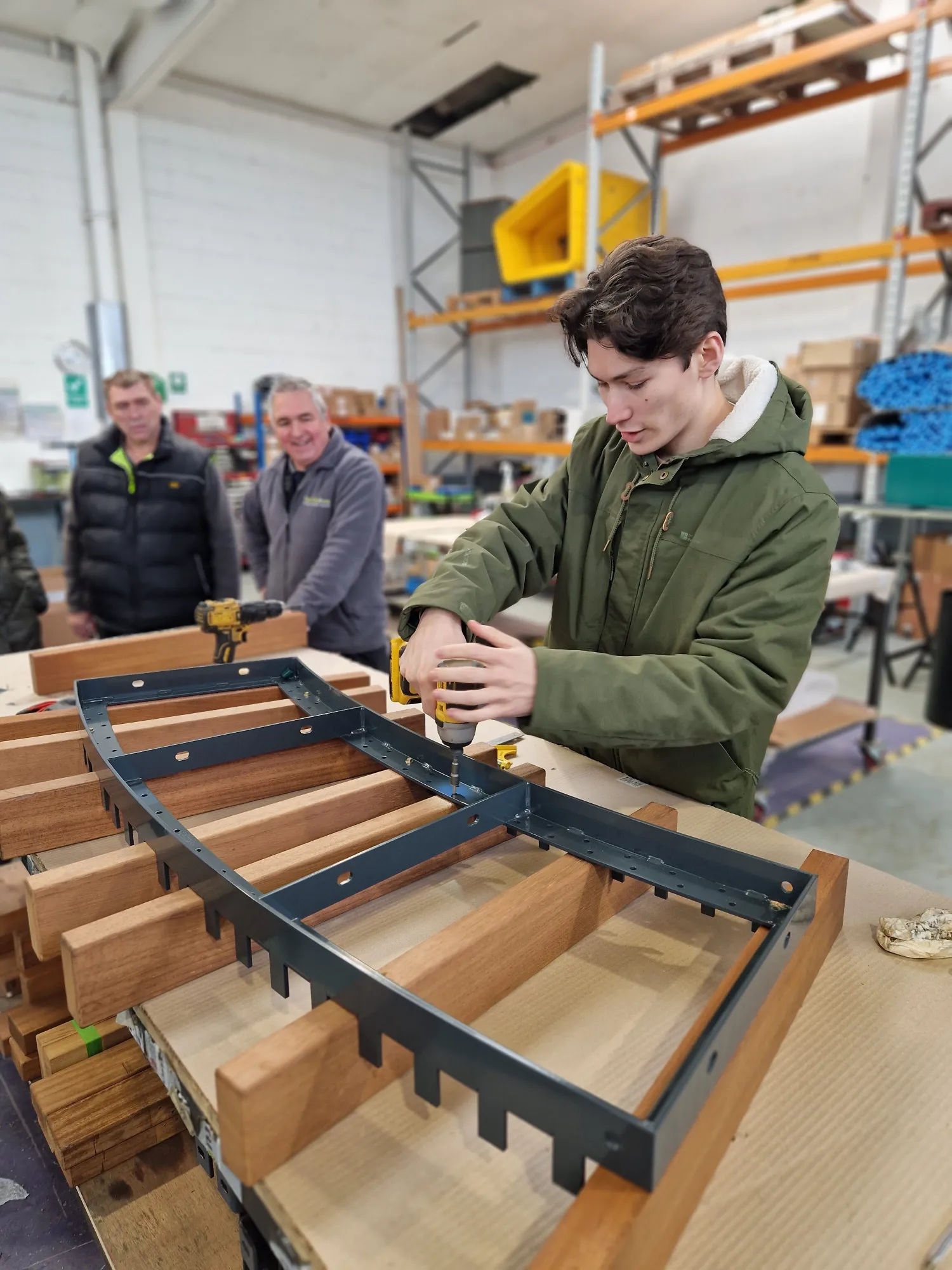
Sustainability isn’t merely about material selection – it’s about creating places that endure, both physically and in the public imagination. When asked about designing spaces that will outlive us, Theo answered simply: “Materiality. Using beautiful, strong, durable materials is the bedrock of unwavering quality in urban furniture.”
This philosophy aligns with William McDonough and Michael Braungart’s influential Cradle to Cradle approach, which advocates for designing with the entire lifecycle of materials in mind – creating objects that are not just less harmful, but actively beneficial in their production, use, and eventual transformation.
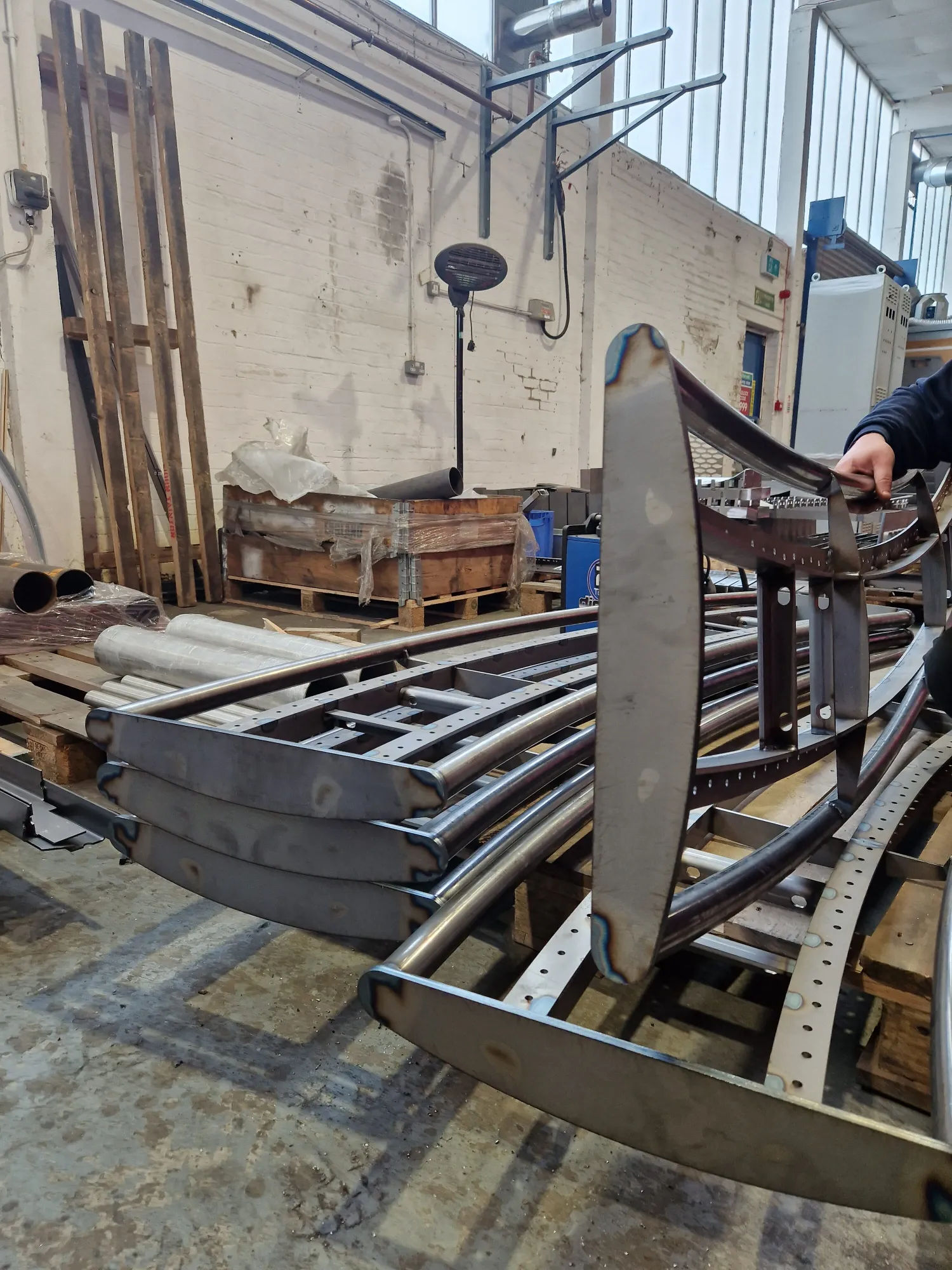
This consideration shapes everything from initial design concepts to manufacturing choices. Street furniture becomes part of our collective landscape for decades – a responsibility that demands thoughtful material selection and careful craftsmanship.
Three guiding principles
For those shaping public spaces – whether seasoned designers or community planners – our designers offer these considered principles:
Begin with careful observation of how people actually use spaces, then maintain a direct connection between these insights and your design concepts at every stage.
Consider the specific setting and ensure that whatever you introduce adds genuine value to that particular environment.
Be thorough in your considerations while keeping solutions elegantly simple – offer precisely what’s needed, nothing more and nothing less.
Measuring success beyond numbers
How do we know when a public space truly succeeds? Beyond visitor counts, the answer lies in diversity – both of people and activities. As Theo beautifully expresses: “When you see the space facilitating a diversity of peoples’ everyday needs, with a sense of security, community and life being vividly lived.”
This echoes findings from Honey-Rosés et al. (2020) in their work on Post-Pandemic Public Space, which emphasises that resilient public spaces must be adaptable, inclusive, and capable of supporting diverse activities simultaneously to truly serve community needs.
A well-designed public space does more than accommodate people. It enables life to unfold in all its messy, wonderful complexity. It provides security without sterility, community without forced interaction, and moments of both connection and contemplation.
The perfect public space might be something of a myth – perfection rarely survives contact with the beautiful unpredictability of human life. Yet by applying thoughtful design principles, we can create outdoor urban spaces that truly become realms of wellbeing – places where everyone feels a sense of ownership and belonging, regardless of circumstances.
These spaces become the sitting rooms of our collective urban home – where, just perhaps, we might rediscover the simple pleasure of sitting comfortably, doing absolutely nothing, and feeling entirely at ease in the world. As the Project for Public Spaces notes in their Urban Quality Indicators, it is precisely this ability to support diverse, spontaneous, and joyful human experiences that marks truly great public spaces.