This article explains how to leverage the love of colour into better built spaces.
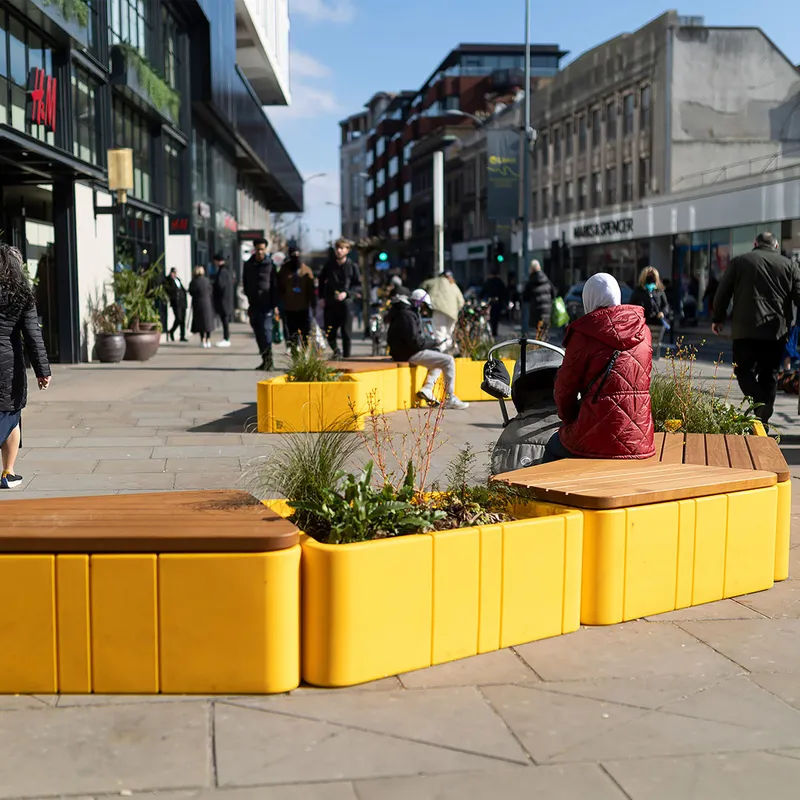
Colourful seating and planters transform public realm
We have the world of colour opportunities in our hands. Technology and industry has moved beyond hand-selecting plants to crush into pigments, and creating small-batch paints that would vary between batches: we can now simply point and choose the colour that we want, and apply it in quantities our history could only fantasise about.
But there are more considerations to keep in mind than merely picking the colour we like. Colour ought to be appropriate – especially for your built environments, your outdoor furniture, your places yet to be made places.
Picking the right colour for the right project
Colour is divisive. Colour is personal.
Places, on the other hand, are created for unity. They’re community locations, public places that bring people together. The same colour that pleases one might put off another; the same location where one colour shines might dull
When it comes to picking colours, there are three main archetypes to keep in mind:
1. Classical builds
Your restoration projects and renovations, your coat of fresh paint, your roads with decades of history embedded into the very foundation of the build. Colours here can go one of two ways – a bright, modern accent to bring the more historical features into stark contrast, or a subtle shade that blends in with the locale.
For Strand Aldwych Road, our renovation project, the planters were built in natural tones to let the surrounding buildings take pride of place, but included colour in forms of deep planters that would bloom with flowers. This was necessary to encourage people to linger – for years, the location had been a road full of traffic, and at the beginning of its renovation, it was still relatively unknown.
Now, it’s never empty, but it’s because of the people there, lingering over the remains of the day.
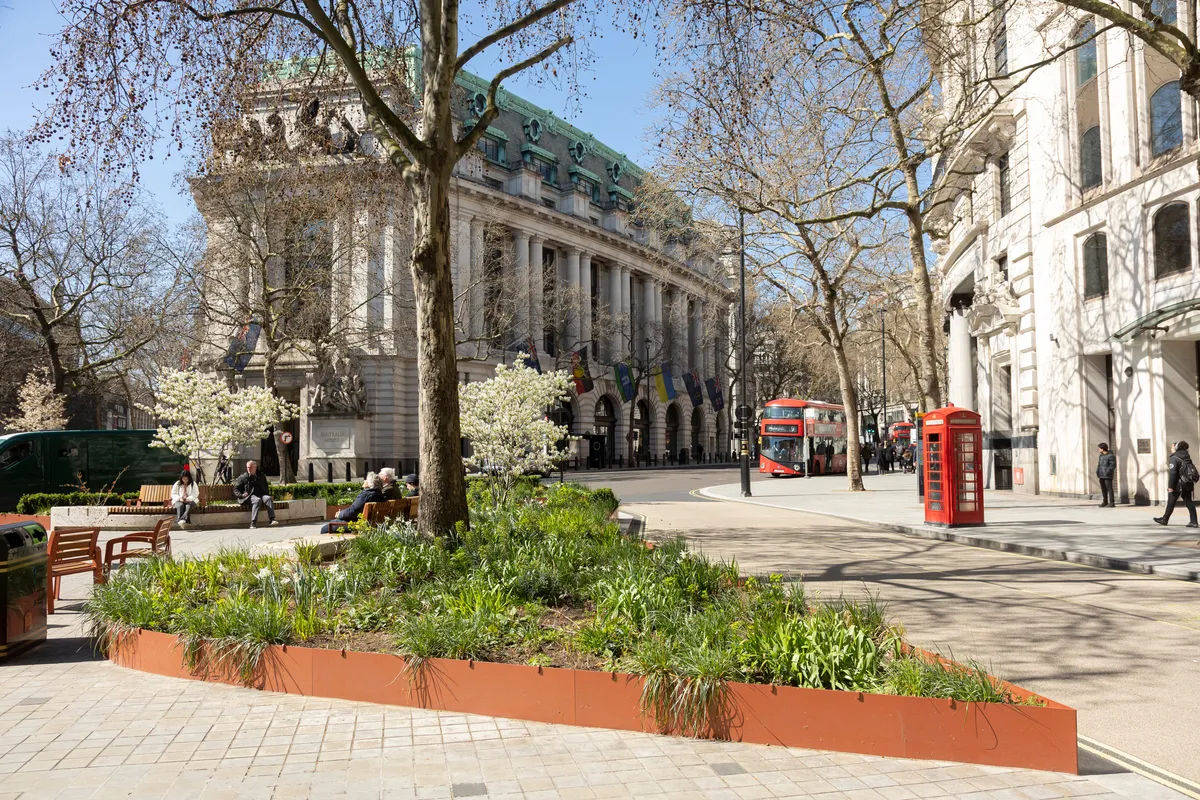
Steel retaining planter with corten finish - Strand Aldwych
2. Industrial builds
Factories, wharfs, or former workhouse buildings turned into flats. These benefit from cooler, more modern shades to offset the red brick, wrought iron, and copper. There’s a benefit to this kind of colour in that they tend to wear well, and if the industrial location sees a lot of foot traffic, this will help cut down on maintenance costs in the long run.
When it came to creating seating opportunities at Culham Science Centre, we wanted to echo the industry, and the hard work that went into creating the machinery housed at the centre. To that end, slate grey served our purposes well, but to add warmth, we offset it with nature timbre in a lustrous finish.
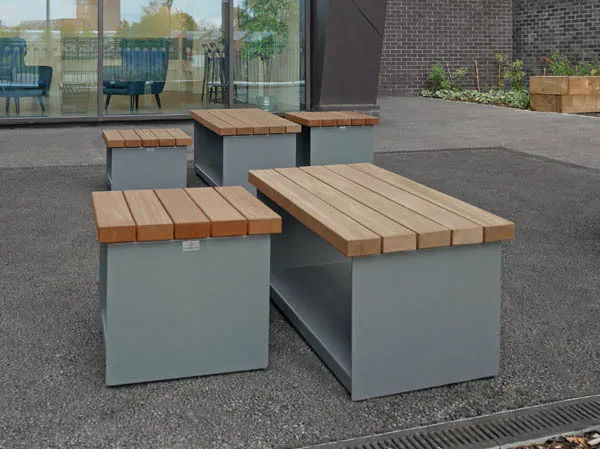
Recycled steel planter planters with bespoke integrated benches - Culham Science Centre
3. Country builds
Benches in forests, places to stop along pathways, a built environment within the wilderness. These are places surrounded by the exceptional beauty of Britain’s natural landscape, and while theories vary on the best approach, here is our humble consideration: blend in. There is no beauty more put together than the beauty of the wild, and so here, we recommend natural tones and materials, to let the environment shine.
Seating at Princes’ Park, in Eastbourne, looks subtle against the stone walls and the greenery. The focus there is on the gardens and the seaside, with our benches taking a deserved second place. While the bright green sides could be eye-catching in other locations, here they are subtle, the same colour as the grass behind, less noticeable than the golden sand in front.
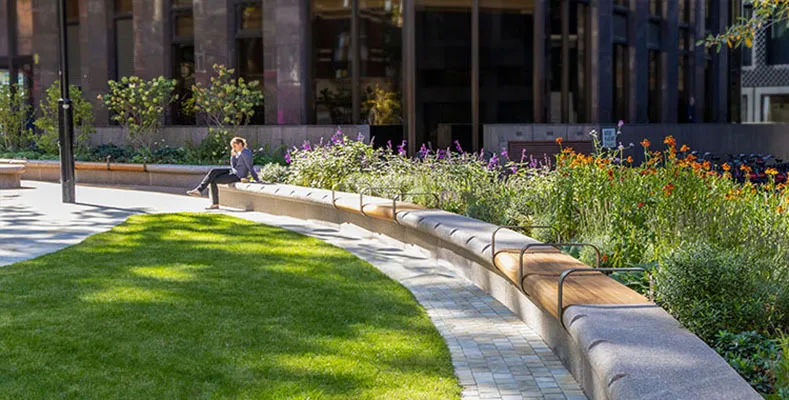
Wall-top seating blends into the environment at Christchurch Gardens
A theory of colour
Of course, you can always break the guidelines.
Bold colour in woodland spaces. Subtle browns and greys in the middle of a retail park. A deep, royal, unnatural blue in a refurbished factory.
The beauty of colour selection is that there are very few ‘right’ colours. With enough imagination, any colour you choose can work in the location you desire. All you need to have in advance is an understanding of the effect you want to achieve.
Is the place you’re building a spot for rest?
Do you want people to settle in there and linger?
Blues, greens, creams, and golds are subtle enough that they draw the eye, but they don’t overwhelm. They’re inviting, familiar colours for places intended to be a longer stopping point. Contrasting these colours with natural wood or metal fittings changes depending on the intended location, but the effect remains the same.
Is the place you’re building somewhere remote?
Brighter colours have their place in landscaping – gardens are riotous with them, and in situations where there’s nothing else around but your build, a brighter colour works just as well as a subtle one. In an environment of greens and greys, they invite the same comfort as blues, charcoals, and brown: to come, to see what there is here, to stay and explore.
Colours like this delineate the object from its surroundings, but remain inviting and welcoming. It’s a good balance for those places which have just taken on a new lease of life, and need the extra little boost to encourage people to stop.
Is the place you’re building relatively new?
You’re in luck if it is! New builds can take any shade of colour, regardless of the overall effect; they’re a blank palette for the future. With grey being such a central, middle-of-the-spectrum shade, there’s no big considerations to keep in mind except the kind of atmosphere you want to create for your new build.
Opt for brighter, cheerful colours if you want to create a modern place where people can go and engage. For retail spaces and community centres, this is an opportunity to build a hub where people go to interact.
However, if your build is more on the residential side, then warm browns, navies, and greens will create the same effect, but without drawing the attention of visitors. Residents of the area can appreciate the colours you choose without it being overwhelming to the senses.
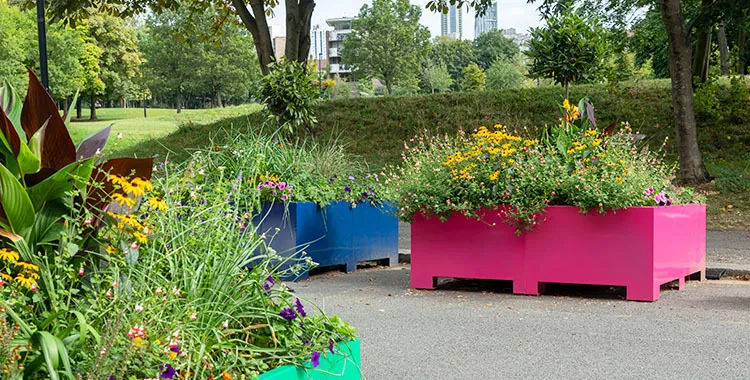
Planters adding a touch of colour
Our consideration of colour
We have over 200 different RAL shades at our Custom Wytelyne factory, and our triple-process powder coating can come in any of those shades. While this offers the best customisability, there’s something to be said for a curated colour palette – one that will showcase, irrespective of shade picked, the side of your new project you want to highlight.
Our selected colour palette can be applied to any urban project. Each colour will work with natural wood tones and metalwork, grey builds and red brick, the full spectrum of planters and greenery and flowers, and everything in between.
We want to see beautiful places built in the world. This helps make it a reality, at no cost to the environment and no extra delay for ongoing works.
If you’re ready to add a little colour to your world, reach out here – we’re ready to help you paint outside the lines.