Timber is an integral material to many of Furnitubes' products, especially seating. It has a natural beauty and warmth and will change its appearance over time as it is subjected to the elements.
Timber comes in many forms or species, each with their own set of characteristics. Here you’ll find the primary species that Furnitubes uses to produce its products and some of the factors to consider before determining the most appropriate timber species for a project.
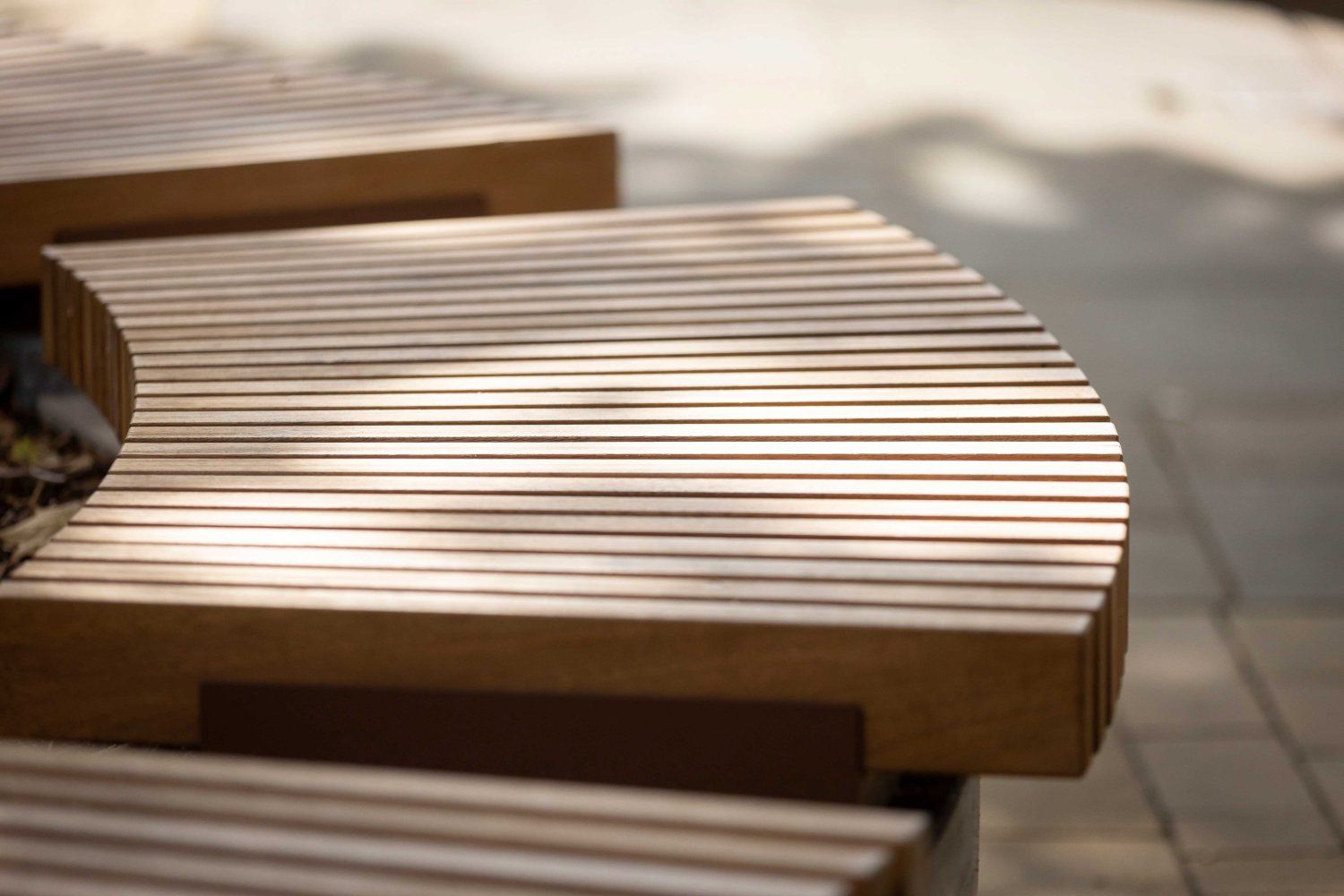
Timber slats on Railroad bench
Durability
There are 5 durability classifications
The durability of timber is based on the results of placing testing hardwood samples into the ground, fully exposed to the elements, with the number of years before decay becomes obvious determining the durability of the natural (untreated) timber into one of five classifications:
Class 1 | Very Durable: 25+ years
Class 2 | Durable: 15-25 years
Class 3 | Moderately Durable: 10-15 years
Class 4 | Non-Durable: 5-10 years
Class 5 | Perishable: 0-5 years
The hardwood of species with a rating of Durable or Very Durable can be successfully used in exterior situations without the support of preservative treatments.
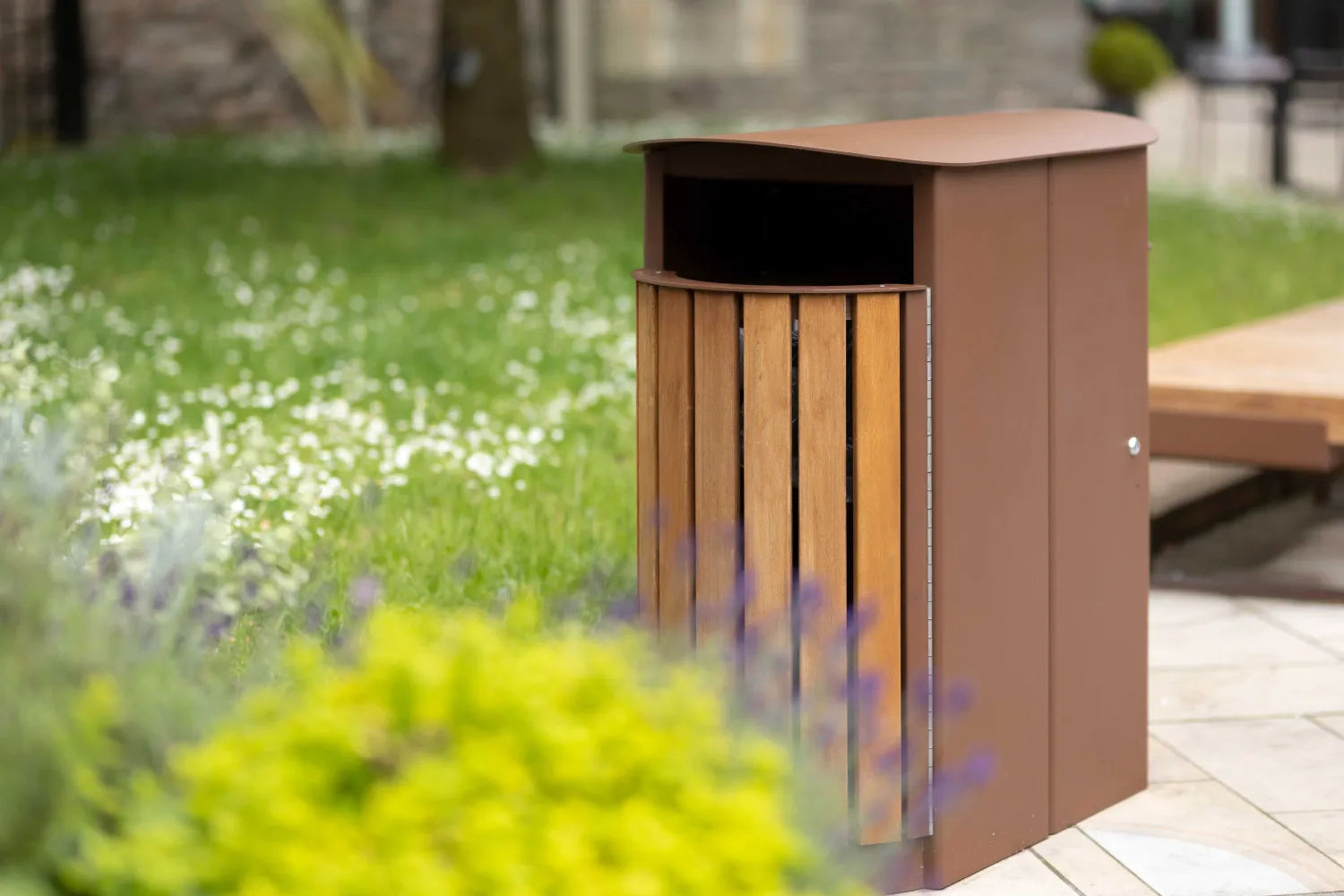
Arca bin
Stability
Some timbers are more liable to twist and distort than others
This is due to the varying grain structure and how it responds to the elements and, in our furniture, we prefer to use the more stable species. Regardless of species, all timber will ‘move’ to some extent as its moisture content changes in varying climates, resulting in fissures or cracks during hot, dry conditions, but which will tend to close up in periods of cold, wet weather.
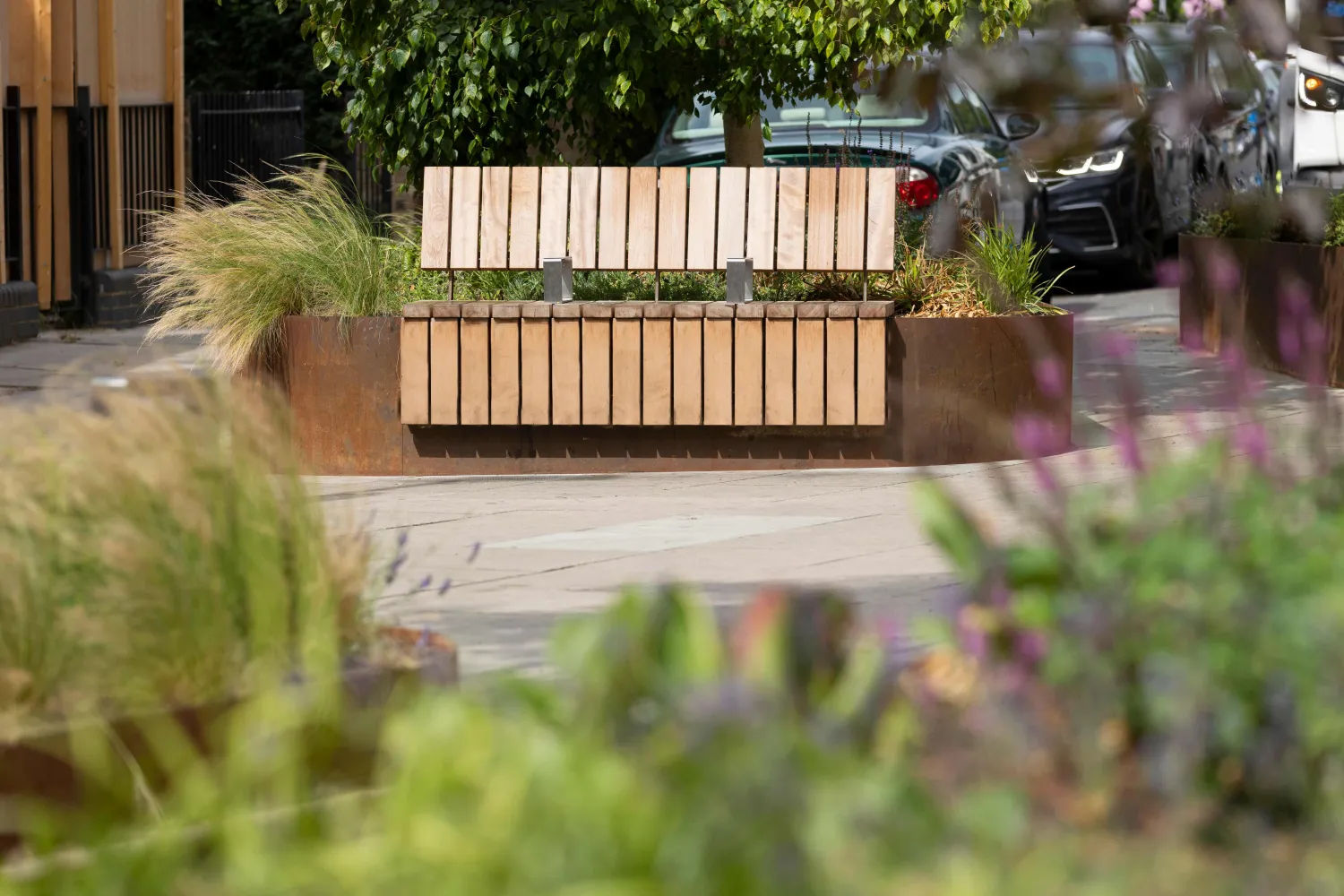
AKRI planter with integrated timber seating
Aesthetic appearance
Colour and grain characteristics vary
There is a huge variety of colour and grain characteristics across different timber species, preferences on which are very much subjective. Photos of timber products and component parts shown on our website and in our brochures are generally new products with freshly-machined timbers (<3 months old), before any significant weathering has occurred that will cause the original timber colouration to fade.
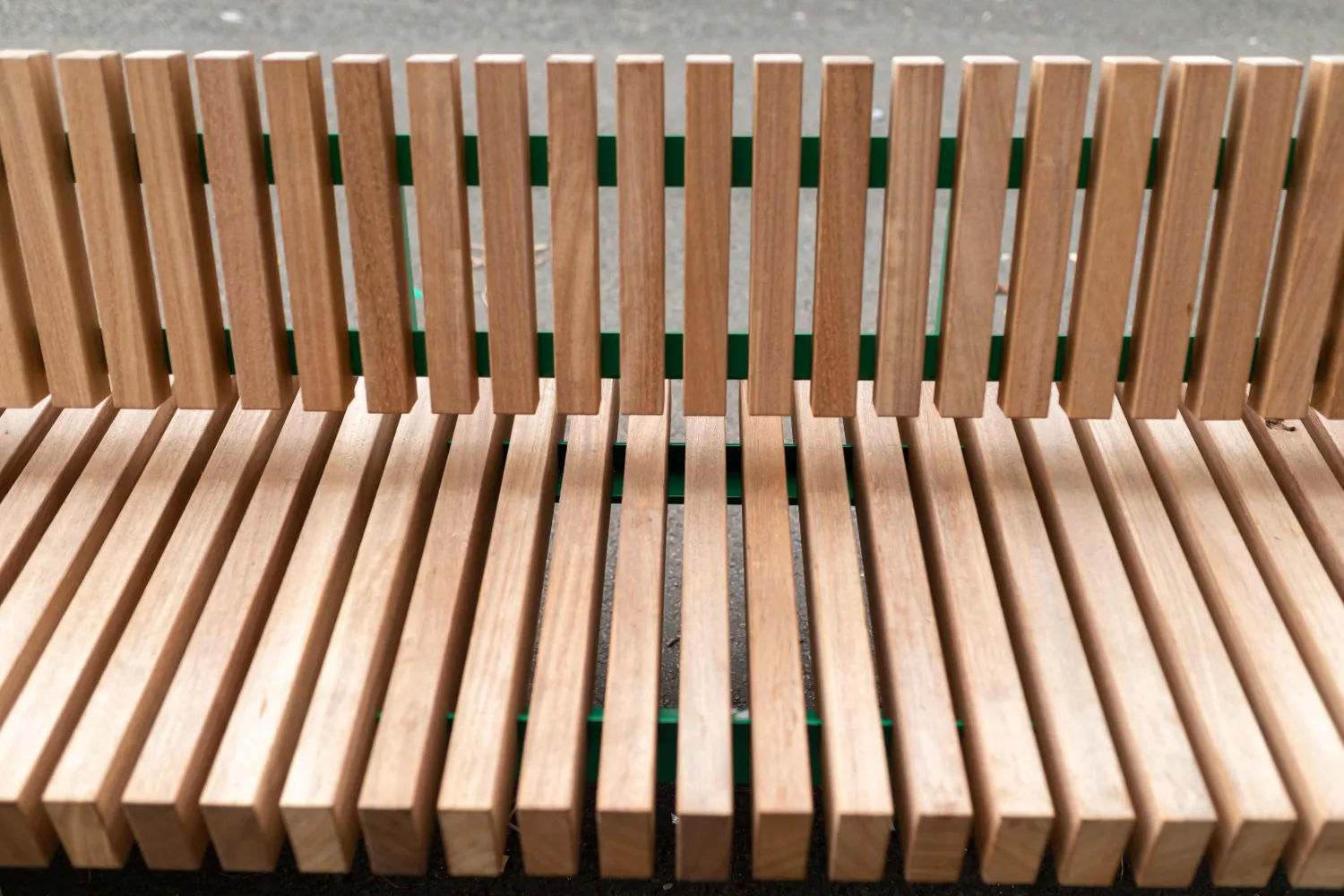
Timber slats on Railroad bench
Density
The denser the timber, the more durable
The density of the timber is important in two respects: firstly to perform its structural function (with an appropriate visual mass); and secondly to resist marking in general wear and tear. In simple terms, the denser the material the lighter the section can be and the more resistant it is surface marking. Generally speaking the more dense the species, the higher its cost.
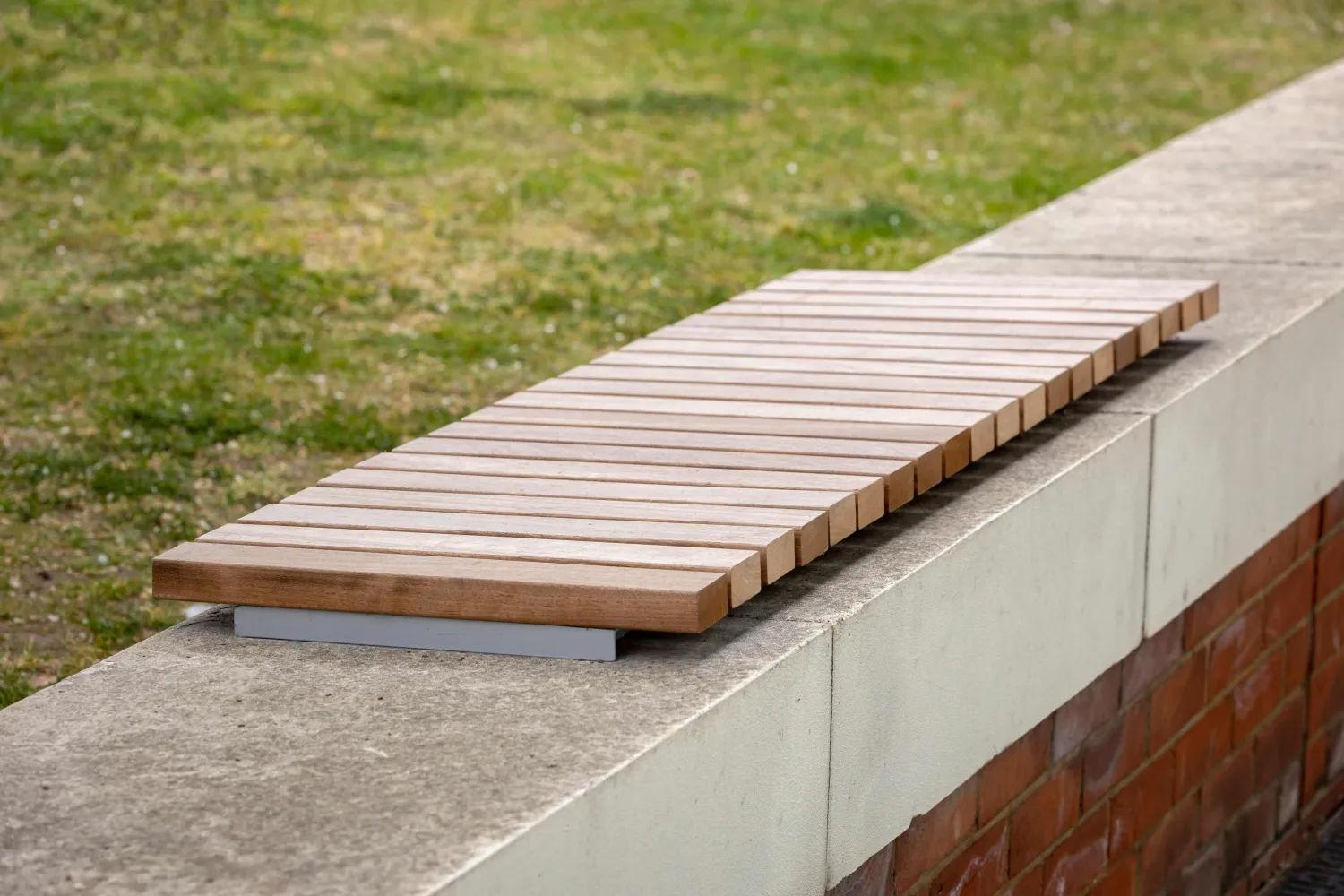
Timber slats on Contor wall-top seat
Supplementary finishes and maintenance
All species of timber change over time
The natural colouration of new machined timber will fade as it is exposed to UV light, fading to a weathered patina that some people prefer in a landscape setting over the original colouration. Many proprietary timber finishes are available, which bring varying degrees of maintenance implications – read up on our timber treatments for more info on this.
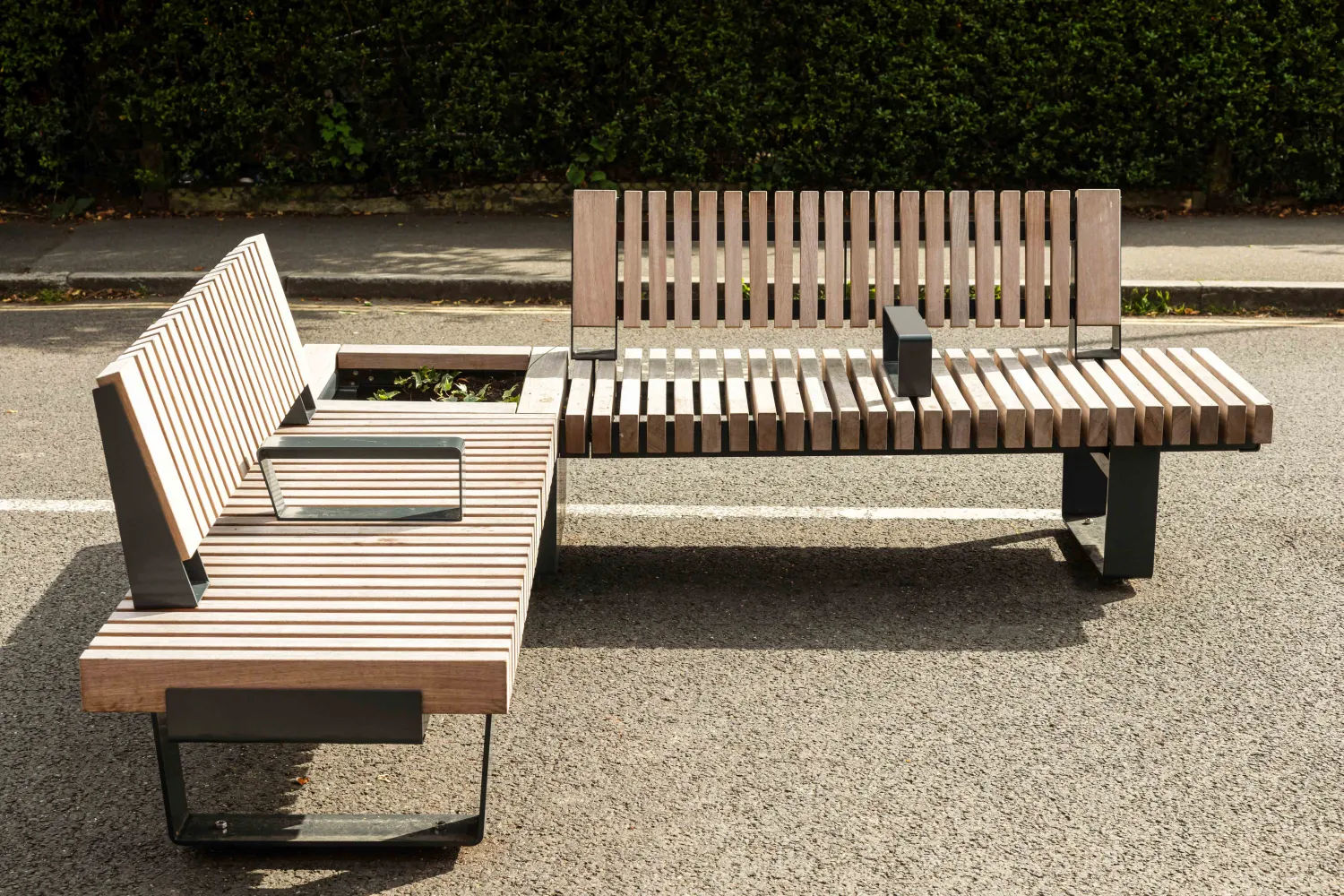
RailRoad modular seating and planter
Costs
Converting timber from a tree to a useable machined section is a labour-intensive process and, with tropical hardwoods especially, involves considerable transportation – all of which adds to the cost of the raw material. With our standard product range our approach is generally to use timber sparingly, in sectional sizes that are appropriate to the performance requirement, and often supported by structural steelwork. Our design team can offer advice on the appropriate material sizes that will minimise the cost of timber product and components.