

- Sector
- Housing, private
- Project type
- New build
- Services provided
- Planning advice
- Design
- Product / system manufacture
- Product / system supply
- Client
- Churchman Landscape Architects
Requirement
Benchmark was approached by Churchman Landscape Architects to help design simple, robust and environmentally-sensitive seating for Elderberry Walk, a new, award-winning collection of beautifully curated homes in Dunmail, Bristol located in a landscaped setting surrounded by woods and parkland.
A key requirement was to using recycled and reclaimed materials where possible, keeping it inline with the sustainable practices used throughout the development.
Solution
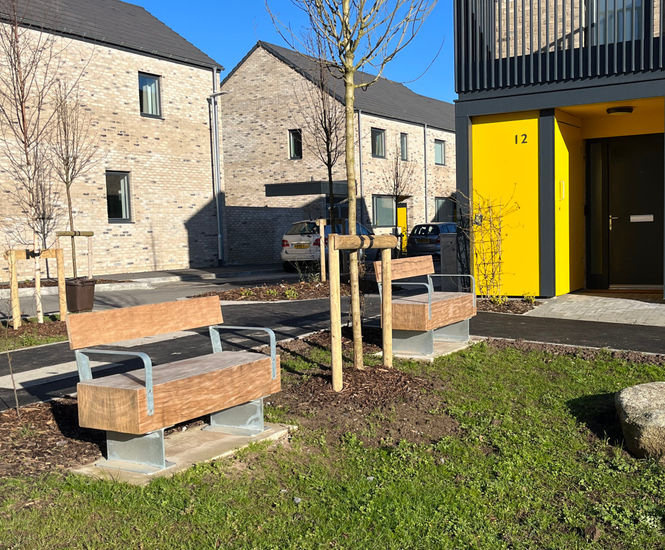
By using reclaimed materials, Benchmark had to work backwards in the design process, as dimensions are often limited. The company was able to source 6m-long Opepe beams that had been reclaimed from Barmouth Viaduct. These had suitable dimensions to produce the natural-style seating that the client wanted.
Being a reclaimed material, careful selection of each beam was required to ensure that no large cracks, shakes, splinters or metal fixings would be detrimental to the finished design. Satisfied that the timbers were sound, the beams were plugged and planed on all sides to create clean, level surfaces that also exposed the natural beauty of the wood.
The design brief called for metal arms and bases with a galvanised finish, this further reflected the natural theme as well as ensuring longevity.
Outcome
The benches have successfully contributed to the overall aesthetic and functionality of the outdoor spaces at Elderberry Walk. The combination of hardwood and galvanised steel not only aligns with the sustainable ethos of the housing development, but also provides a durable and visually appealing seating solution for residents and visitors.
The project stands as a testament to the successful integration of reclaimed materials into contemporary urban design, demonstrating that sustainable practices can coexist with aesthetic considerations and functional requirements.
As well as being a practical seating solution, they also enhance the communal atmosphere of Elderberry Walk, creating inviting spaces for social interaction and relaxation.