

- Sector
- Public realm
- Project type
- Refurbishment
- Services provided
- Design
- Product / system manufacture
- Product / system supply
- Project management
- Year completed
- 2023
- Project location
- Outside the UK
- Consultant
- Landscape Architect: Land'Act
- Contractor
- Val d’Oise Paysage
- Products used
- Bowie bridge
Context
The 3.5-hectare Parc de la Planchette has been open to the public since 1924. Located in Levallois-Perret in France, it is the area’s largest park and plays a vital role in the densely built-up district. The aim was to have a larger water feature in the park that would serve to reduce heat stress in the locality. After various discussions within the local authority, a nature-inclusive pond was approved and went ahead with the help of regional funding. Today, it teems with flora and fauna.
The renovation was designed by Land’Act, a renowned design firm in France specialising in landscape architecture, urban planning and ecology.
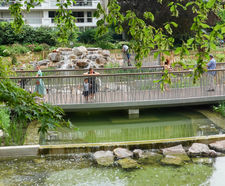
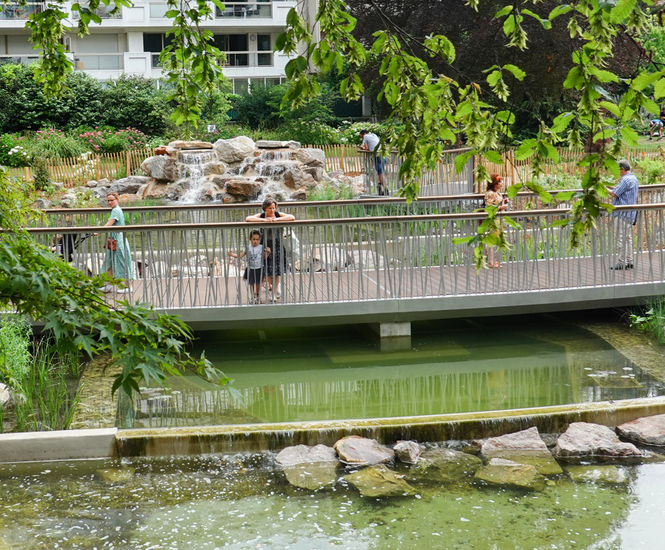
The ecological pond, with carefully chosen planting, is completely naturally filtered. The new footbridge and opposite observation platform now bring people closer to the water.
Project detail
Streetlife’s Bowie Serpentine bridge follows the meandering line of the footpath, leading pedestrians naturally across the water.
The observation platform, across the water, was designed in the same style as the bridge to create coherence. The bridge’s criss-crossed, stainless-steel bars are reminiscent of the grasses along the shore.
For the handrail, the municipality opted for the highly sustainable material Bamboo Brown. Bamboo Brown is carbon neutral and can be recycled. At dusk, the fencing takes on a truly enchanting appearance thanks to the LED lighting under the handrail.
Streetlife designs its bridges in-house and delivers them prefabricated. This allowed contractor Val d’Oise Paysage to install the bridge and platform in just one day.
Outcome
Land’Act’s design represents an investment in not only biodiversity but also people and is a tremendous improvement. Experiencing the return of butterflies, lizards, amphibians, birds and lush planting has resulted in bringing visitors closer to nature and improving their well-being.