A review of the most commonly-specified design options that enable a planter to be lifted and moved via pallet truck or fork lift.
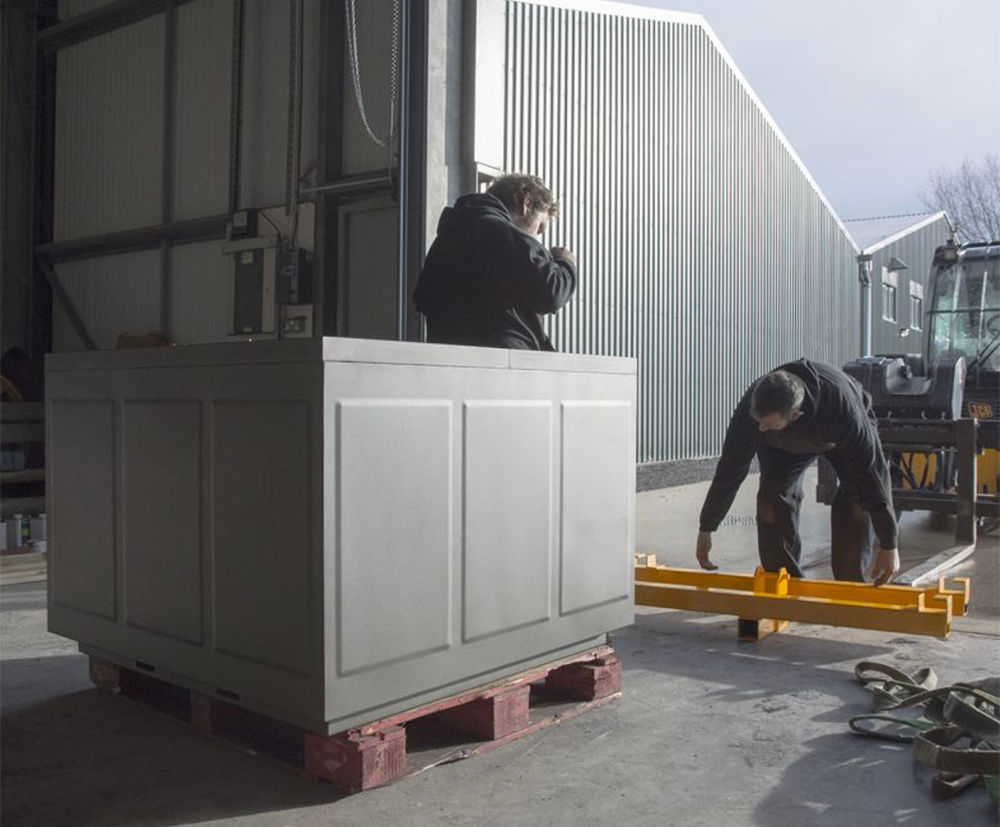
Where the planters are heavy, and / or the ground is rough, mechanical means of lifting and movement are necessary – and the devices used are generally pallet trucks or fork lifts.
In either case, the forks of the device need to pass under the planter, and the base of the planter needs to be strengthened to take the loading.
Design considerations
There are many ways to design a planter to be moved via pallet truck / fork lift, but three options are most commonly specified.
Which option to specify generally comes down to cost vs aesthetic trade-off, and the options are listed below in order of ascending cost, from the cheapest to the most expensive.
1. Invisible design
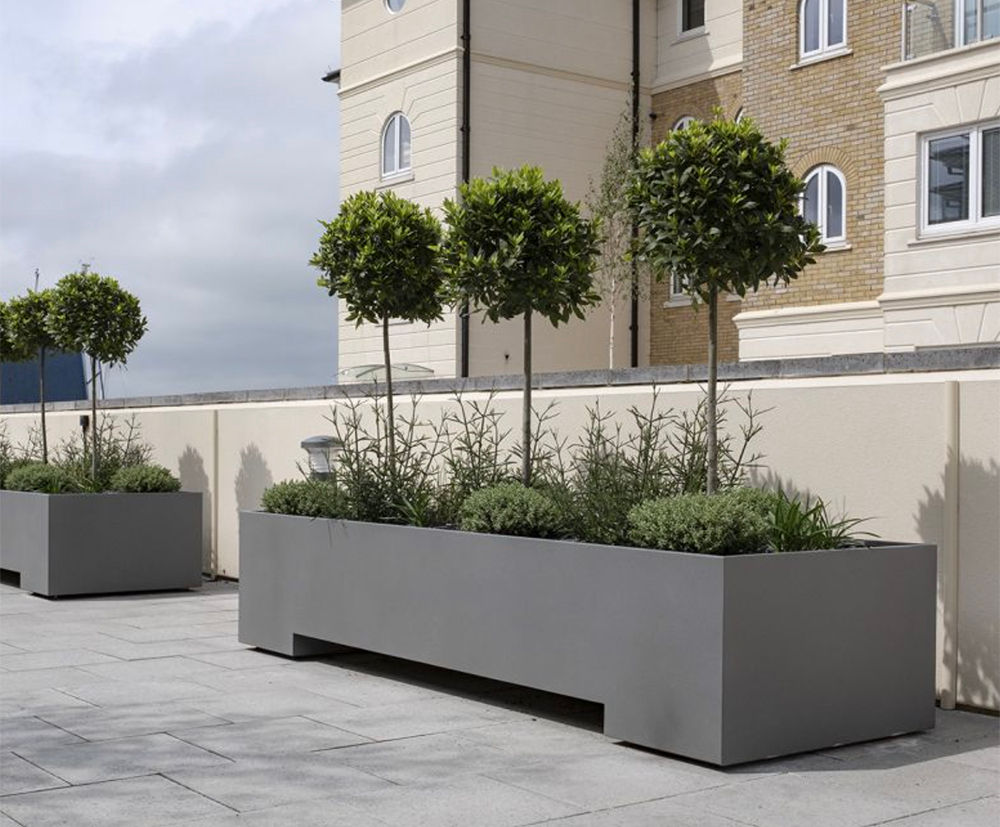
The first option is to design the planter such that the functional requirement for movement is not apparent.
Generally this objective is achieved by having a long, elevated central span – this reads like a design feature of the planter, rather than a functional add-on.
In a geometric built environment, which is common, this design can often feel very much in keeping with its surroundings.
The underside of the planter is lined with stainless steel to avoid the forks damaging the planter.
This option is not only the cheapest option, but it is also the most aesthetically pleasing, in our opinion. As such, it is the option that IOTA most often recommends.
However, for use in public realm, this option can fall foul of Environmental Health, on the grounds that the void under the planters can create a rubbish trap and vermin habitat.
2. Runners or skids
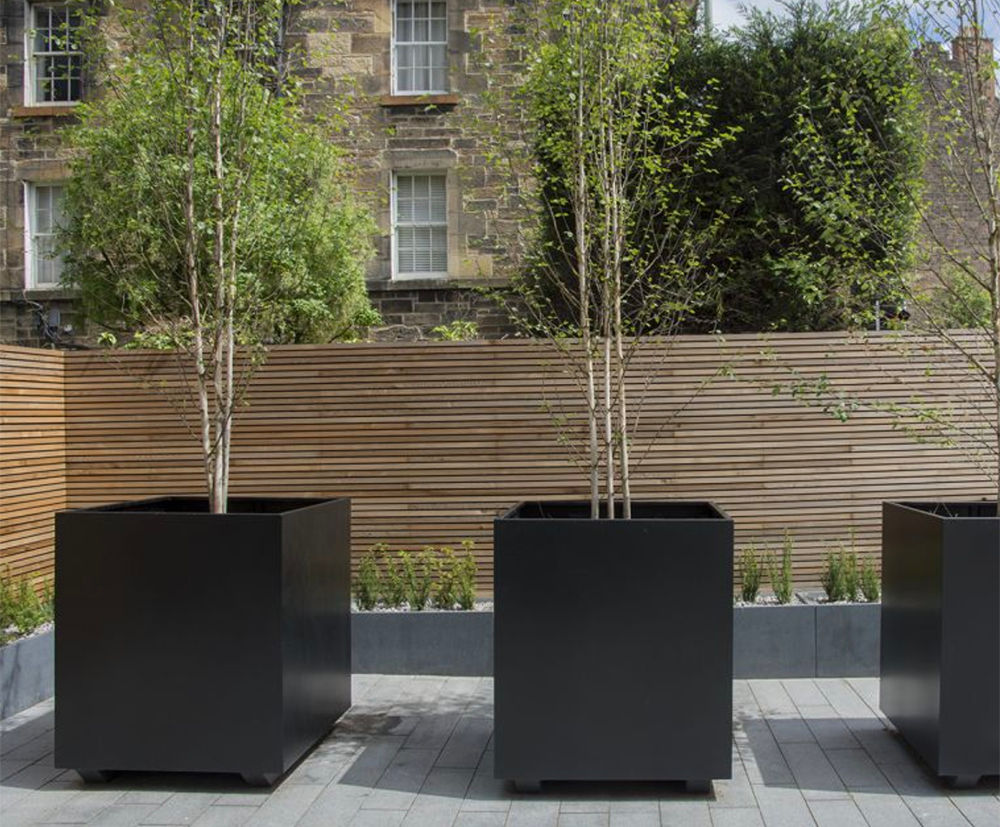
The second cheapest option is to design the planter with runners or skids underneath, generally two or three, unless the planter is particularly large.
The underside of the planter is lined with stainless steel to avoid the forks damaging the planter.
This is a perfectly functional solution, and also cost-effective; however some may feel that the aesthetic is compromised.
3. Fork channels
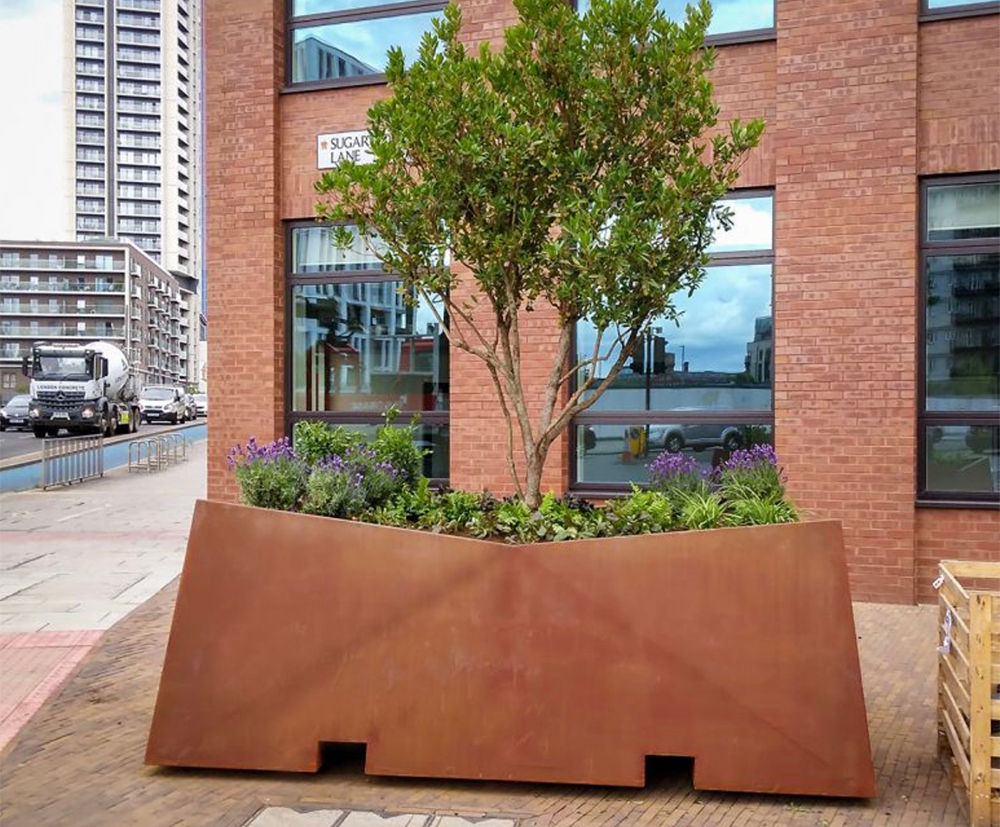
The final, and most expensive, option is to create ‘front-to-back’ channels for the forks, within the base construction of the planter. These channels are lined with stainless steel to avoid the forks damaging the planter.
Fork channels are more expensive than runners / skids, but give a more ‘designed-in’ aesthetic – the channels are still noticeable, but look like they are an integral part of the planter design.
Moving lighter planters
For lighter planters, located on a reasonably fair surface, it may be possible to move the planters manually with castors. This option is cheap, quick and easy – see Moving planters with castors >>