

Theories Landscapes has been designing and building safe play environments since 1983.
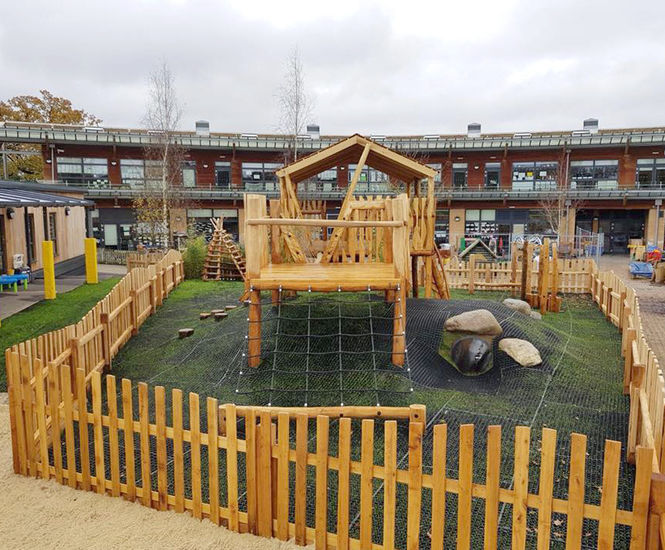
All playgrounds for parks and public spaces are uniquely designed for their specific spaces and can range from family interactivity spaces to quiet spaces for small children, to play and picnic areas, and learning and educational spaces.
The designs complement, enhance and attract visitors to parks and public spaces.
Public parks and their playgrounds should be unique, enhancing their surroundings and environment while delivering fun and educational value to children and young people alike.
But playgrounds and public spaces aren’t just for children, they are also for families, young and old, and for friends that may just want to sit and talk with the backdrop of excitement, fun and learning.
Slides, swings, trails, tree houses, shelters, picnic benches and seating are only a small part of creating an inviting outdoor space.
Natural environments
Bringing planting into playgrounds in parks and open spaces adds whole new dimensions – touch, smell and even taste.
Theories playgrounds are built by landscapers, not just contractors, so they are adept at choosing planting that enhances a child’s play and learning experience.
Working collaboratively
Theories works with the client to build a playground that fits their needs. Understanding what and for whom the playground is being used means that they can ensure the greatest balance between fun, education and development, whatever age or physical restrictions pupils may have.
Safe and secure
Playgrounds should be a safe environment for everyone. Using the best quality materials, leaving no screws or bolts exposed to small fingers or to snag on clothing, is is included as standard.
Dedicated aftercare
A Theories playground is built to last, but all playgrounds need regular checks and some TLC from time to time. Theories' dedicated team can carry out regular safety inspections, ensuring a playground is always safe, spotting problems or maintenance requirements early on, saving needless worry and costs for major upgrades, repairs or replacements in the future.
Process
- Initial meeting
- Design phase
- Contract
- Construction
- Planting
- Aftercare
Equipment that can be included
- Balance beams
- Bridges
- Bug hotels
- Canopies
- Chalk boards
- Clamber nets
- Climbing structures and walls
- Decking
- Dens
- Fireman’s poles
- Integrated storage
- Landscaping
- Learning boards
- Log stacks
- Natural or artificial grass
- Mirrors
- Mud kitchens
- Musical instruments
- Organic archways
- Outdoor classrooms
- Parasols
- Planting
- Play tunnel
- Pulleys
- Rope walks
- Rubber mulch
- Sand and pebble play areas
- Scramble nets
- Sensory gardens and planting
- Slides
- Stages
- Stepping stones
- Stilts
- Story telling areas
- Tables and benches
- Tipis
- Towers
- Trap doors
- Trapeze handles
- Trim trails
- Water
- Work benches
- Wormeries
Building skills and educational advancements
- Art and design
- Balance
- Communication
- Confidence building
- Concentration
- Creative play
- Decision making
- Discovery
- Eco, creative and independent learning
- Imaginative and co-operative play
- Maths
- Motor skills – fine and gross
- Music skills
- Language skills
- Problem solving
- Resilience
- Responsibility
- Risk
- Role play
- Sensory skills
- Science
- Social play
- Team building
- Well-being