Noise pollution is becoming an increasing concern, and it’s more than simply an annoyance – it can have a detrimental impact on health and wellbeing. Studies have found that even small increases in ambient sound can have a marked effect on modern living, and it’s something that’s getting harder to avoid. As population densities rise, people find themselves living and working closer to sources of noise – which can come from transit systems, businesses, or just from each other.
Acoustic fencing is widely used in industrial and commercial situations as an effective method of reducing the impact of operational noise. Acoustic fencing reduces the impact of environmental noise, by absorbing or reflecting sound. Frequently used to reduce the sonic footprint of traditionally noisy areas such as loading bays, transport hubs, and schools, it’s now becoming a popular choice in residential areas.
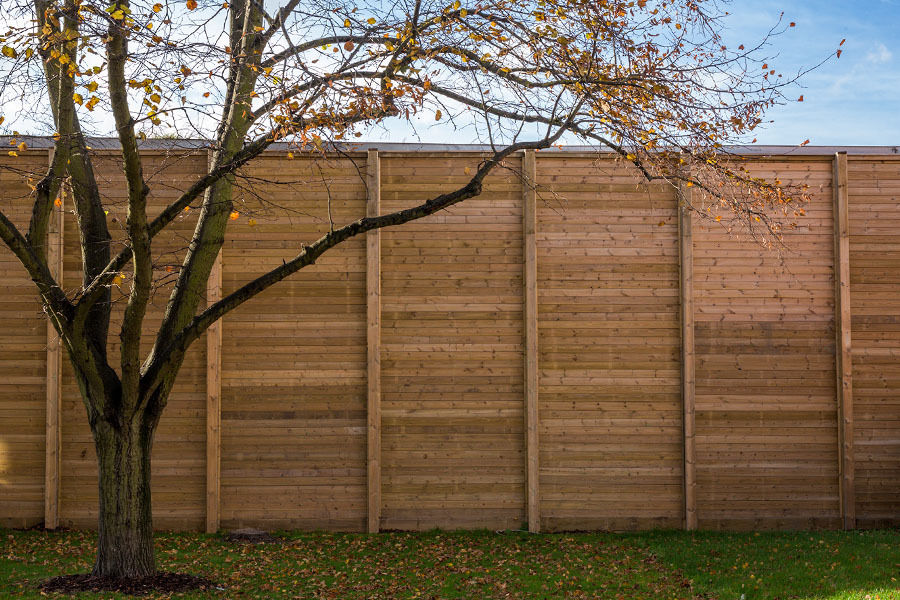
Acoustic fencing - domestic application
How acoustic fencing works
There are two main types of acoustic fencing: reflective and absorptive. Both are designed to interrupt the propagation of sound waves, resulting in a reduction of noise. A reflective noise barrier – as the name suggests – reflects sound waves away from the area that’s being protected from noise. Reflective noise barriers are straightforward to install, and highly effective for most applications. They work best in large spaces, and are commonly installed as a single barrier to prevent sound waves from simply bouncing between multiple surfaces and amplifying the sound within the enclosed area.
Absorptive barriers trap and diffuse sound rather than reflecting it; these are generally used in situations where reflecting noise might not be practical, such as confined spaces around generators and air conditioning units. Absorptive acoustic barriers are often seen in pairs on opposite sides of roads and railways, as each one can work to absorb sound.