Design and functionality issues to consider when specifying that planters should be movable with in-built castors.
Castors are used for the manual movement of light or moderately heavy planters over reasonably fair surfaces. Where the planters are extremely heavy, and/or the ground is very rough, then mechanical means of movement are necessary and generally satisfied using pallet trucks or fork lifts.
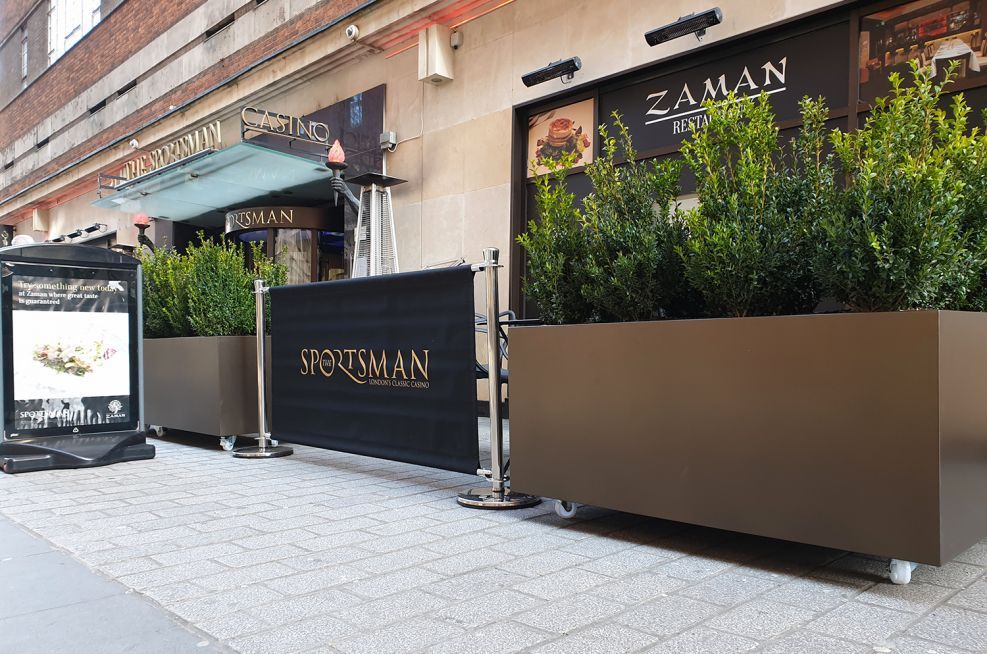
Large moveable metal planters on lockable castors for a restaurant frontage
When planters on castors are useful
The ability to move planters with castors, quickly and easily, has a wide variety of applications – for example:
- Planters on residential or commercial terraces, where the space needs to be configured for different uses at different times
- Where planters need to be brought indoors to avoid out-of-hours damage or theft
- Planting above utilities and/or services, which is very common in public realm
- Where planters are obstructing an access point, such as a drain or utilities meter
Specifying the right type of castor
A wide range of castors are available to suit every requirement.
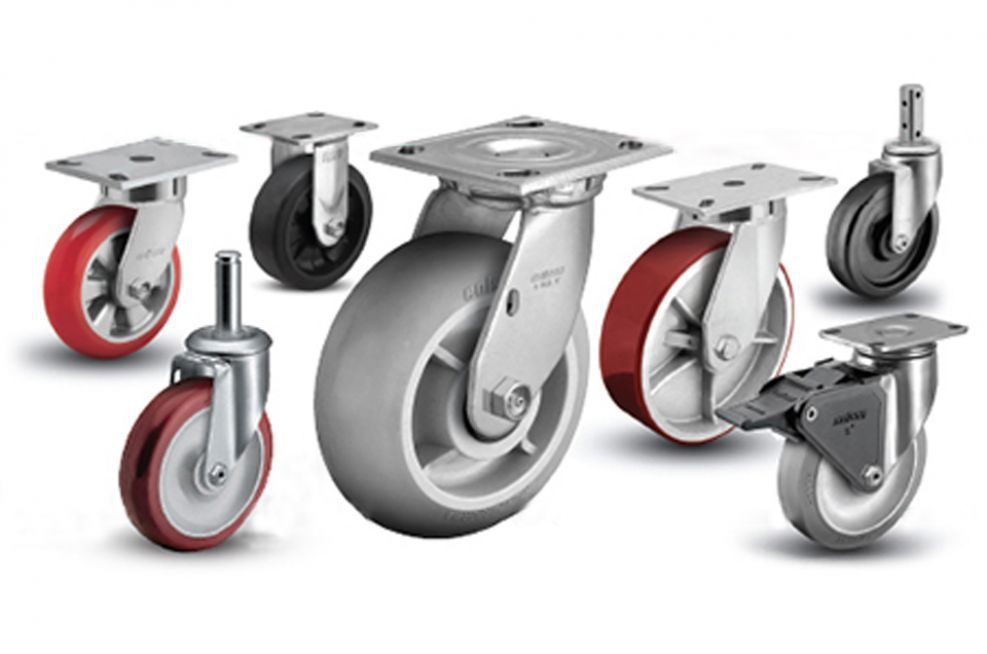
Castor wheels for planters
There are basically two kinds of castors – lockable and non-lockable – and each have their pros and cons.
1. Non-lockable castors
Non-lockable (or freewheeling) castors are cheaper than lockable castors, and they are invisible.
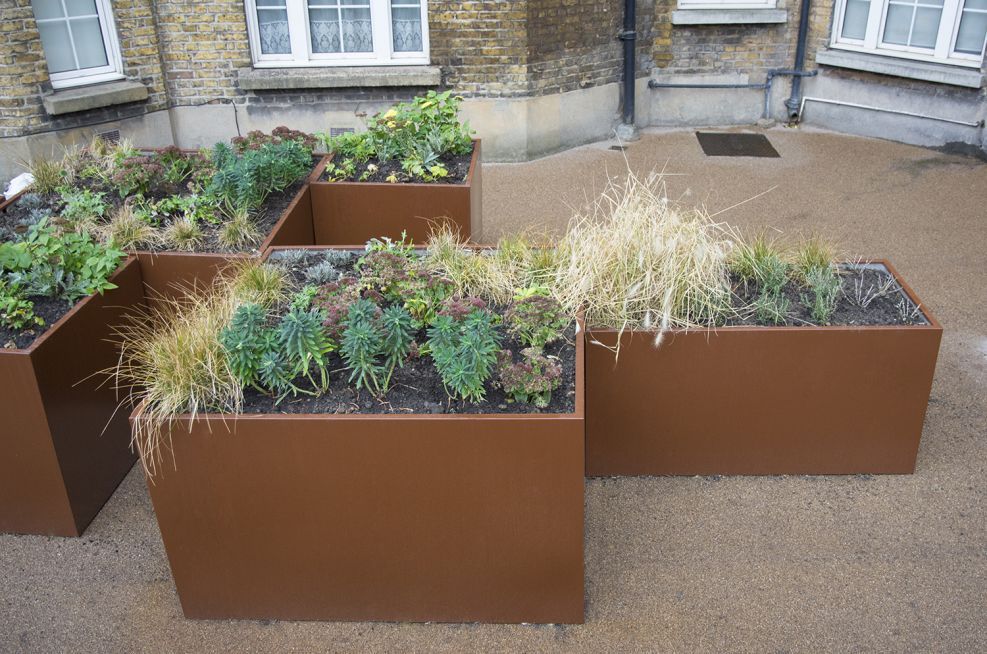
Bespoke powder coated moveable planters with invisible castors
Assuming a fair surface underneath, like paving, the planter clearance from the ground can be as little as 5-10mm. Therefore on both cost and aesthetic grounds, Non-lockable castors are to be preferred where there is not an absolute requirement to lock the movement.
2. Lockable castors
Lockable castors are used where there is an absolute requirement to restrict any risk of unwanted movement.
Typical situations where lockable castors would be specified include:
- Where public liability issues apply, such as planters located on public realm outside a restaurant
- Exposed locations, such as roof terraces, where unwanted movement might be caused by strong wind
The principal downside with lockable castors is that the braking mechanism must be accessible, and this generally means that the planters must have a clearance from the ground of 70-100mm (ie the castors will be visible, and there is therefore a negative aesthetic impact).
The only solution to disguise the castors is to have a removable access panel – this adds to cost, and also makes the movement operation more time-consuming.
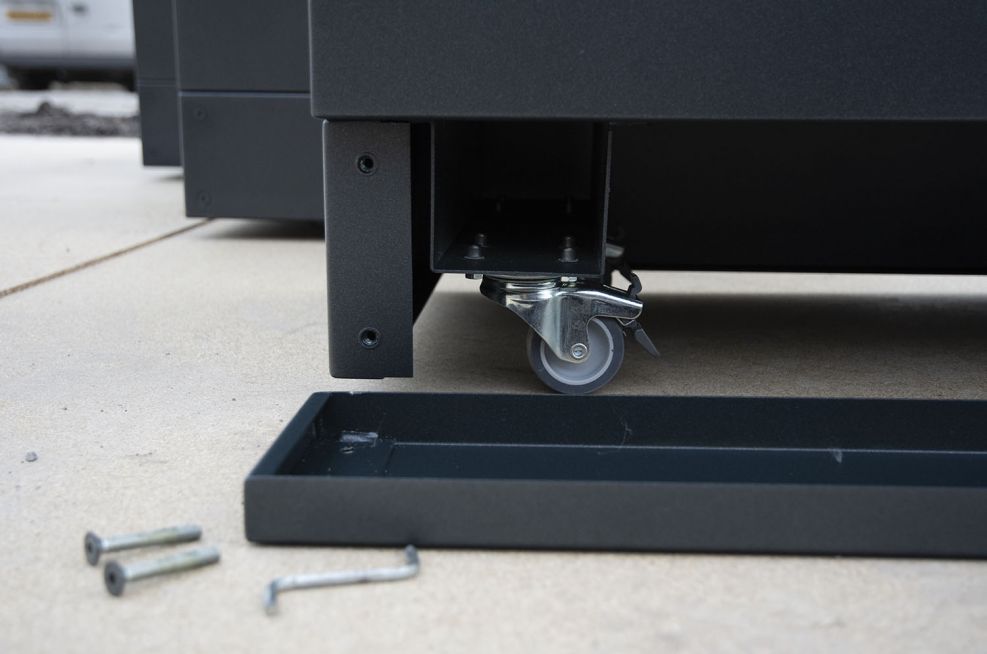
moveable outdoor planters with hidden castors
About IOTA
IOTA is expert in modifying existing metal planter designs to incorporate castors.
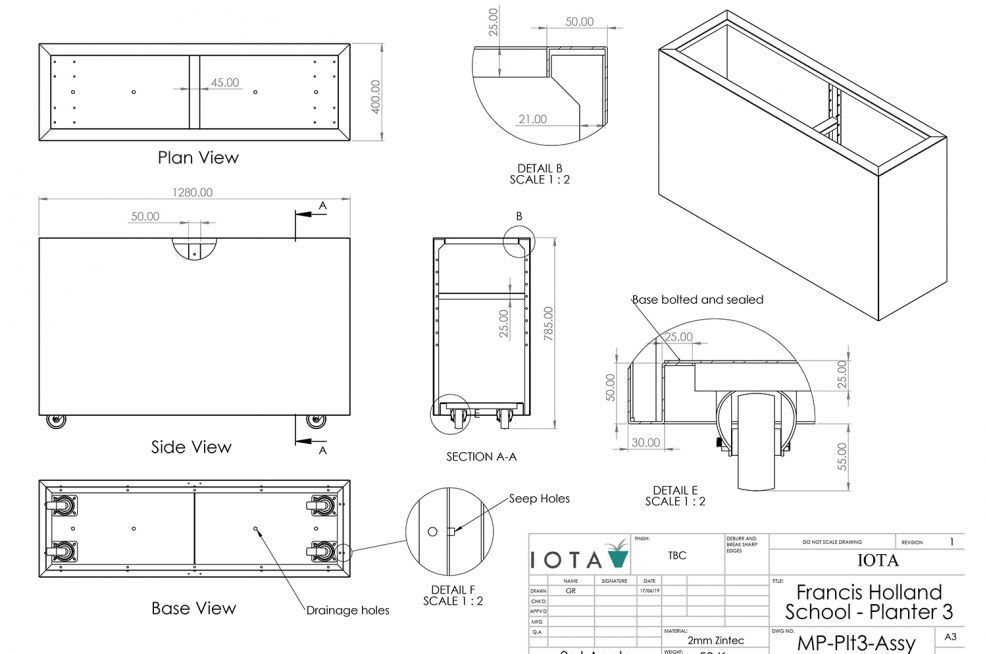
CAD drawing moveable planters with wheels
IOTA’s in-house metalworking facilities include precision laser-cutting, fabrication, powder c-oating and specialist applied finishes such as patination.
To discuss a standard or bespoke planter scheme incorporating castors, call 01934 522617 or visit the IOTA website for additional information.