There are many ways in which a planter design scheme can be extended to include balustrades, trellises or fencing. There are, equally, many situations where it makes sense to do so, for example:
- Integrating balustrades or fencing with planter design can avoid costly duplication of structures, where these elements are required to create a perimeter to a patio, podium or terrace.
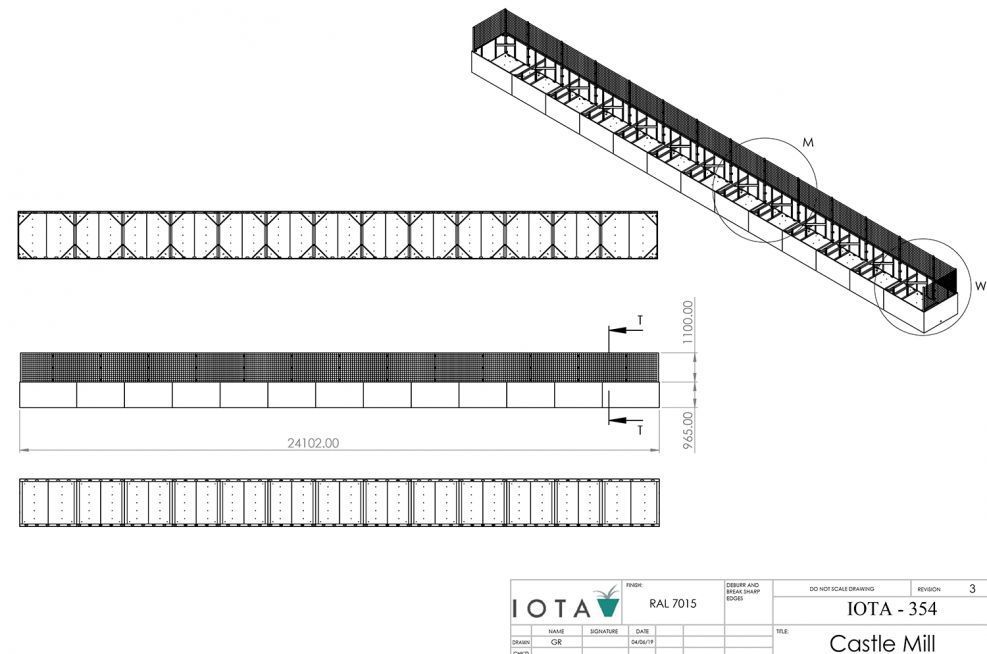
Plant containers with integrated privacy screens
- Integrating the elements together can also yield a structurally stronger solution – for example, where an edge protection against falls from height is required to [say] a roof terrace.
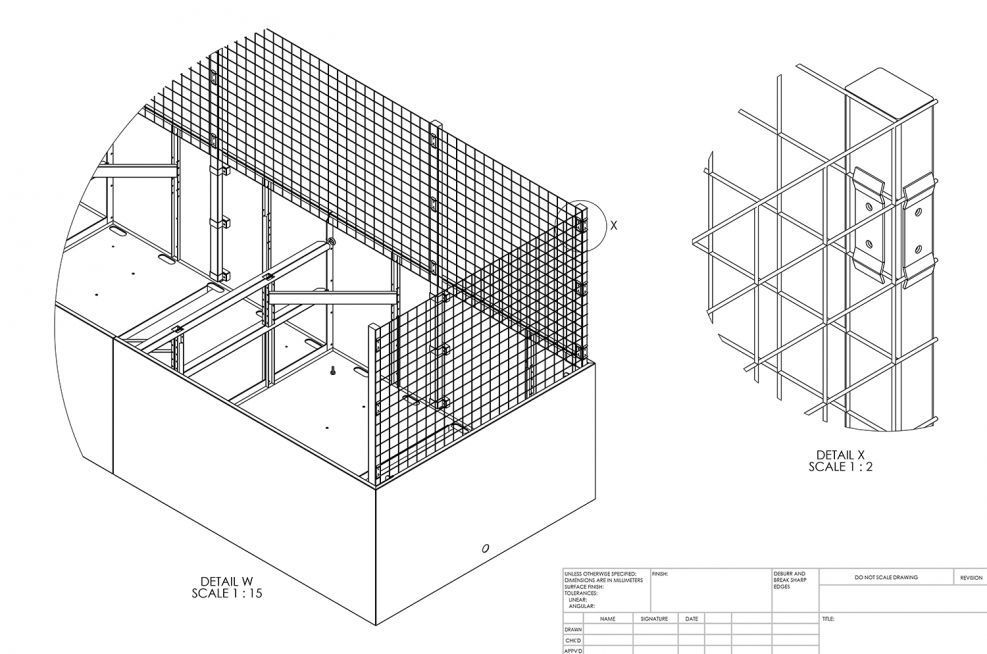
Large planters with integrated metal fencing
- Trellises integrated with the planters support vertical plant growth in situations where, for example, it is neither desired nor possible to permit growth on an adjoining wall structure.
- Integrating trellises with the planters also allows the whole installation to be moved, for example for use as movable privacy screening.
When structural integration is not required
There are a couple of other common situations where elements do not need to be structurally integrated:
- Where the planter can 'do the job' on its own. For example, if a planter of H 1100mm completely encloses the perimeter of a private terrace, then - subject to structural engineer sign-off - this is generally accepted by most planning departments as meeting edge protection standards.
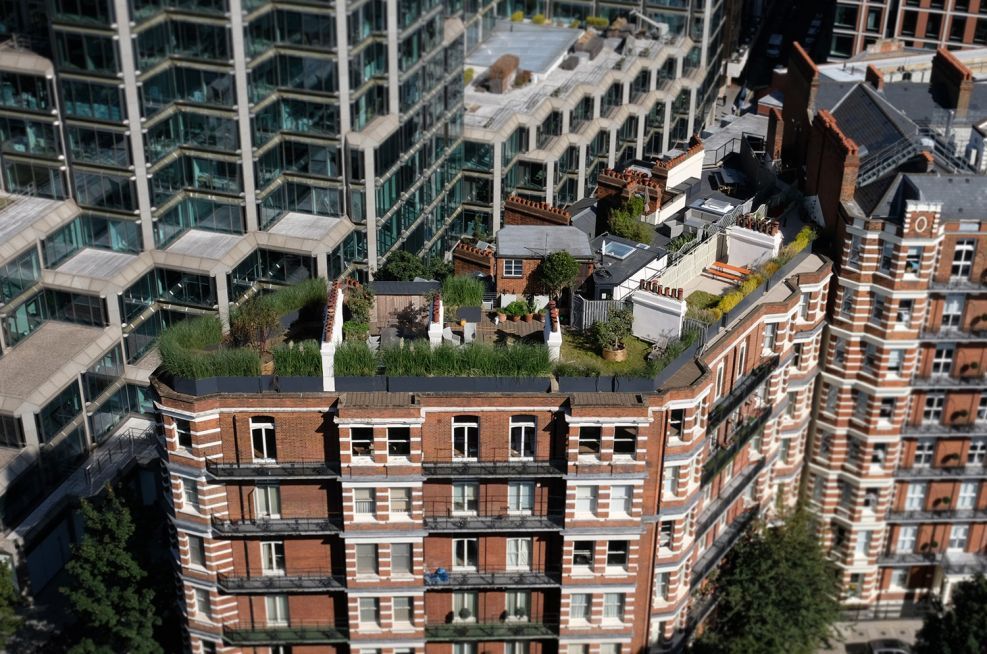
Planters were used as the sole roof edge safety system on the Ashley Gardens rooftop terrace in London
- Sometimes planters can be used to 'green', and to improve the substantive effectiveness of edge protection, where pre-existing balustrades etc are already in place.
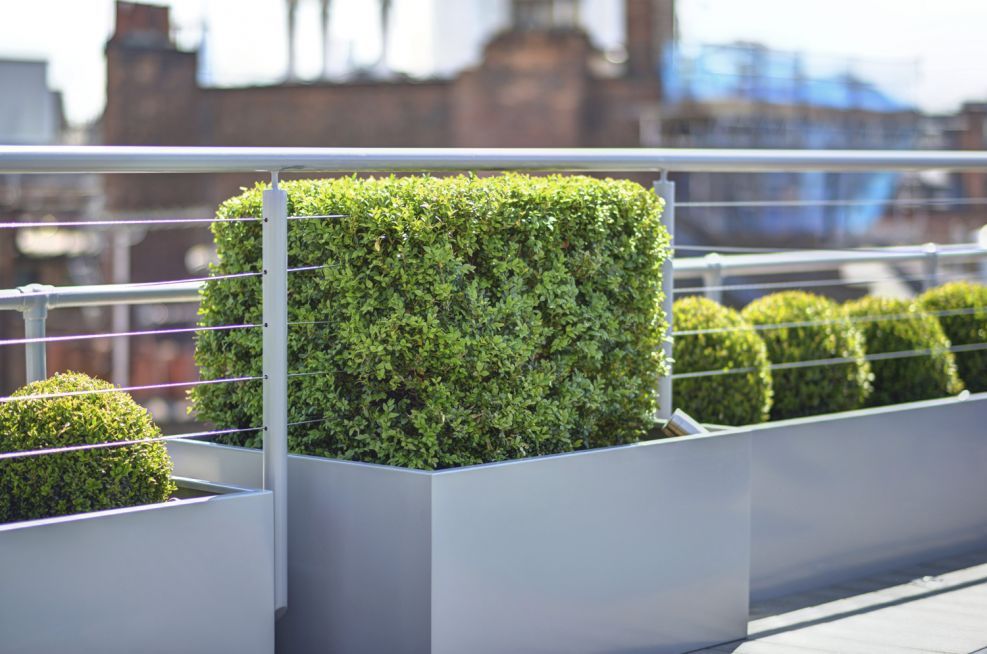
Steel trough planters with integrated balustrade for Tapestry, Firth Street, London
Design fundamentals
When balustrades, trellises or fencing are combined with a planter, then the load bearing and load distribution requirements are changed, and the planter must be structurally re-engineered.
Metal is the ideal material with which to combine balustrades, trellises or fencing and planters into an integrated design – the integration of these additional structures need not be expensive - in fact it is most often cheaper than buying the individual systems separately.
The strength and rigidity of a metal planter comes from the manner in which loads are spread internally via vertical stiffeners, cross-braces and base / rim structures. With the addition of relatively inexpensive stock metal sections, pre-existing internal planter structures can be used to spread the loads of balustrades, trellises or fencing. So with intelligent design, and an eye on cost, a standard planter design can usually be evolved to incorporate additional structures without the need for revolutionary design changes.
The only additional cost which might be incurred, depending on the situation, would be structural engineer review and calculations - and for a scheme of any size this cost will be relatively immaterial.
About IOTA
IOTA is expert in modifying existing metal planter designs to incorporate balustrades, trellising, fencing, privacy screens and handrails into metal planters.
IOTA’s in-house metal working facilities include precision laser cutting, fabrication, powder coating and specialist applied finishes such as patination.
To discuss a standard or bespoke planter scheme incorporating structural elements, call 01934 522617 or visit the IOTA website for additional information.