This article will highlight some of the key considerations a typical Procurement Manager in the Utilities sector may find helpful, whilst providing an understanding about how specifying products impact a sites overall security performance.
The combination of high investment in the utility sector and the need to replace ageing and inefficient power stations to meet renewable energy targets, suggests that physical security specifically designed to address the needs of the industry will rank highly on the business agenda in the foreseeable future.
To date the UK utilities industry has not experienced a major security violation, but there have been a series of incidents, which highlight the vulnerability in this sector. For example in November 2013, a break-in at a substation in Greenock resulted in a power surge that set four homes ablaze and a further 280 properties being without power.
While the installation of physical security products to protect sites is an obvious critical requirement, for those responsible for procurement comes the burden to correctly specify those products whose design and manufacture have been proven to deliver the security performance, resilience and longevity required in this high risk environment. Equally important is the commitment to ongoing inspection and maintenance of all physical security devices once they are installed to ensure their continued efficiency.
Identifying the risk
Following a review of Operational Requirements, usually a two stage process where the requirement for the security of assets is first established before the solutions are identified, a resulting security plan will typically employ the Onion Principle to provide multilayered protection.
The aim is to work from the outside into the centre, treating each different boundary as a layer which is hardened to delay the attacker, provide greater protection to the target and give security staff the intelligence they need to implement their response.
This methodology of assessing the perimeter security requirements of a site from the perspective of someone attempting to get in is far more realistic and effective than working from a printed plan, a web search, a specification sheet, or a fixed budget from a desk in an office.
The 5 D perimeter
There’s a lot of discussion around the 5 D’s of effective perimeter security - to detect, deter, delay and deny access in order to defend assets - and perhaps these days, a little too much is centered around electronic detection and surveillance technologies within the broader topic of the ‘Internet of Things’ and connected devices.
But perimeter security, whether for manned or unmanned remote sites is equally about creating an effective physical barrier which can detect, deter, delay and deny unauthorised access to the protected area and ultimately defend the asset.
A well planned, designed and installed fence and access solution will add real substance to the protection of a perimeter and can also yield significant savings in the overall cost of site security by reducing the requirement for more expensive electronic alternatives or manned guarding.
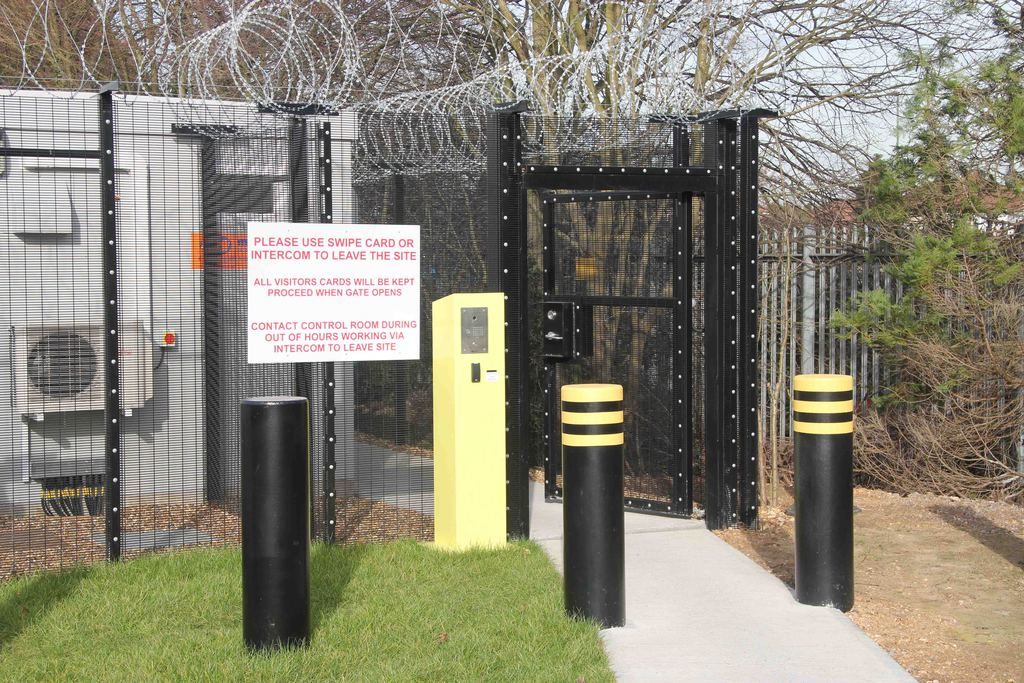
Utilities Security Fencing
Specify for success
Once the threats facing the site have been established and the products designed to mitigate risks and provide the desired level of protection are identified, the focus shifts to selecting the right products from the right suppliers.
Most utilities sites would employ products which have been tested and certified under LPS 1175 while for higher risk sites; Approved for UK Government Use products may be recommended by CPNI (The Centre for the Protection of National Infrastructure) as part of their advisory remit.
Installing for performance
Any physical perimeter security product, regardless of the testing it has undergone to prove its ability to withstand various challenges is only as good as its installation. It can only deliver to its design specification if it is regularly inspected, maintained and repaired. Therefore, buying decisions need to also consider a number of contributing factors which affect the integrity of these performance critical products.
For example materials employed in their construction should be both fit for purpose and able to deliver a long service life. Any steel used which is exposed to the elements above or below ground should at the very minimum be hot dip galvanised to BS EN 1461, inside and out, and ideally after basic manufacturing has been carried out.
For more information covering the above points in more depth download Jacksons Insight Paper: Physical Protection for Utilities Sites.
Maintaining performance
The final element to good physical perimeter security practice is the regular and scheduled inspection of the fence line to identify any changes which could impact on its security integrity. Litter, debris and dirt should be regularly cleared to allow an unhindered view of the condition of the fence and all repairs required identified and remedied in a Condition Report.
It might sound obvious, but just because a product hasn’t failed does not necessarily mean that it is working properly… and unless there is standard practice in place to routinely inspect, check, test, maintain and repair the physical elements of perimeter security infrastructure, it probably will.