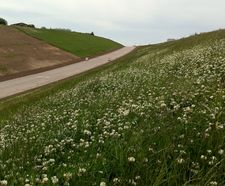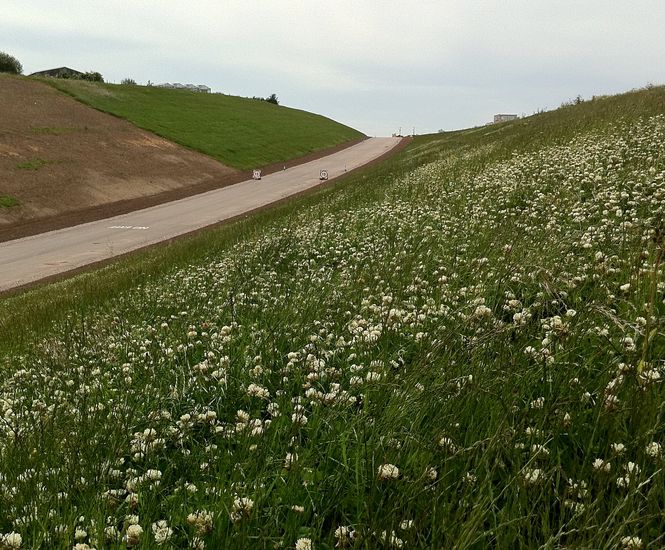


CDTS provides wildflower seeding solutions using conventional or hydroseeding techniques.
Wildflower seeding requires careful assessment and species selection to suit individual sites.
CDTS has many years' experience dealing with a wide variety of soil and site conditions, including:
Amenity areas
Roadside verges and banks
Mining and quarry site reinstatement
Racecourses, sports pitches and large lawns
Embankments and cuttings
Process
An initial site visit to fully understand the requirements and to do a full assessment of the site and surrounding vegetation is imperative in formulating a methodology to prepare and choose the right wild flower species to suit the clients requirements, soil type aspect, local vegetation adjacent to the site and various other factors which need to be taken into account.
Wild flower mixes are traditionally based on an 80/20 mix of non aggressive grasses and wild flowers sown at relatively low seeding rates of between 3gms and 5gms per m2. Alternatively pure wild flower mixes can we sown and are generally sown at 1gm to 2 gms per m2. Additionally there are high impact flower mixes which while are not strictly wild flower mixes, have a big impact visually and environmentally.
Once a methodology and wild flower mix is agreed on, the next step is to prepare the site for seeding; it is imperative to create a clean seed bed i.e. one which is free of noxious weeds and invasive grasses which if left untreated would dominant the sward. For this reason wild flower seeding is best carried out on low fertility soils and subsoil’s which are nutrient deficient and don’t have an inherent seed bank. If the proposed wild flower seeding area consists of a very fertile soil with a large seed bank within it, it may be necessary to undertake multiple treatments by cultivation, herbicide treatment or a combination of both over a prolonged period to ensure that the soil is free of weeds.
Once the seedbed has been prepared the site specific wild flower mix can be sown this is generally done in spring or autumn. CDTS operate a full range of specialist seeding equipment either using conventional seeding methods or hydroseeding or a combination of the both. Once sown it is important to monitor the developing sward to control invasive species either by spot treatment, hand weeding or cutting.
Operational area
Wildflower hydroseeding services are available throughout the north and west of England.