

- Sector
- Transport infrastructure
- Project type
- New build
- Services provided
- Planning advice
- Design
- Installation
- Year completed
- 2012
- Project location
- South West England
- Client
- Dorset County Council
- Products used
- Bespoke Greenscreen LITE planted acoustic barriers
Challenge
The 4.5-mile Weymouth relief road was developed to ease traffic between Dorchester, Weymouth and Portland in preparation for the 2012 Olympics sailing events.
The road was forecast to carry 35,000 cars each day, drawing objections because of the potential impact on the area’s sensitive natural environment and local residences.
Dorset County Council needed to commission a system of acoustic barriers to meet regulations and minimise the effects and penetration of traffic noise. At the same time, in certain sensitive areas, the acoustic barriers would need to have an especially unobtrusive appearance and natural finish.
The sound control scheme had to be delivered in stages according to the strict construction programme set out in preparation for the Olympics.
Solution
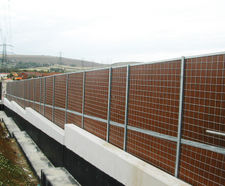
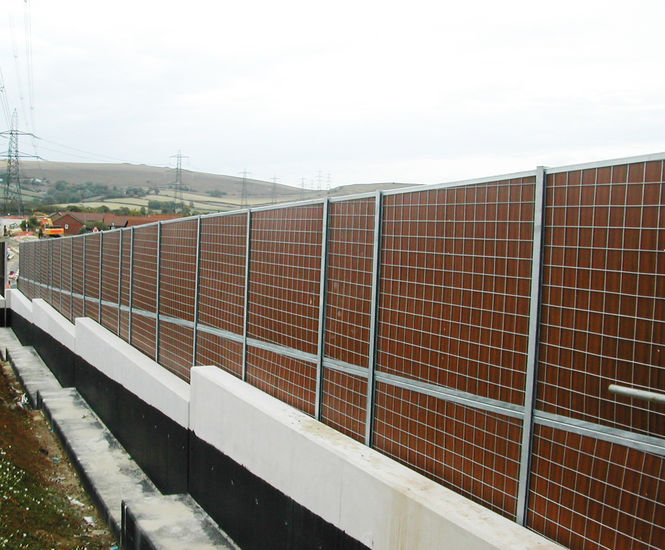
Livingreen Design was chosen to supply customised Greenscreen LITE planted acoustic barriers to give the necessary level of sound control and a natural hedge-like appearance on one side. The outer side of the Greenscreen LITE barriers are finished with natural and durable coconut fibres, which allows them to support climbing plants.
The company worked closely with the fencing contractor, Newton & Frost, who provided adjacent wood-panel acoustic fencing for other sections of the relief road. Together they ensured a co-ordinated system design and installation process, timely delivery and a seamless, continuous finish across the various sections and the different types of acoustic barrier.
Livingreen’s Greenscreen LITE panels had the highest possible rating for their reflective acoustic properties, being EN 1793 Category 1 certified and providing 29dB of sound insulation and 7dB of sound absorption. In certain sections they were used in conjunction with additional bespoke absorptive panels for even greater acoustic protection.
The panels were purpose-made for the site, and were designed and manufactured to follow the angles and inclines alongside the relief road.
Outcome
As well as fulfilling the stringent acoustic, environmental and site-specific requirements of the Weymouth relief road project, Livingreen’s acoustic barriers provided a long-term, low-maintenance solution.
The plastisol-coated noise plates, held between two rows of coir-wrapped tubes, provide a system that requires no maintenance for 35 years, apart from the care of the plant growth – a guarantee that would have been impossible with comparable wooden systems.