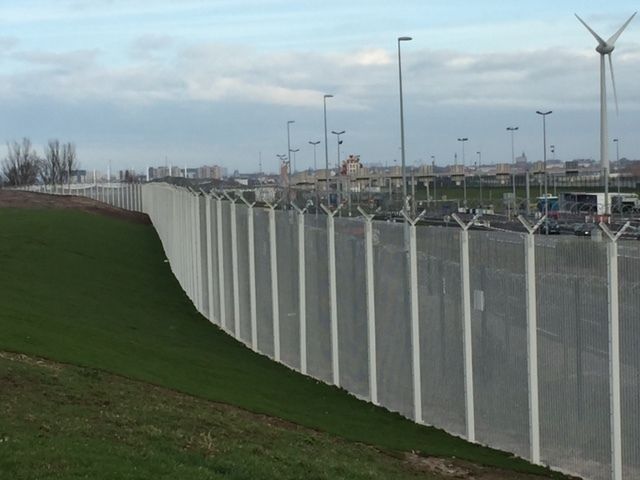
A minimum of a CPNI or LPS1175 B3 security fence is recommended
COVID-19 has unearthed a stark realisation of what devastating effects a virus/disease can have on not only people’s health but their livelihood, freeness and the economy.
A number of COVID-19 vaccines have now been authorised around the globe and it is widely seen as the solution to this worldwide problem. As a result, organisations which develop a vaccine have been thrust into the public eye as they are seen to be crucial to getting the world back to ‘normal’.
Interest in high-security fencing for vaccine centres has increased in the COVID-19 pandemic as the increased focus has been put on vaccinations and this blog post aims to inform anyone involved in the development of vaccine and biochemical facilities.
We cover:
- Dangers to consider
- Key recommendations
- Whether a ‘layered’ approach is suitable
High-security fencing for vaccine centres and bio-chemical
With the emergence of the Covid-19 pandemic throughout 2020, the world stopped. Workplaces were closed, education put on hold, and the key message was to stay at home to save lives. This was of course for most of the world.
However, the medical world was more alive than ever. Hospitals were operating close to full capacity, research centres working overtime, and vaccine centres were trying to find a way to end the pandemic.
With vaccines seen as the only answer to the world’s problem, they have been thrust into the public eye, making them a valuable asset which needs to be protected. In the wrong hands, vaccines could be damaged, foiling vaccination programmes or they pose a risk and harm unauthorised personnel.
What are the dangers?
It isn’t just the vaccine that could be harmful, we need to consider the contents of the labs involved. We have seen the devastating effect of one virus, and these units may have multiple vaccines and viruses being researched at the same time.
High-security fences provide the first layer of security to prevent this from happening. Security fencing deters possible intruders and can delay attackers for long enough for the relevant security to react to the situation.
Which fencing would be recommended for the likes of research/vaccine centres?
The recommended fence depends on the severity of what’s inside and length of delay the physical security solution needs to create for security or the police to stop the perpetrators. However, for high-level security to effectively protect an asset such as this one, it is advised to choose a minimum of a CPNI or LPS1175 B3 (previously SR2) security fence.
Both of these security fencing options have been tested to ensure they can offer substantial protection to critical assets such as vaccine and biochemical centres.
SecureGuard SL2 from Barkers is an ideal solution if you are looking for a fence certified to LPS 1175 B3 as it also provides an extra level of protection. It is currently the only B3 fence also certified to LPS 1175 C1. Providing defence for 1 minute against category C tooling – a range of powered tools including:
- Drills
- Gas torches
- Crowbars
For high-risk sites, we would recommend LPS 1175 C5 (previously SR3) certified fencing. LPS 1175 C5 fencing can withstand more than five minutes of persistent and experienced attack from a range of powered tooling including:
- Drills
- Gas torches
- Crowbars
What additions can be made to make your security fencing more secure
Usually, a CPNI or LPS 1175 B3 and above certified perimeter is a good deterrent and delay method for high-risk facilities, however, there are additional options you can use to make the fence even more daunting to any unauthorised personnel.
The use of barbed and razor wire are the most common additions used alongside security fencing. The aggressive look to the wire, as well as the additional physical protection it can give offer the most protection to any property.
If you are choosing a forced entry tested fence, it would make sense for the entrance security to meet the same standards. The use of certified security gates and turnstiles in conjunction with fencing will provide a complete perimeter with no vulnerabilities. Turnstiles are ideal for pedestrian entry where you need complete control over who can gain access.
The layered approach to your security fencing
Layered approaches are used to ensure maximum protection, creating more time for the site to react to an attack.
A key consideration for vaccine centres is that the layered approach of security depends on the space and budget available. Barkers has an association with HS security that allows it to bring additional security products such as bollards, barriers, cages and covers to help protect assets in the most effective way, from a single source, should they be required.