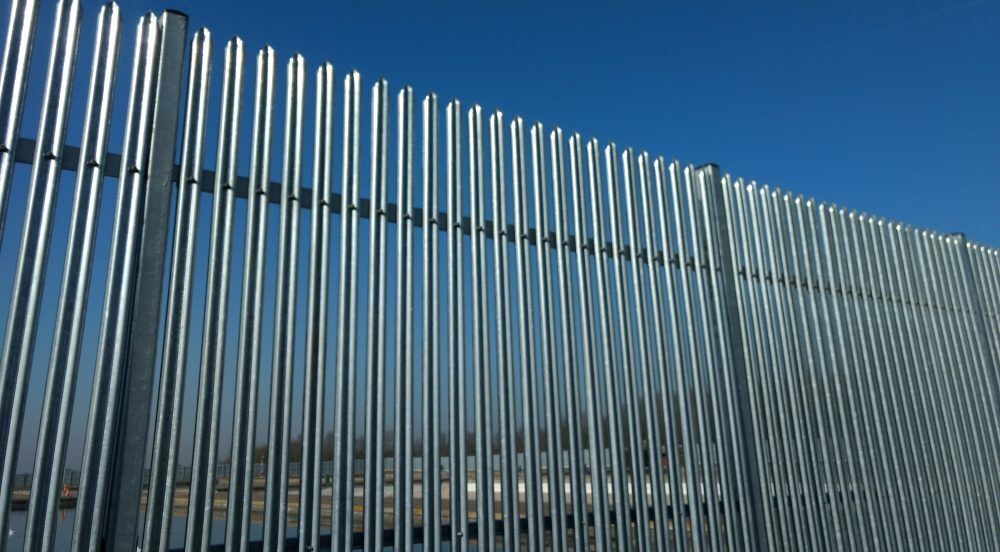
Accreditations make specifying a security fence incredibly simple
When specifying security fencing, it is essential to know the quality of the fence you’re using, as well as the standard it will perform too.
This is where accreditation comes in, accreditation ensures fences, or anything for that matter, meet the required, and stated standards.
These accreditations require rigorous testing to ensure the fences are up to standard and do the job. They are attacked for set periods and different levels of tools- withstanding the assault to achieve the accreditation.
More on how fences are tested for LPS 1175 can be found at https://barkerseng.com/what-is-lps-1175-and-how-are-security-fences-and-gates-tested/
Common security standard for fencing and gates
There is a whole array of different third-party accreditations and security ratings which may cause some confusion if you’re not an expert in security fencing. There are three widely recognised testing houses for forced entry testing:
- LPCB (Loss Prevention Certification Board) has been working with industry and insurers for more than 100 years to set the standards needed to ensure that fire and security products and services perform effectively. In recent years LPCB’ has gained momentum for being all-encompassing and universal. It is being adopted by schools, healthcare facilities, water industry and data centres to name a few.
- CPNI (Centre for the Protection of National Infrastructure) is the government authority for protective security advice to the UK national infrastructure – Products with this accreditation have been tested and approved for use on government infrastructure.
- ASTM (American Society for Testing and Materials) is an international standards organization that develops and publishes voluntary consensus technical standards. This is widely used in the US and the Middle East.
Why choose an accredited security fence?
As the security fences are independently tested by a third party, it shows that manufacturers aren’t exaggerating the quality of their product and that their products are meeting requirements specified by the customer.
Accreditations make specifying a security fence incredibly simple. As products certified to the same classification must meet the same standards to pass the certification. This ensures that, wherever the fence is manufactured, if it meets the SR2 standard, it’ll be the same standard as any other with that accreditation, making the tests incredibly reliable and consistent.
This allows the customer to compare any fence accredited to the same standard, and allows them to make an informed purchase.
These accreditations give customers peace of mind that they’re getting what they pay for, and the fence will protect them too.
LPCB go to the next level and audit accredited companies twice a year, these audits comprise of:
- Proof of material purchases checked to ensure it matches the drawings
- Provide calibration certificates for machines
- Operator certifications to ensure operatives are trained to work machines
- Traceability – All documentation for products must be kept
- Drawings are checked again to ensure products are being made to the certified drawings
This audit is an ongoing process all year round, therefore it ensures standards are constantly being met, and no corners are being cut. All certificates are also available online on the https://www.redbooklive.com/
What are the benefits of accredited security fencing?
The main benefit, to a customer of accredited security fences, is you know exactly what you’re getting with your purchase, as each certification shows a clear outline of what a fence can withstand, and how they performed in that test.
This gives the customer peace of mind as they know by making this purchase, they will be protected to the required standard.
From a manufacturers point of view, the accreditation adds the certified quality of the fence they have produced, allowing them to deliver continuously high-quality tested fencing.
This can also be a huge help on specified projects as if it needs to be a certain specification such as an SR2 rated fence.
Where are accredited security fences needed?
Accredited fences can be used anywhere, and are usually used at high-value sites, such as data and research centres, as these facilities are needed to be protected due to the sensitivity of the information inside.
However, we have recently seen a shift in where accredited fencing is used, to more commercial property “standard sites”.
For example, we have seen the use of LPS1175 fences in schools and other educational sites in Wales, showing these sites are putting the safety of their pupils first, could we maybe see this shift across other areas of the UK in the future?