In many situations, high security is a given. Government buildings, airports and prisons are areas that are all obvious targets for crime, sabotage and terrorism. Other targets are perhaps less obvious – computer data centres, utility stations or pharmaceutical manufacturing plants are also places that have a constant need to secure their perimeters.
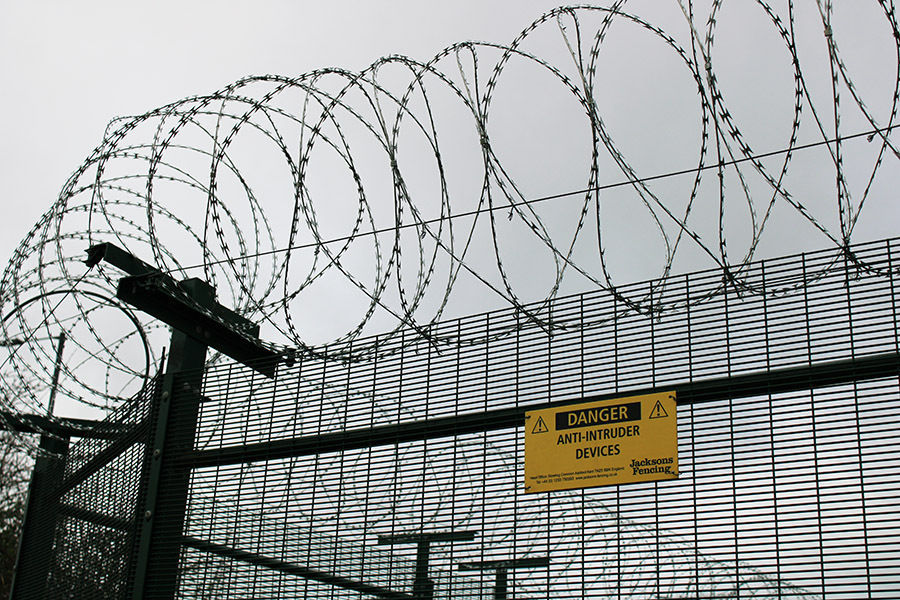
But other areas are less obvious still. Recent terror attacks have shown that well-populated city centres also have a need to be secured; and even schools and places of worship face security challenges on a day-to-day basis.
The 5 Ds of perimeter security
Whether securing a water facility or a church, there are certain common principles that apply. A common model used is the 5 Ds of perimeter security, an onion skin approach where several layers of security work together to protect a site. In summary, these are:
- Deter - fencing, lighting and signage all act as visual deterrents
- Detect - motion sensors and CCTV help to detect intruders
- Deny - access control systems help prohibit unwanted visitors
- Delay - road and interior barriers can slow down intruders
- Defend - the final line of defence; police or security to apprehend intruders
This is not an exhaustive list of each of the available security measures, but the core principle is still the same: making intrusion difficult. The actual measures used will vary greatly depending on the site being secured, and which factors are most important.
Aesthetics
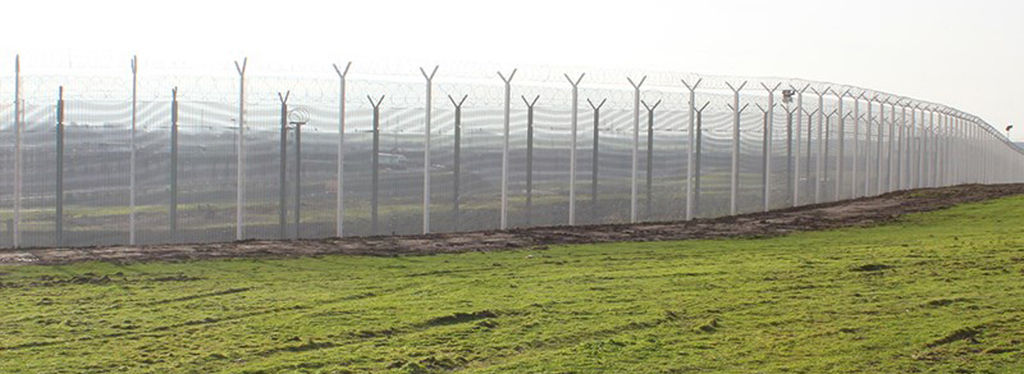
Often, a choice will need to be made on whether visibility takes precedence over privacy, or vice versa, but there are options for both. With many high-security sites, one of the main priorities is to remain inconspicuous. In these situations, the perimeter measures can be discreet, but still highly effective.
How high should security fencing be?
In other circumstances, aesthetics have to take a back seat to the practicalities of security. Tall fences can look foreboding – but that can often be the intention. A 3m fence can be a deterrent all by itself, and the perimeters of prisons are generally 5m or more. Anti-climb and tamper-proof fixtures increase security and can be added on, or built in. Fencing such as Barbican® Defender Xtreme offers a built in security topping that doesn't look too intimidating, while traditional security toppings such as barbed wire or security spikes provide an anti-climb solution paired with a menacing appearance.
Noise reduction
If noise is also a concern, then security-rated acoustic fencing is a good option. Timber acoustic fencing also presents a totally flat face, making climbing extremely difficult.
Intruder detection
Perimeter Intrusion Detection Systems – or PIDS – can monitor and detect unwanted intruders in a variety of ways. Vibration and magnetic sensors have a high degree of accuracy, and can provide early warnings of any attempts made by intruders.
Access control
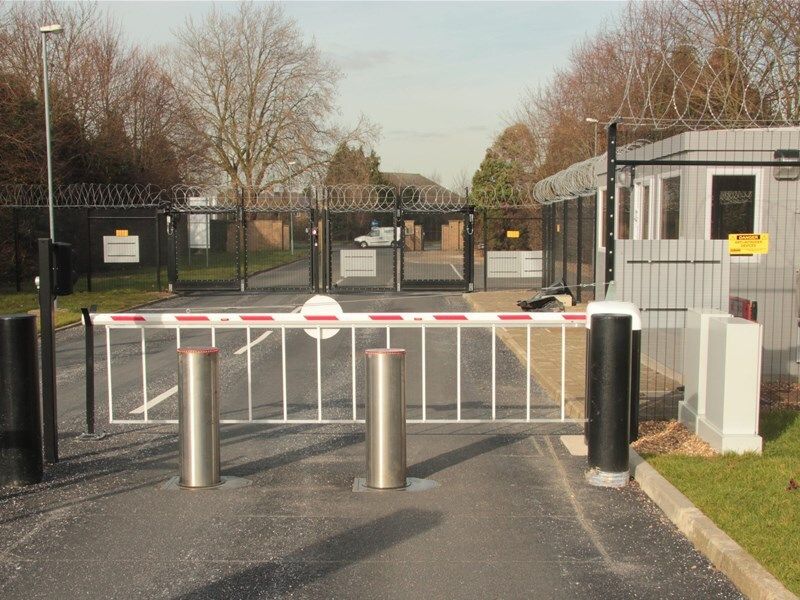
Controlling access presents the challenge of being able to delay and deter intruders, without hindering legitimate visitors. For high security areas, bi-folding speed gates allow fast and quick access to those who need it, whilst presenting a considerable barrier to those who don’t. Without the need for a top or a bottom track, it means that there’s no restriction on the height of a vehicle.
Ideally, access control would be augmented by other measures – such as card or proximity readers, and intercoms.
Puplic spaces
It can be a challenge to provide security to areas in constant use by the public. It may not be practical to deploy the same measures that would provide ample protection to a high-security site.
Bollards such as PAS 68 static bollards are discreet, but effective, and ideal for situations where security needs to be balanced against aesthetics.
High standards, high security
Any effective security measure has to be of the highest standard to be effective. A security perimeter that fails after 10 years means more cost and risk whilst it’s replaced, a situation that’s simply not acceptable.